Derwentwater Looking Towards Borrowdale — History & Facts
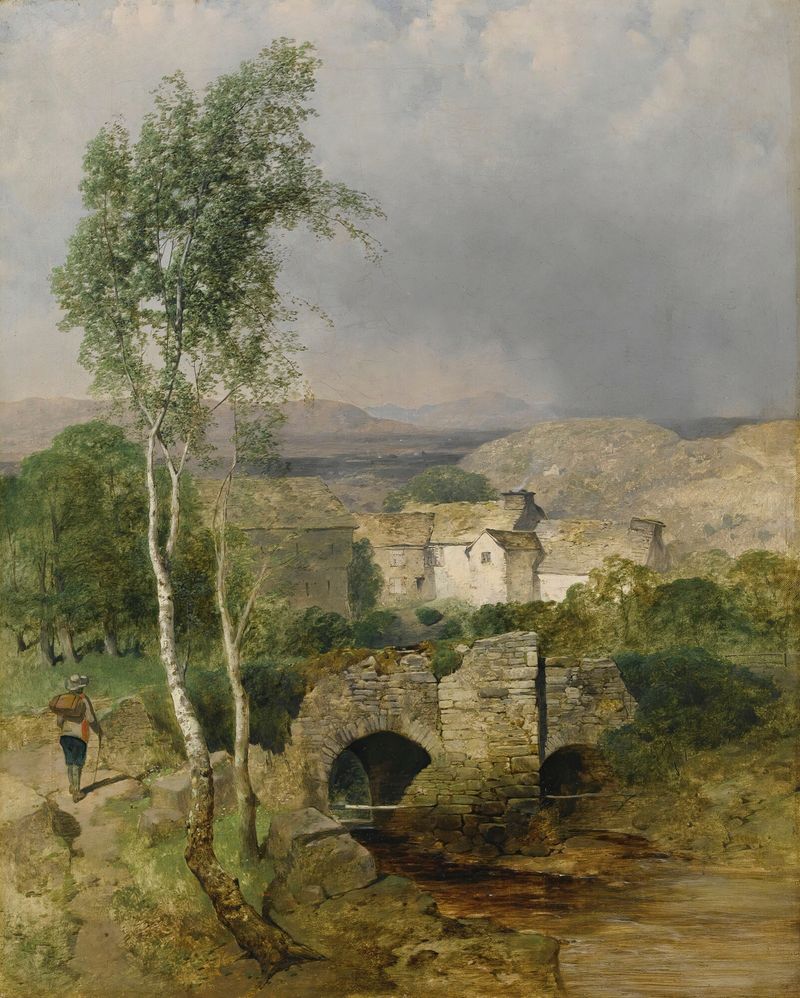
Could a single brushstroke hold eternity? In Derwentwater Looking Towards Borrowdale, the masterful interplay of light and shadow invites us to contemplate the delicate balance between nature and human perception. Look to the center of the canvas, where a serene lake reflects the soft hues of a fading day. Notice how the gentle strokes of green and blue blend seamlessly, capturing the tranquil essence of the landscape. The soft gradations of color create a harmonious rhythm, drawing the eye towards the distant mountains, their peaks kissed by the last rays of sunlight.
Each brushstroke is intentional, working together to evoke a sense of stillness that invites contemplation. Yet, amidst this calm, tension brews. The contrasting vibrancy of the vegetation along the shoreline stands in stark opposition to the muted tones of the lake, symbolizing the duality of nature—wild yet tranquil, alive yet serene. The play of light creates a fleeting moment, suggesting the transient beauty of a world that is continually in flux.
Every element in the painting reflects an intricate balance, underscoring both the fragility and enduring strength of the landscape. William James Blacklock painted this masterpiece in 1855, during a period of vibrant artistic exploration in England. He was deeply influenced by the Romantic movement, which emphasized emotion and the sublime beauty of the natural world. At this time, the Lake District was gaining popularity as a subject for artists, capturing not just the physical landscape but also the rising spirit of nationalism and appreciation for the English countryside.
Blacklock's work encapsulates both the aesthetic values of his contemporaries and his personal artistic journey.