
Design for a Monument — History & Facts
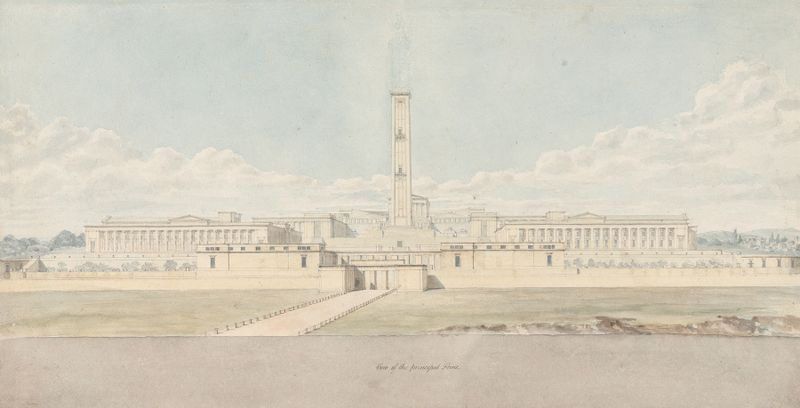
In the void of creation, every line carries a whisper, while each contour holds the potential for revelation. Look closely at the bold geometries that rise and fall across the page, echoing the architectural dreams of their creator. The stark contrasts of black and white invite the eye to traverse the boundaries of light and shadow. Focus on the intricate details—the delicate arches and robust columns—that suggest both strength and fragility, embodying the tension between permanence and the ephemeral nature of existence. The work speaks to the interplay of absence and presence, where the void becomes a canvas for contemplation.
Lines intersect, suggesting structure and inviting interpretations of how we occupy space, both physically and emotionally. Each corner hints at a narrative yet to be constructed, a monument waiting to rise from the depths of imagination, eliciting a sense of longing for what could be. During the years that led to the conception of this piece, Vulliamy was immersed in the evolving landscape of early 19th-century architecture, a time marked by neoclassical revival and bold experimentation. Working primarily in London, he navigated a world marked by industrial growth and societal change, which shaped his architectural visions.
This design reflects both his personal aspirations and the broader cultural currents of his time, encapsulating a moment when monuments were not merely structures but embodiments of ideals and aspirations.
More Artworks by Lewis Vulliamy
Browse all →
More Architecture Art
Browse all →
The statue of Liberty
Frédéric Auguste Bartholdi

View of Houses in Delft, Known as ‘The Little Street’
Johannes Vermeer

View of Houses in Delft, Known as ‘The Little Street’
Johannes Vermeer

The Cathedral in Rouen. The portal, Grey Weather
Claude Monet

The yellow house
Vincent van Gogh

The Church in Auvers-sur-Oise, View from the Chevet
Vincent van Gogh