Die Bucht von Neapel von Posilippo aus gesehen — History & Facts
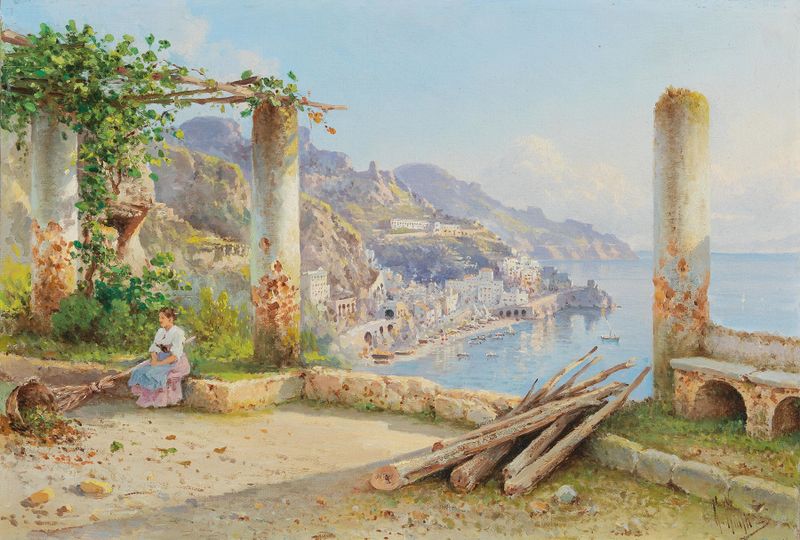
Is this a mirror — or a memory? The tranquil waters of Naples reflect the sky's soft hues, blurring the lines between reality and illusion in an evocative embrace. Look to the left at the gentle rise of the hills, their emerald slopes cradling the city nestled below. The artist employs a serene palette of blues and greens, interspersed with dashes of warm ochre that depict the sun-kissed buildings. Notice how the light dances across the surface of the water, rippling as if alive, creating a sense of movement that invites the viewer to linger longer in this idyllic scene. In the foreground, the serene composition contrasts the vibrant life of Naples bustling beyond the canvas.
The reflections in the water act as a bridge between the illusion of tranquility and the chaotic vitality of the city, suggesting that peace often exists alongside the clamor of daily life. Each brushstroke captures fleeting moments, whispering secrets of time passed—not merely a landscape, but a poignant reminder of memory and experience intertwined. Guglielmo Giusti painted this work during a period when artists increasingly explored the interplay of light and reflection in their landscapes. Emerging in the late 19th century, he was part of a movement that sought to capture not just the physical beauty of places but their emotional resonance.
His painting reflects a time of artistic transition, where the boundaries of representation were being challenged, allowing viewers to experience a world that was as much about feeling as it was about sight.