
Die ehemalige Brandstätte am Stephansplatz in Wien mit dem Cafè L’Europe — History & Facts
Did the painter know this moment would outlive them? The quiet aftermath of a catastrophe echoes through the brushstrokes, hinting at loneliness amidst the ruins. Direct your gaze to the center of the canvas where a skeletal structure rises, a ghost of what once was. The remains of a building stand defiantly against a muted sky, the cool blues and grays reflecting a melancholic solitude. To the left, the inviting warmth of the Cafè L’Europe remains, bathed in soft light, a contrast to the devastation.
Notice how the carefully rendered details around the café create a sharp juxtaposition to the stark outlines of the charred remnants — an invitation to linger over coffee within a city recovering from loss. Within this haunting scene lies a narrative of absence and presence. The emptiness of the foreground speaks to the void left by the destruction, while the café symbolizes resilience, a place of refuge. Those lingering figures, mere silhouettes, intertwine with the past and the present, suggesting that life continues even in the shadow of despair.
The artist captures not only a moment in time but also the emotional landscape of a community grappling with grief. In 1880, August Gerasch painted this poignant scene while Vienna was undergoing rapid change, embroiled in a mix of cultural revival and urban expansion. The city had recently experienced a devastating fire, which served as both a literal and metaphorical backdrop to his work. At this time, Gerasch focused on cityscapes, embracing the dualities of destruction and renewal, reflecting the complexities of a society caught between tradition and modernity.
More Artworks by August Gerasch
Browse all →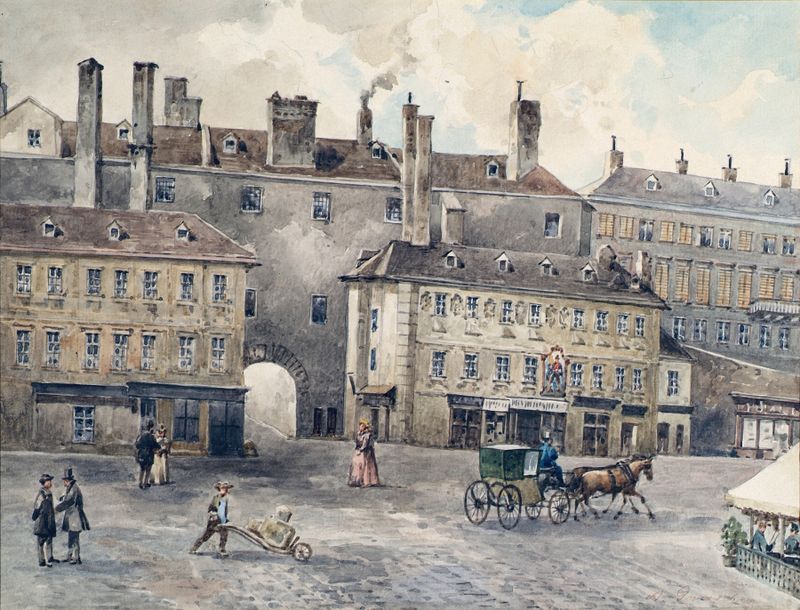
More Architecture Art
Browse all →
The statue of Liberty
Frédéric Auguste Bartholdi

View of Houses in Delft, Known as ‘The Little Street’
Johannes Vermeer

View of Houses in Delft, Known as ‘The Little Street’
Johannes Vermeer

The Cathedral in Rouen. The portal, Grey Weather
Claude Monet

The yellow house
Vincent van Gogh

The Church in Auvers-sur-Oise, View from the Chevet
Vincent van Gogh