
Die Johannes-Nepomuk-Kapelle auf dem Schanzel — History & Facts
In the serene embrace of a quiet chapel, one can almost hear the whispered prayers of centuries past. Here, the sacred convergence of nature and architecture reveals a truth that echoes through time. Look to the left at the chapel’s façade, intricately adorned with delicate carvings that invite the eye. Notice how the soft morning light bathes the structure, accentuating its earthy hues of ochre and olive.
The artist employs a careful balance of shadow and illumination, using the interplay of color to imbue the scene with a sense of tranquility. The gentle contours of the landscape wrap around the chapel, creating a harmonious dialogue between the built environment and the natural world. Within this peaceful composition lies a deep emotional tension. The solitary chapel stands as a testament to faith amidst the vastness of nature, symbolizing both isolation and solace.
Each detail—the subtle rustle of leaves, the distant silhouettes of trees—offers a narrative of contemplation, evoking a sense of yearning for connection with the divine. The inviting path leading towards the chapel alludes to a journey, encouraging the viewer to reflect on their own spiritual pilgrimage in the face of life’s uncertainties. Heinrich Peyer painted this work in 1851, during a time when Romanticism was prevalent in Europe, emphasizing emotion and individual experience. Working in a period of profound change, both socially and artistically, Peyer sought to capture the serenity found in sacred spaces.
This piece reflects not just his artistic vision but also the broader movement that sought beauty in both nature and architecture, immortalizing a moment of quiet reverence in a rapidly evolving world.
More Artworks by Heinrich Peyer
Browse all →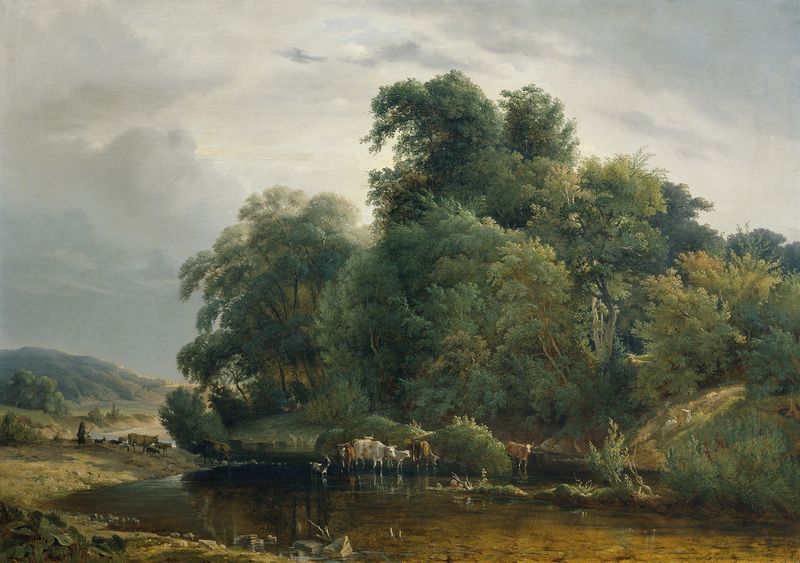
More Architecture Art
Browse all →
The statue of Liberty
Frédéric Auguste Bartholdi

View of Houses in Delft, Known as ‘The Little Street’
Johannes Vermeer

View of Houses in Delft, Known as ‘The Little Street’
Johannes Vermeer

The Cathedral in Rouen. The portal, Grey Weather
Claude Monet

The yellow house
Vincent van Gogh

The Church in Auvers-sur-Oise, View from the Chevet
Vincent van Gogh