
Die junge Ziegenhirtin — History & Facts
In the world of art, few capture this intricate dance as profoundly as the brushwork of Edmund Mahlknecht. Look to the center of the composition where the young shepherdess stands, her delicate figure framed by a cascade of verdant greens and muted earth tones. Notice how the interplay of light and shadow dances across her face, illuminating her youthful features while cloaking the surrounding landscape in a subtle ambiguity. The soft palette evokes a sense of tranquility, inviting the viewer to pause and reflect on the innocence and burden of youth. As you examine the details, you might discern the contrast between the shepherdess’s serene demeanor and the looming shadows that envelop her, hinting at the untold stories of her life.
Each stroke conveys not just a moment in time, but the weight of expectation and the glimmers of freedom that come with nature. The gentle positioning of her hands suggests care and connection to her surroundings, while the distant hills serve as a reminder of both isolation and liberation. Created during a period of personal exploration and artistic maturation, this work emerges from a time when the artist was delving into the themes of rural life and the beauty of simplicity. The late 19th century, marked by shifting cultural landscapes in Europe, provided fertile ground for the exploration of human connection to nature, an idea that resonates deeply in this piece.
More Artworks by Edmund Mahlknecht
Browse all →
A View of the Dachstein Massif
Edmund Mahlknecht

Returning Home With An Approaching Storm
Edmund Mahlknecht

Landschaft mit Bergsee
Edmund Mahlknecht

Idylle am Bauernhof
Edmund Mahlknecht

Kühe am Seeufer
Edmund Mahlknecht
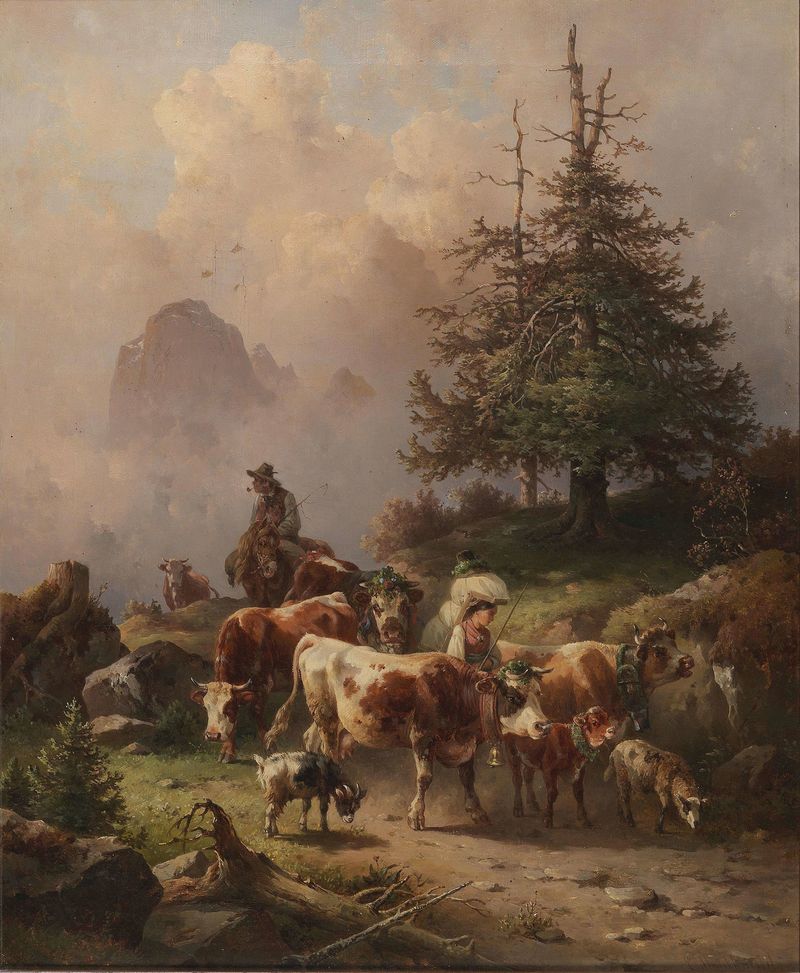
Driving the Cattle down from the Alpine Pastures
Edmund Mahlknecht

Beim Hufschmied
Edmund Mahlknecht
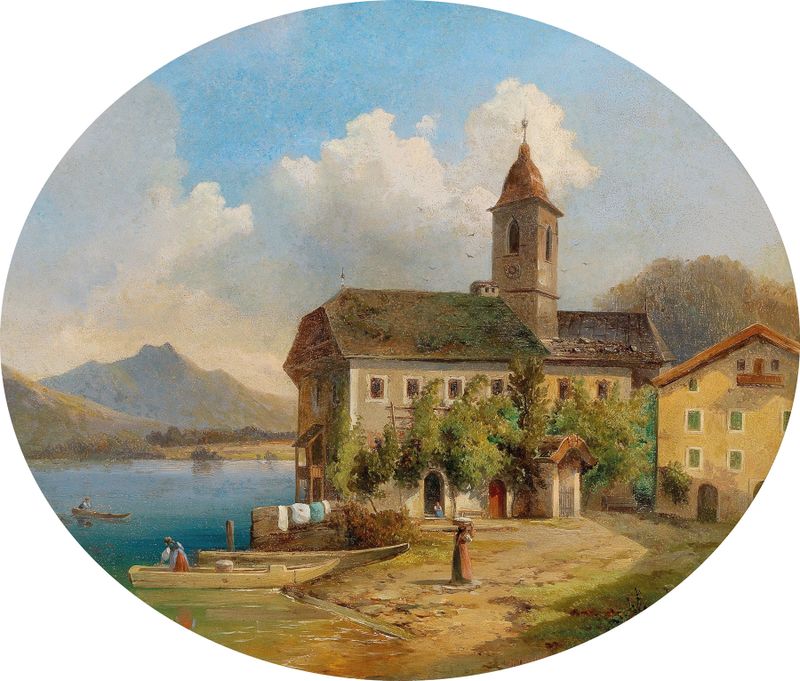
View of St. Wolfgang
Edmund Mahlknecht

Kühe mit Hirten an der Furt
Edmund Mahlknecht

Herd of animals with shepherdess on the lakeside
Edmund Mahlknecht





