Die Königsgräber von Meroe — History & Facts
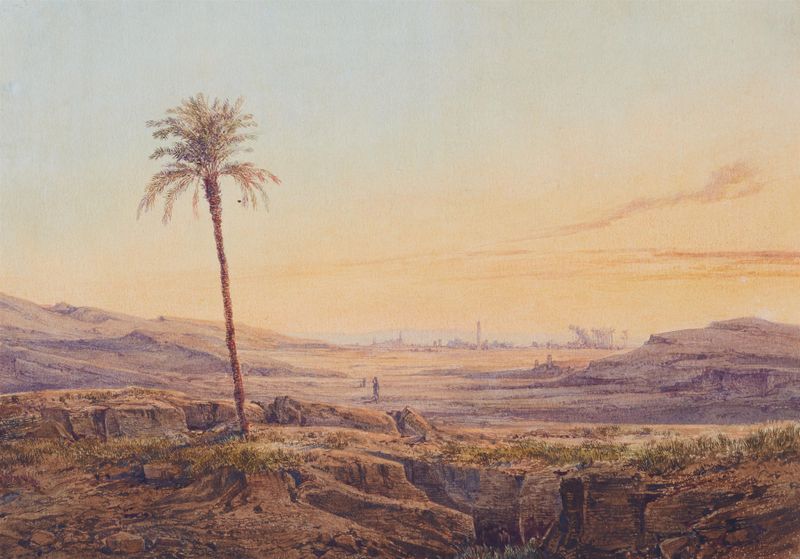
In the midst of sweeping sands and ancient echoes, what destinies lie buried beneath the surface, waiting to be uncovered? The shimmering allure of the past draws us into realms where time is both a friend and a foe. Focus first on the intricate details that adorn the pyramids, rising majestically against a backdrop of ochre and azure. The delicate brushstrokes outline the burial mounds with precision, while the sun-kissed hues of gold and sepia create an ethereal glow. Notice how the stark contrast between light and shadow carves out the landscape, suggesting both glory and decay; the elegant structures stand as monuments to a civilization that once thrived, but whose whispers have long been silenced. Within this timeless canvas, a tension emerges between beauty and transience.
The pyramids, symbols of power and legacy, evoke the ambition of kings while hinting at the inevitable decline of all human endeavors. The sandy foreground, seemingly mundane, serves as a reminder of nature’s relentless reclamation. In these layered meanings, we perceive a striking duality: the triumph of architectural mastery entwined with the sorrow of forgotten stories. This work emerged from the mind of an artist ensconced in the early 19th century, a period marked by a fascination with the exotic and the historical.
Georgi created this piece during a time when European interest in ancient cultures surged, particularly those of Africa and the Middle East. The artist’s explorations reflected broader currents in art that sought to bridge the old and the new, merging aesthetics with a quest for knowledge in a rapidly changing world.