
Die Rosalienkapelle im Freihause — History & Facts
Could a single brushstroke hold eternity? In Anni Schedlbauer’s Die Rosalienkapelle im Freihause, the essence of destiny weaves through every stroke, inviting contemplation on the passage of time and the permanence of faith. Look closely at the interplay of light and shadow across the chapel’s façade. The delicate brushwork captures intricate details, drawing your gaze first to the ornate entrance, where sunlight bathes the doorway in a warm glow. Notice how soft, muted colors evoke a sense of reverence, while the textured walls seem to whisper stories of devotion and history.
The composition balances the sacred and the mundane, inviting viewers into a space that is both ethereal and grounded. Within this serene depiction lie deeper themes of transience versus constancy. The subtle contrast between the bright highlights and deep shadows reflects not only the physical structure but also the emotional weight of faith amidst life’s uncertainties. Each element—a flickering candle, a solitary flower—echoes the fragility of existence, juxtaposed against the enduring nature of spiritual beliefs.
Destiny hangs in the air, inviting viewers to reflect on their own paths. In 1913, Schedlbauer painted this piece during a period marked by a resurgence of interest in spirituality and symbolism in art. Living in Germany, she was part of a burgeoning movement that sought to explore deeper emotional truths through imagery, while the world around her was poised on the brink of dramatic change. This work stands as a testament to her artistic journey and the cultural currents that shaped her vision.
More Artworks by Anni Schedlbauer
Browse all →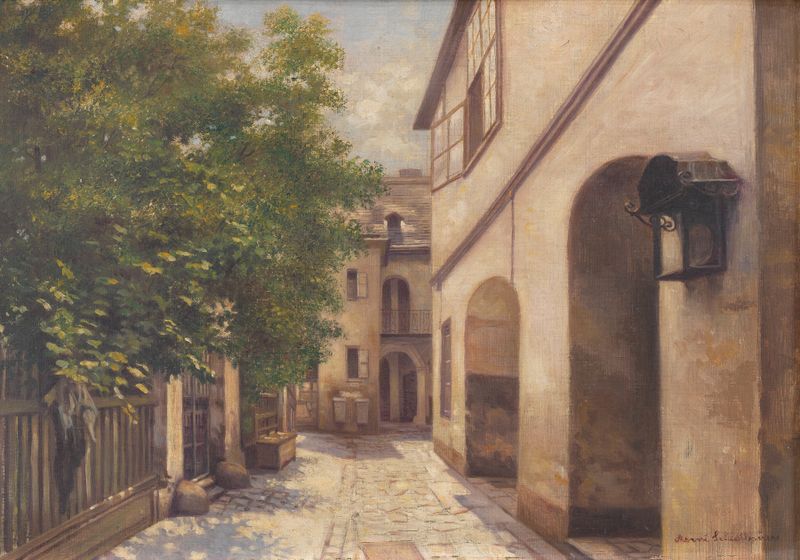
More Architecture Art
Browse all →
The statue of Liberty
Frédéric Auguste Bartholdi

View of Houses in Delft, Known as ‘The Little Street’
Johannes Vermeer

View of Houses in Delft, Known as ‘The Little Street’
Johannes Vermeer

The Cathedral in Rouen. The portal, Grey Weather
Claude Monet

The yellow house
Vincent van Gogh

The Church in Auvers-sur-Oise, View from the Chevet
Vincent van Gogh