Die Schelde bei Wettern (Belgien) — History & Facts
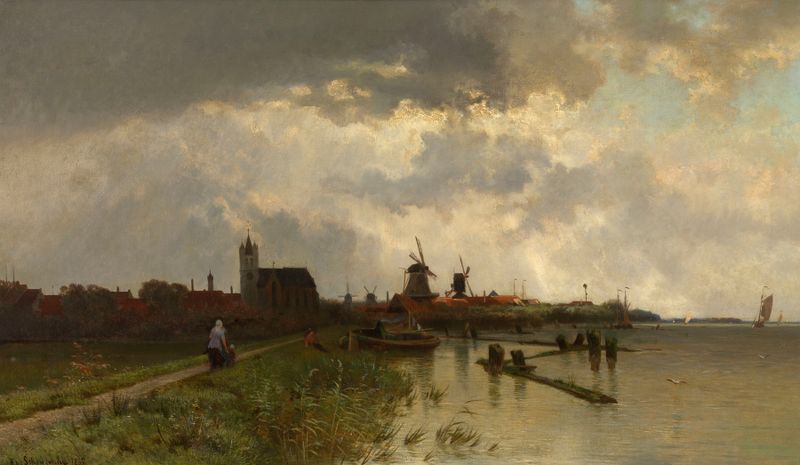
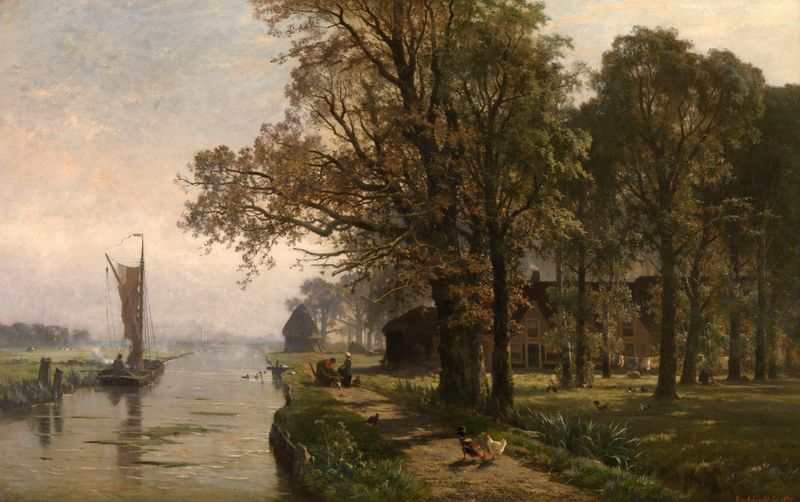
What if beauty was never meant to be finished? A stillness pervades the canvas, inviting the viewer to linger in the silence of idyllic contours and muted tones. Look to the left, where a soft blend of greens and blues evokes the languid waters of the Scheldt River. The artist’s brushwork creates a gentle ripple effect, capturing the essence of tranquil movement. Notice how the light falls upon the delicate foliage, revealing an interplay of shadow and illumination that breathes life into the landscape.
The horizon, an exquisite gradient of warm hues, hints at the approaching twilight, further enhancing the serene atmosphere. In this tranquil scene, hidden emotions stir beneath the surface; the juxtaposition of vibrant nature and the stillness of water evokes a sense of introspection. The subtle reflection of the trees in the water suggests duality—what is real and what is merely an echo of reality. This tension between presence and absence, movement and stillness, speaks to the universal longing for connection in a world often marked by chaos. Painted in 1880, this work emerged during a transformative era for Edmond de Schampheleer, as he was deeply influenced by Impressionism yet sought to maintain a distinctive voice in landscape painting.
Living in Belgium, he was part of a burgeoning movement that celebrated the natural world, reflecting both personal and broader societal shifts. This period marked a significant exploration of light and color, allowing the artist to blend realism with a more emotive interpretation of his surroundings.