Die Schleuse — History & Facts
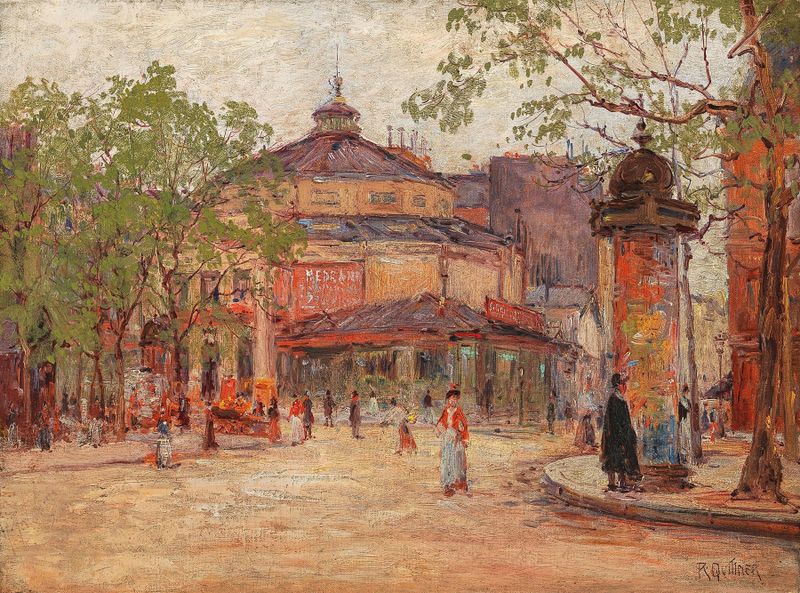
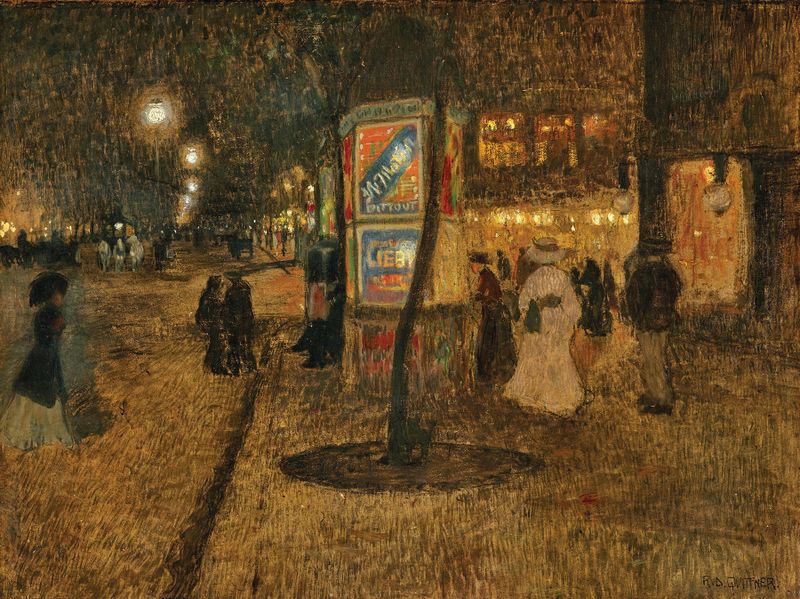
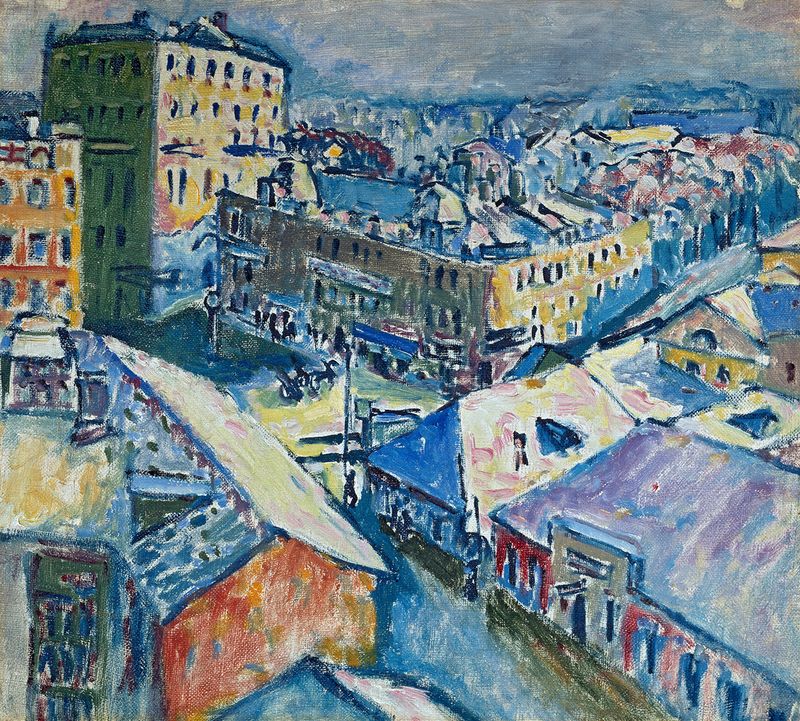
In art, chaos can often be a reflection of faith—an unsteady journey toward something greater. This transformative experience is beautifully captured in the work of Rudolf Quittner. Look closely at the swirling patterns of color that dominate the canvas, drawing your eye into a whirlwind of movement and fluidity. Notice how the ochre and deep blues intertwine, creating an atmosphere both turbulent and serene.
The composition feels alive, as if the colors are engaged in a dialogue, each stroke deliberate yet spontaneous, embodying the tension between chaos and harmony. Beneath the surface, the painting suggests a struggle for understanding—a visual representation of faith amidst uncertainty. The contrasting tones invite contemplation of the emotional weight carried by the figures obscured within the tumult. Quittner positions light and dark in a way that reinforces this tension; shadows linger, hinting at doubt, while bursts of brightness suggest hope and clarity, illuminating the need for belief in the unseen. Created in 1908, this piece emerged during a time when Quittner was exploring the boundaries of expressionism.
Working in Germany, he was deeply influenced by the shifting artistic landscape, marked by a push toward abstraction and emotional depth. This period was not only a personal exploration for Quittner, but also part of a larger movement that sought to convey the complexities of human experience through art.