
Dorfstraße im Winter — History & Facts
Could beauty survive in a century of chaos? In the midst of uncertainty, Dorfstraße im Winter emerges as a quiet testament to the resilience of nature and the human spirit. Look to the left at the gentle curve of the snow-covered path, winding its way through the scene. The soft palette of whites, blues, and muted earth tones invites the viewer into a serene winter landscape. Notice how the delicate brushstrokes evoke the texture of the snow, creating a tangible hush that hangs in the air.
The trees, their branches draped in winter’s embrace, stand sentinel, while the subtle play of light reveals the contours of the village, imbuing each house with a sense of warmth amidst the cold. Beneath this tranquil surface lies a tension between solitude and community. The absence of figures suggests introspection, inviting the viewer to ponder their own place within this winter tableau. The contrast between the stillness of the landscape and the looming shadows of the trees may symbolize the passage of time, hinting at the transient nature of life.
Each element—snow, light, and shadow—interlaces to whisper the story of destiny, forging a connection between beauty and the inevitability of change. Anton Doll painted this work during a period of burgeoning interest in realism, likely in the late 19th century, when artists increasingly sought to capture the essence of everyday life and landscapes. Living in Germany, he was part of a movement that celebrated the natural world while navigating the complexities and upheavals of a rapidly modernizing society. This backdrop deepened the significance of his portrayal of winter, where beauty becomes a beacon of hope amid change.
More Artworks by Anton Doll
Browse all →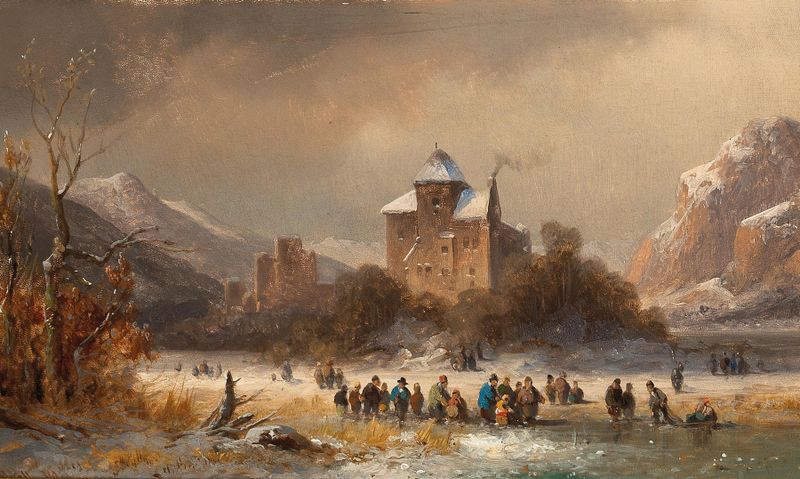
Ruine Kropfsberg und Schloß Lichtwert
Anton Doll
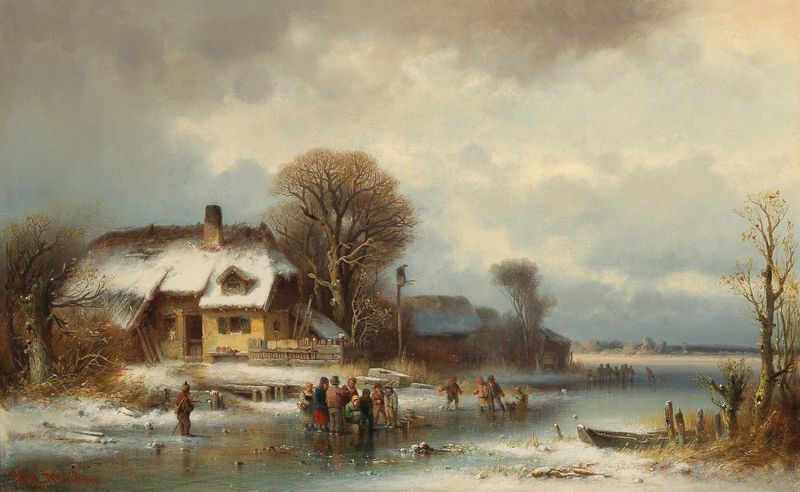
Winter Landscape With Ice Skaters
Anton Doll

Winter Amusements With A Town In The Background
Anton Doll
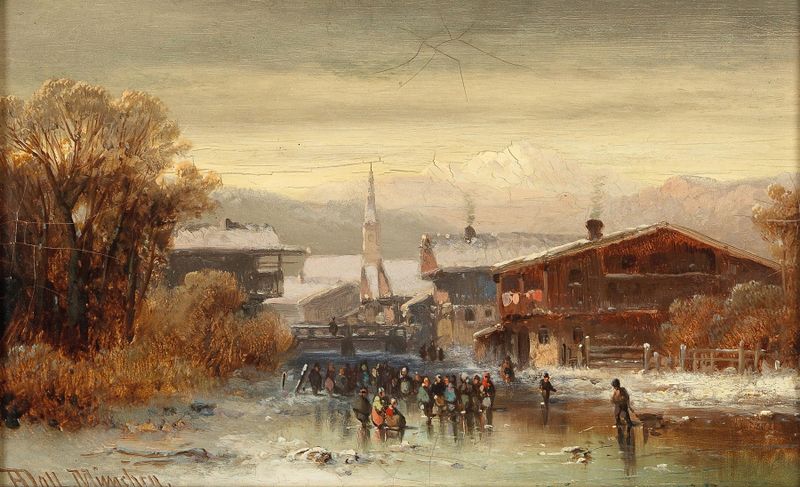
View Of Hardt On Lake Constance
Anton Doll
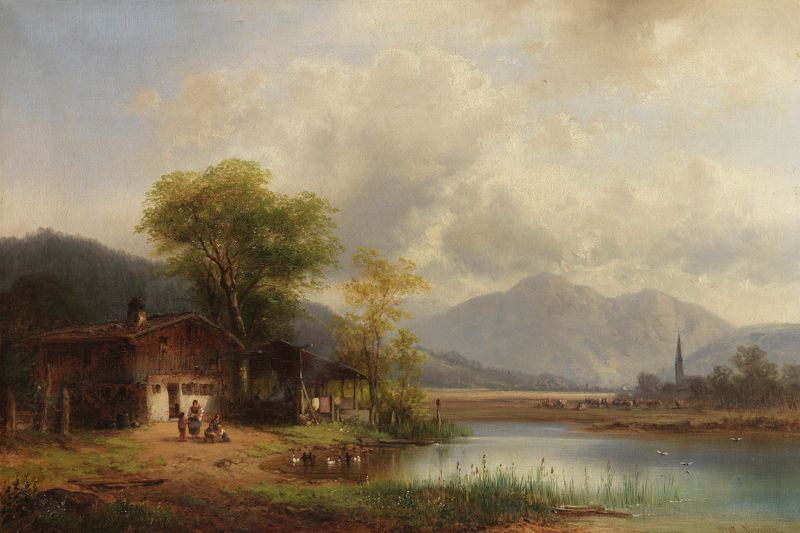
Oberbayerische Landschaft mit Waschhaus am See
Anton Doll
Sommerliche Landschaft mit Bauern bei der Flachsverarbeitung
Anton Doll

Wintervergnügen
Anton Doll
Dorfansicht in der Abenddämmerung
Anton Doll

Winterliche Flusslandschaft mit figürlicher Staffage
Anton Doll
Wintervergnügen
Anton Doll





