Dredger at Twickenham, September 22, 1874 — History & Facts
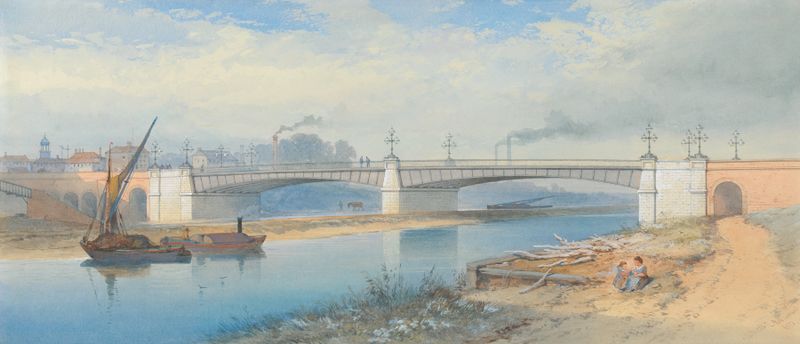
In its stillness, it holds the echoes of labor and the quiet resilience of nature. Here, on a tranquil September day, silence envelops the scene, punctuated only by the soft sounds of water and the distant rustle of leaves. The world exists in a moment of pause, demanding the viewer to listen carefully. Look to the left at the central figure, the dredger, who seems to merge with the landscape, his presence both striking and humble.
The muted palette evokes a sense of calm, with soft browns and greens intermingling to create an atmosphere of serene productivity. Notice how the light dapples through the trees, casting gentle shadows across the water and illuminating the subtle textures of the dredger’s work. This composition draws the eye towards the interplay of man and nature, where the horizon blurs, symbolizing the harmony of industry within the natural world. Yet beneath this tranquil exterior lies a deeper narrative.
The dredger’s solitary figure embodies the toil of labor; he is both a part of the land and an agent of change, highlighting the tension between nature’s beauty and the encroachment of human activity. The stillness of the water reflects not only the surrounding environment but also the weight of contemplation, inviting viewers to ponder the implications of progress and preservation. The juxtaposition of earthy hues against the reflective water speaks to the duality of existence—work and rest, noise and silence. In 1874, the artist created this piece while living in England, during a time of industrial expansion and societal change.
Rowbotham was noted for his depictions of rivers and landscapes, capturing both their serenity and the human endeavors within them. This era saw artists grappling with the consequences of modernity, striving to find balance between the natural and the manmade, a theme that resonates profoundly in this work.