Drifting — History & Facts
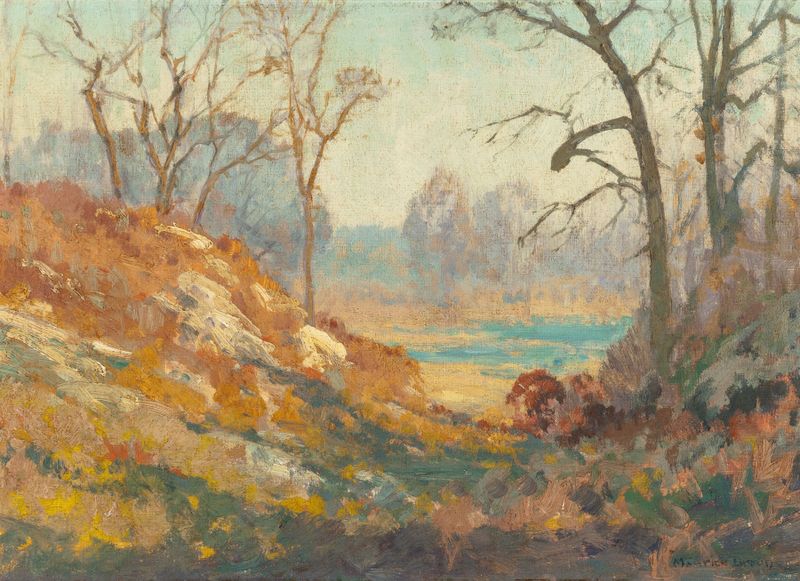
In the dance of light across the canvas, the artist captures the essence of fleeting moments, inviting reflection on the interplay between memory and emotion. Look to the center, where the strokes converge to create a soft light breaking through the clouds. The palette of muted blues and gentle yellows evokes a sense of tranquility, while dappled sunlight plays upon the surface, suggesting movement and life. Notice how the texture of the brushwork adds depth, inviting the viewer to explore the layers beneath the surface, where light and shadow intertwine in a delicate embrace. The juxtaposition of warm and cool hues creates a palpable tension, suggesting the duality of human experience—serenity amidst chaos, joy interwoven with nostalgia.
In the background, the subtle hints of contours and forms speak to the vastness of nature, standing in stark contrast to the intimate play of light. Each detail—perhaps a hint of a path or the rustle of foliage—draws you deeper into a world where reality blurs with memory. During the time this piece was created, Braun was deeply influenced by the California landscape, exploring the effects of light on natural forms. Working in the early 20th century, he was part of the American Impressionist movement, which sought to convey the beauty of the everyday world.
This moment in art history was marked by a desire to capture the ephemeral qualities of light, making Drifting a testament to both the artist’s vision and the shifting paradigms of the era.