Durlacher Wald — History & Facts
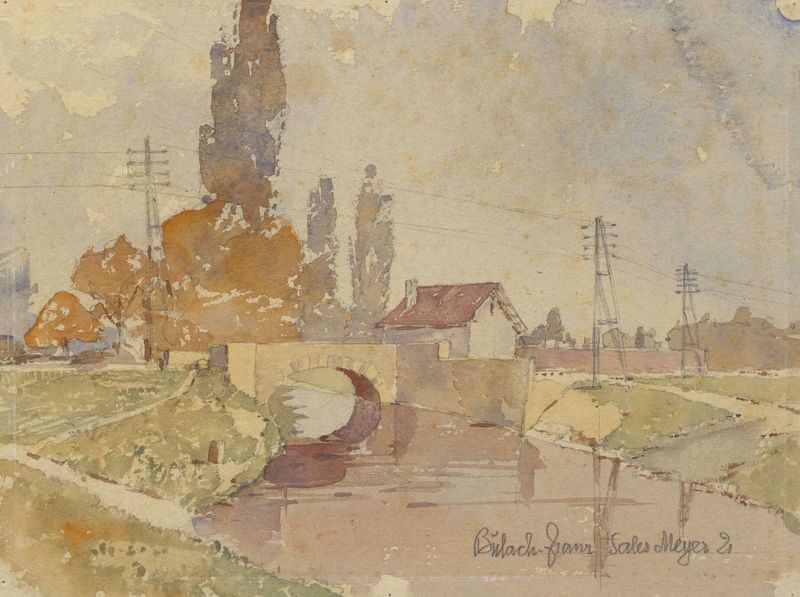
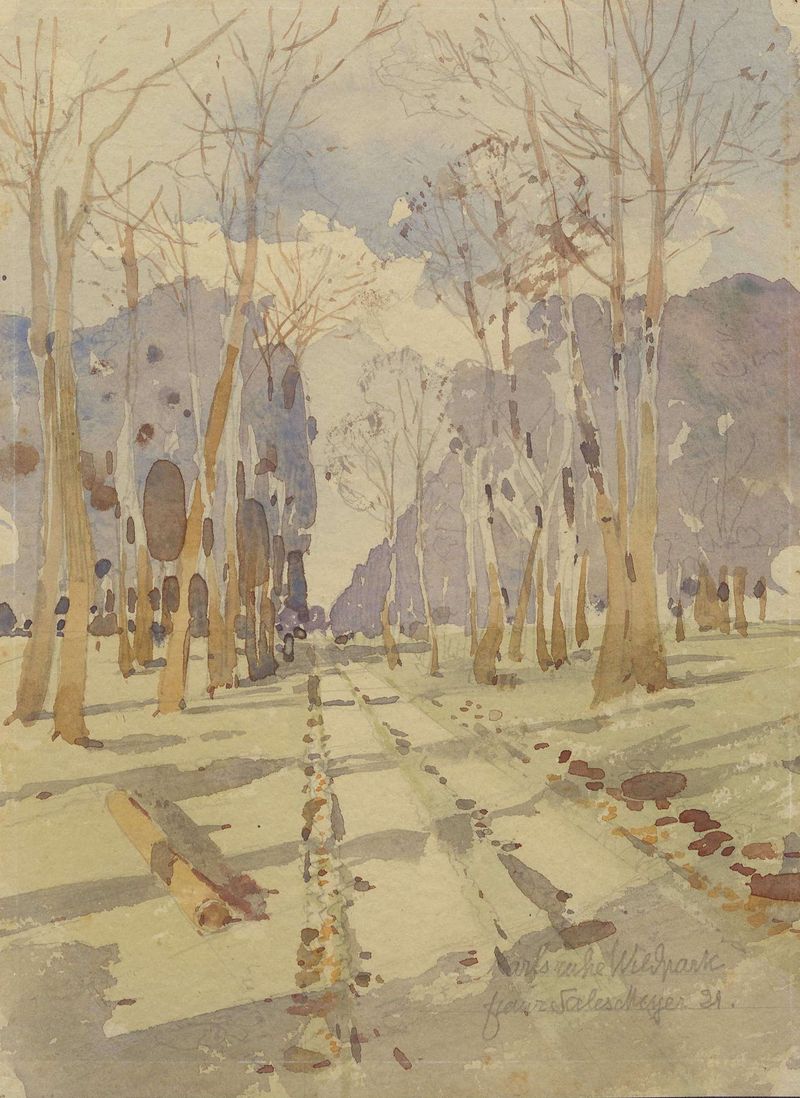
Could beauty survive in a century of chaos? The question lingers, inviting us to explore the depths of serenity amidst turmoil. Look to the left at the delicate interplay of greens and browns, where a tranquil forest unfolds like a gentle breath. The artist employs soft brush strokes that create a sense of movement in the leaves, as if the trees themselves whisper secrets to one another. Notice how the dappled sunlight filters through the canopy, illuminating patches of undergrowth and casting a warm glow on the earthy tones.
This balance of light and shadow evokes a harmonious tranquility, inviting viewers to linger in the calm embrace of nature. Delve deeper into the contrasts present in the scene: the stillness of the forest against the chaotic backdrop of the early 20th century. The lush foliage seems to symbolize resilience, a quiet defiance against the disorder outside its borders. The horizon, though subtly hinted at, suggests a world beyond — one fraught with uncertainty and disruption.
In this moment of transformation, we witness nature's ability to endure, holding onto its beauty even as civilization teeters on the brink. In 1921, Franz Sales Meyer painted this work during a time of great upheaval following World War I. Living in Germany, he experienced the profound shifts in society and the art world, where traditional styles were challenged by new movements. Amidst this transformative period, his focus on serene landscapes reflects a yearning for peace, capturing a moment where beauty and nature can offer solace amidst chaos.