Dutch Plantation in Bengal — History & Facts
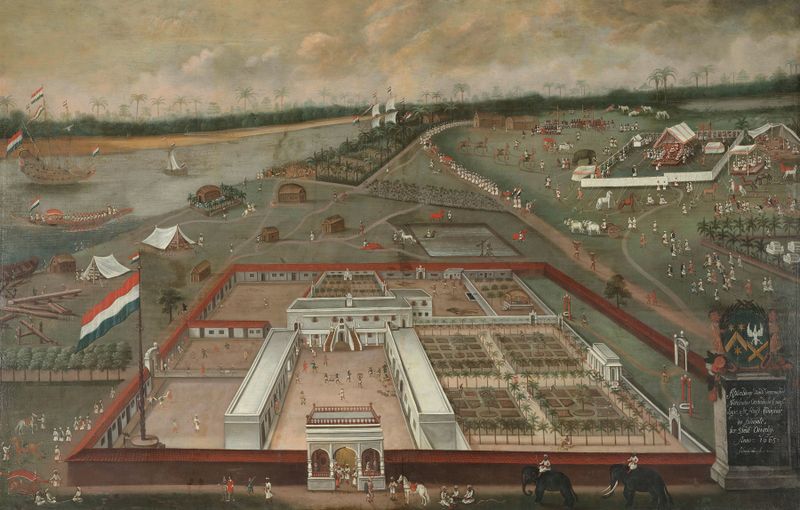
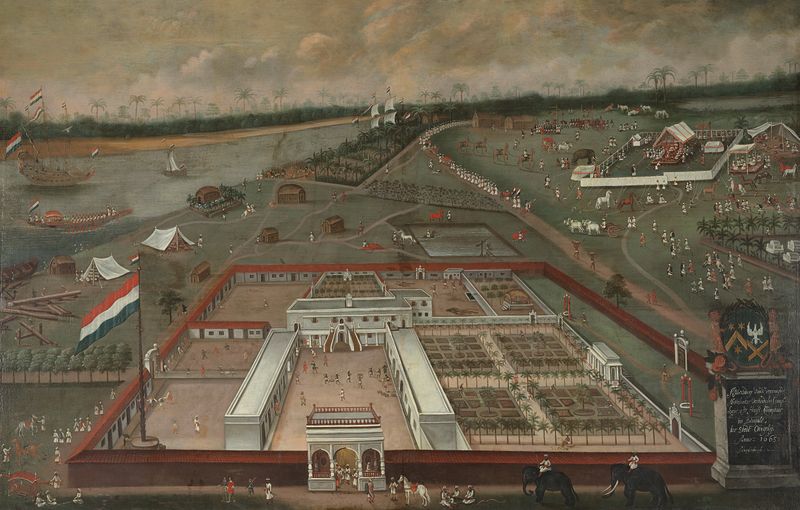
Who listens when art speaks of silence? In Dutch Plantation in Bengal, a haunting stillness envelops the scene, suggesting a story of loss beneath the surface of pastoral beauty. Look closely at the lush greenery that envelops the plantation; the vivid greens contrast sharply with the muted, somber tones of the figures. Notice how the light filters through the canopy, casting dappled shadows across the laborers' faces, revealing a spectrum of emotions ranging from hope to despair. The careful arrangement draws the eye to the central plantation structure, a symbol of colonial ambition, while the workers toil around it, their postures and expressions hinting at unspoken burdens and personal grief. Beneath the idyllic facade lies a deeper contemplation of colonialism and its implications.
The juxtaposition of the vibrant landscape with the weary figures evokes a sense of unease, as if the earth itself mourns the exploitation it has endured. The artist captures an emotional tension in the contrast between the richness of the terrain and the muted sorrow of the laborers, inviting reflection on the cost of progress and the quiet grief that accompanies it. In 1665, the artist painted this work during a time of increasing Dutch colonial expansion in Asia. Living in a period marked by prosperity for the Netherlands, van Schuylenburgh witnessed the complexities of trade and power dynamics while capturing the nuances of human experience.
This painting serves as a testament to both the allure of the New World and the silent suffering that often accompanies such ventures.