Dyrnæs enge — History & Facts
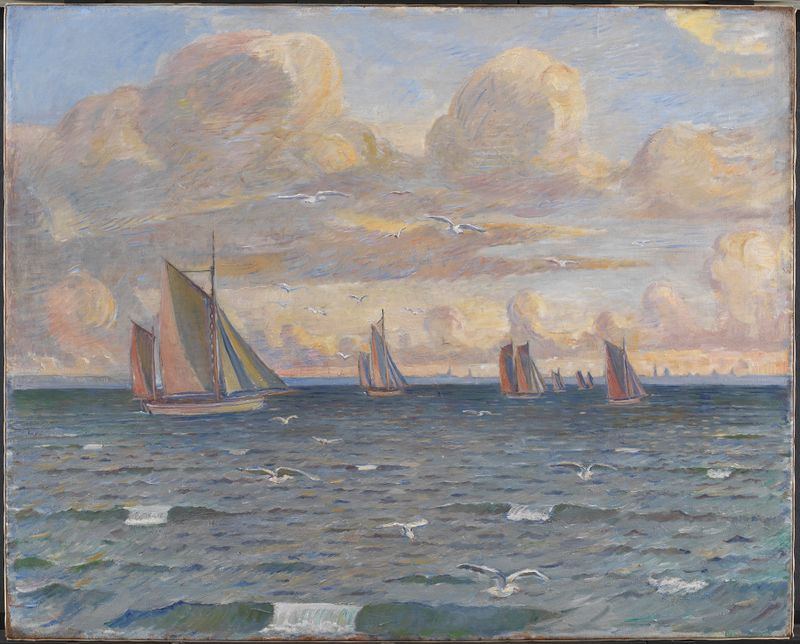
Can paint confess what words never could? In Dyrnæs enge, vibrant strokes whisper the secrets of obsession, revealing an inner turmoil that transcends mere representation. Look to the center where a lush expanse of grass unfurls under a gentle sky, the hues of green and blue merging seamlessly. Notice how the artist uses a delicate interplay of light and shadow to define the contours of the landscape, inviting the viewer to step into its serene embrace. The soft brushwork creates a sense of movement, as if the wind itself dances through the blades of grass, while the distant horizon, painted in fading pastels, evokes a sense of longing and contemplation. With every brushstroke, an emotional tension unfolds; the verdant landscape suggests both tranquility and an unspoken yearning.
Small details—a solitary tree bending slightly, an ethereal cloud cluster—imbue the scene with a sense of isolation, mirroring the artist’s own struggle with obsession and identity. Each element reflects not just the beauty of nature, but an introspective journey, capturing the essence of both longing and solace found in the familiar. Poul Simon Christiansen created this work in 1914 while living in Denmark, a time marked by the burgeoning modernist movement in art. As Europe stood on the brink of war, the artist found solace in his surroundings, reflecting the tension of a transforming world.
This landscape serves as a quiet yet poignant commentary on the complexities of human emotion amidst external chaos, capturing both the beauty and fragility of the moment.