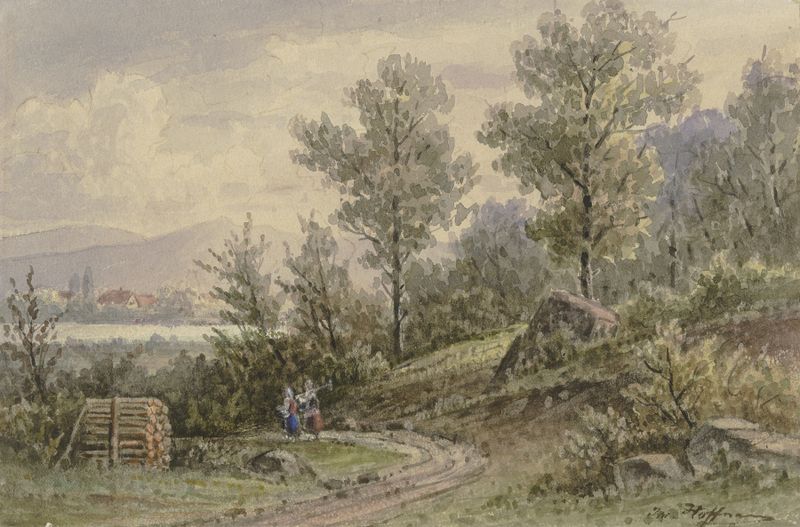
Edge of the forest with stream — History & Facts
In the quiet embrace of nature, a moment of rebirth unfolds, as if the very essence of life is captured at the edge of the forest. Look to the left at the delicate interplay of greens and browns, where the trees stand sentinel, their trunks textured and sturdy against the soft caress of sunlight filtering through the canopy. Notice how the stream winds gracefully through the composition, its gleaming surface mirroring the lush foliage above. The palette is rich yet understated, inviting the viewer to linger in each stroke and revel in the tranquility of this secluded realm. Yet, beneath the serene surface lies a tension between the stability of the trees and the flowing water.
The steadfastness of the forest suggests permanence, while the stream signifies change, a constant reminder of life’s transience. Small details, like the gentle ripple of water and the flicker of light on the leaves, reveal a narrative of cyclical rebirth—life renewing itself in every season, every moment. In the early 1880s, Hoffmann was immersed in the vibrant artistic circles of Europe, drawing inspiration from the natural world around him. During this period, the shift towards impressionism was reshaping perceptions of light and color, encouraging artists to explore the beauty and complexity of landscapes.
This work, painted in this transformative time, captures both the stillness and the ephemeral nature of life, reflecting Hoffmann's quest to express the profound connections between man and nature.