Edinburgh from Blackhall — History & Facts
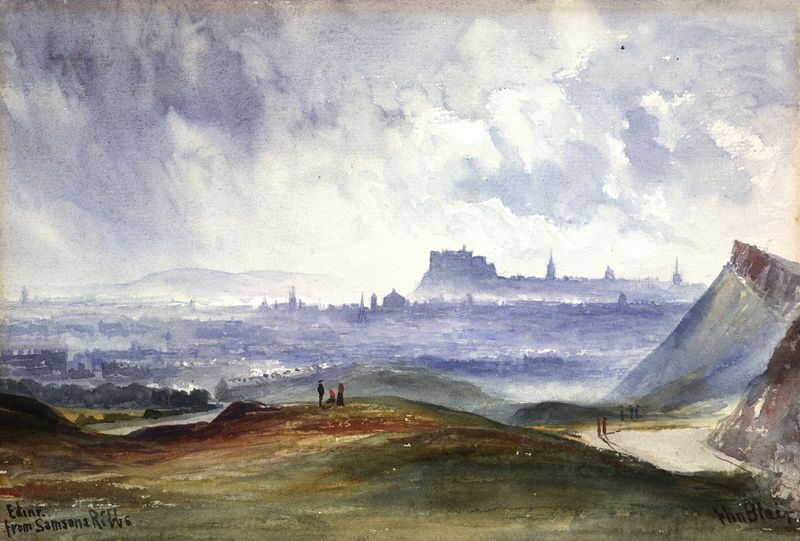
Can paint confess what words never could? In Edinburgh from Blackhall, the landscape spills forth with a destiny written in the tapestry of the city, where each stroke unfolds a silent narrative of life and history. Focus on the sweeping panorama that draws your eyes across the canvas. The viewer's gaze is first captured by the soft hues of twilight washing over the rooftops, creating a gentle embrace of color that whispers of evening’s arrival. Notice how the delicate strokes of the brush delineate the contours of the hills, each ridge a silent witness to the countless stories etched into the fabric of time.
The interplay of light and shadow accentuates the architectural details below, subtly guiding the viewer into the heart of this beloved city. Hidden within the layers of this urban vista are contrasts that evoke a deep emotional resonance. The serene skyline offers a stark juxtaposition to the tumult of human existence that unfolds below. Each house is a vessel of stories, dreams, and destinies intertwined, illuminating the tension between permanence and transience.
The ethereal quality of the light suggests hope, while the encroaching night hints at the inevitable passage of time, a poignant reminder of life's fleeting nature. In 1920, during a period of rebuilding after the devastation of World War I, the artist painted this view from a vantage point in Blackhall, reflecting his own internal journey and the broader cultural revival in post-war Scotland. At this time, the art world was grappling with modernism's emergence, and Blair, influenced by both impressionism and local narrative, sought to encapsulate the essence of his surroundings through a lens of tranquility and reflection, marking a significant moment in his artistic evolution.