
Ehemalige Hauskapelle der Riedhöfe — History & Facts
Could beauty survive in a century of chaos? Look to the foreground of Ehemalige Hauskapelle der Riedhöfe, where shadows blend with muted hues, delicately framed by the gentle arch of the chapel door. The soft, golden light spills in from the left, illuminating weathered stones that whisper tales of devotion and despair. Notice how the artist’s meticulous attention to texture reveals the chapel's timeworn façade, while subtle strokes capture the flicker of candlelight’s warmth against the cold stone, creating a poignant balance between the sacred and the decayed. As you explore the depth of the chapel, observe the intricate details within the stained glass — fragments of color that catch the light yet remain encased in somber outlines.
Each window, a window to the past, reflects the tension of a bygone era, hinting at the violence that has marred its sanctuary. The juxtaposition of vibrant hues within the glass against the somberness of the surrounding stone evokes an emotional conflict, suggesting that amidst turmoil, fragments of beauty still cling desperately to existence. Created in 1804, this work reflects Johann Friedrich Morgenstern’s engagement with the tumultuous era of the Napoleonic Wars, where religious and cultural sanctuaries faced threat and destruction. Painted in a Germany grappling with political instability, Morgenstern captured the delicate balance of beauty amidst chaos.
His focus on architectural forms and their weathered states speaks to a longing for stability and reverence in a deeply changing world, positioning the chapel as a symbol of resilience.
More Artworks by Johann Friedrich Morgenstern
Browse all →
Hof Rebstock inmitten des weiten Wiesengeländes an der Mainzer Landstraße bei Frankfurt am Main
Johann Friedrich Morgenstern

Hirten auf Felsen, eine Hirtin liegt vor einem Esel, vorn Kühe, Schafe und Ziegen, im Hintergrund Ruinen mit einer Brücke
Johann Friedrich Morgenstern
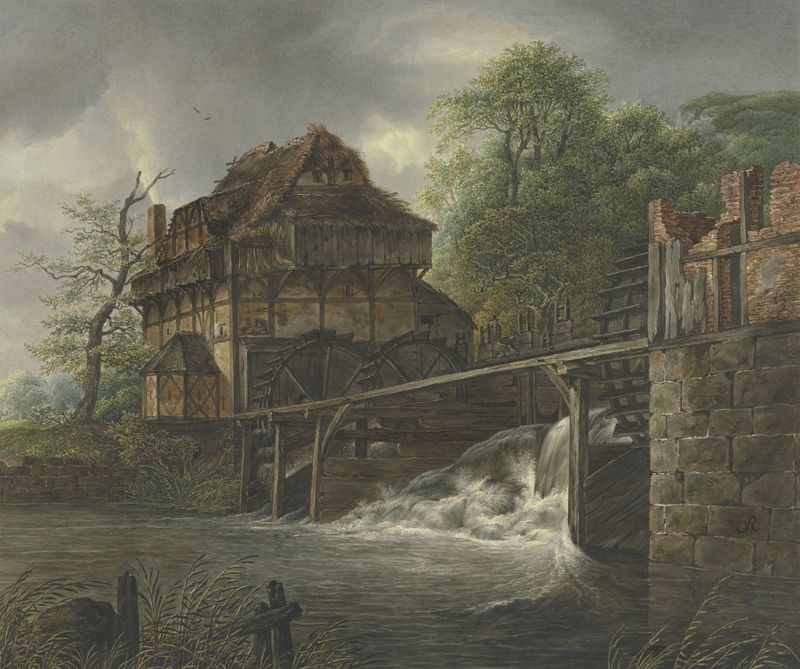
Water mill
Johann Friedrich Morgenstern
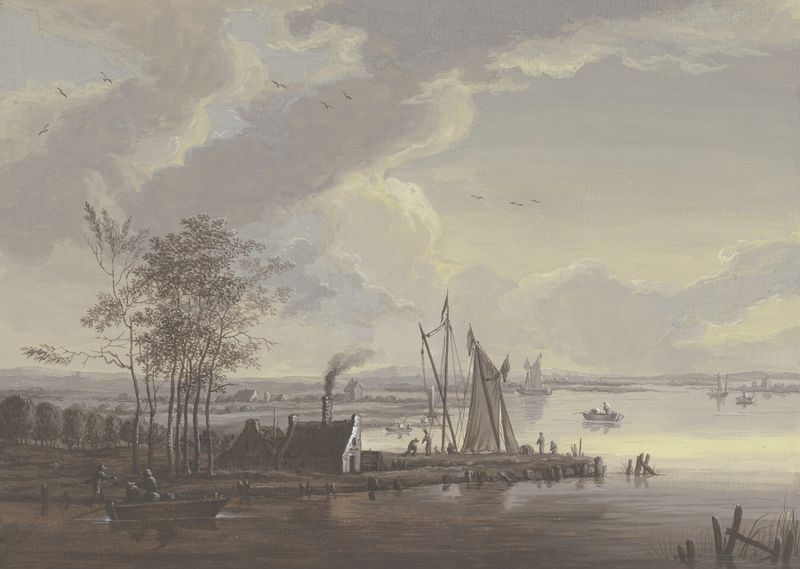
River scenery in the summer
Johann Friedrich Morgenstern
More Architecture Art
Browse all →
The statue of Liberty
Frédéric Auguste Bartholdi

View of Houses in Delft, Known as ‘The Little Street’
Johannes Vermeer

View of Houses in Delft, Known as ‘The Little Street’
Johannes Vermeer

The Cathedral in Rouen. The portal, Grey Weather
Claude Monet

The yellow house
Vincent van Gogh

The Church in Auvers-sur-Oise, View from the Chevet
Vincent van Gogh