
Eingang in die Kasematten des Heidelberger Schloss — History & Facts
What if beauty was never meant to be finished? In the depths of a forgotten world, the rough-hewn walls echo with the whispers of time, urging us to contemplate the nature of existence itself. Look closely at the shadowy archways on the left; the subtle gradation of light underscores the textured stone, revealing decades of history etched into each craggy surface. The artist employs a muted palette, with earthy browns and greys that invite the viewer to wander through this dim passageway, while the flickers of light create a mesmerizing interplay of shadow and form. Each stroke feels deliberate, drawing us deeper into the mysterious depths of the castle. Yet the interplay of light and darkness speaks volumes about transience and permanence.
The worn stones seem to cradle untold stories, suggesting a tension between decay and endurance. Notice the faint streaks of moss and lichen that cling stubbornly to the walls, contrasting with the coldness of the stone—a reminder of nature’s quiet reclamation. This juxtaposition encapsulates the emotional weight of the scene, hinting at a beauty that is forever in flux, forever unfinished. In 1840, Georg Philipp Schmitt painted this evocative scene while living in Heidelberg, a city steeped in history and romanticism.
The Romantic movement was flourishing in Europe, emphasizing emotion and individual experience, and Schmitt was deeply influenced by this ethos. His work reflects not only the architectural grandeur of his surroundings but also a broader cultural longing for connection to the past amidst the rapidly changing world of industrialization.
More Artworks by Georg Philipp Schmitt
Browse all →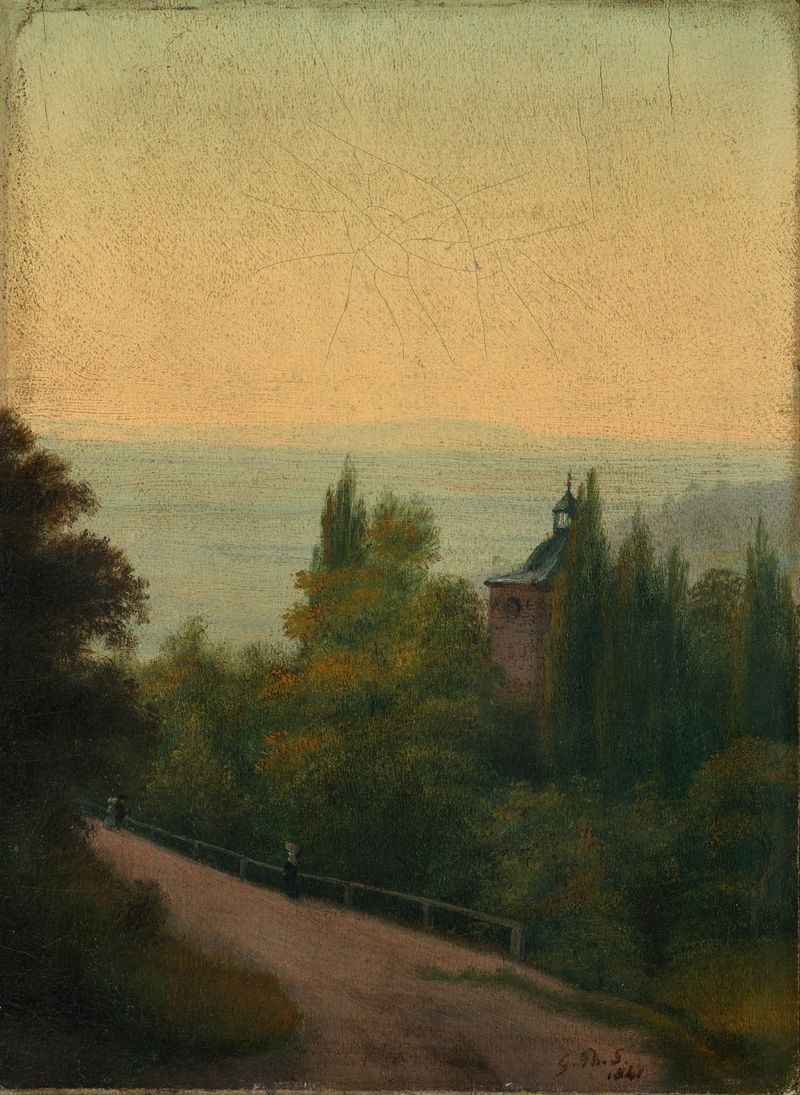
More Architecture Art
Browse all →
The statue of Liberty
Frédéric Auguste Bartholdi

View of Houses in Delft, Known as ‘The Little Street’
Johannes Vermeer

View of Houses in Delft, Known as ‘The Little Street’
Johannes Vermeer

The Cathedral in Rouen. The portal, Grey Weather
Claude Monet

The yellow house
Vincent van Gogh

The Church in Auvers-sur-Oise, View from the Chevet
Vincent van Gogh