El Juego de Barras (The Game of Bars) — History & Facts
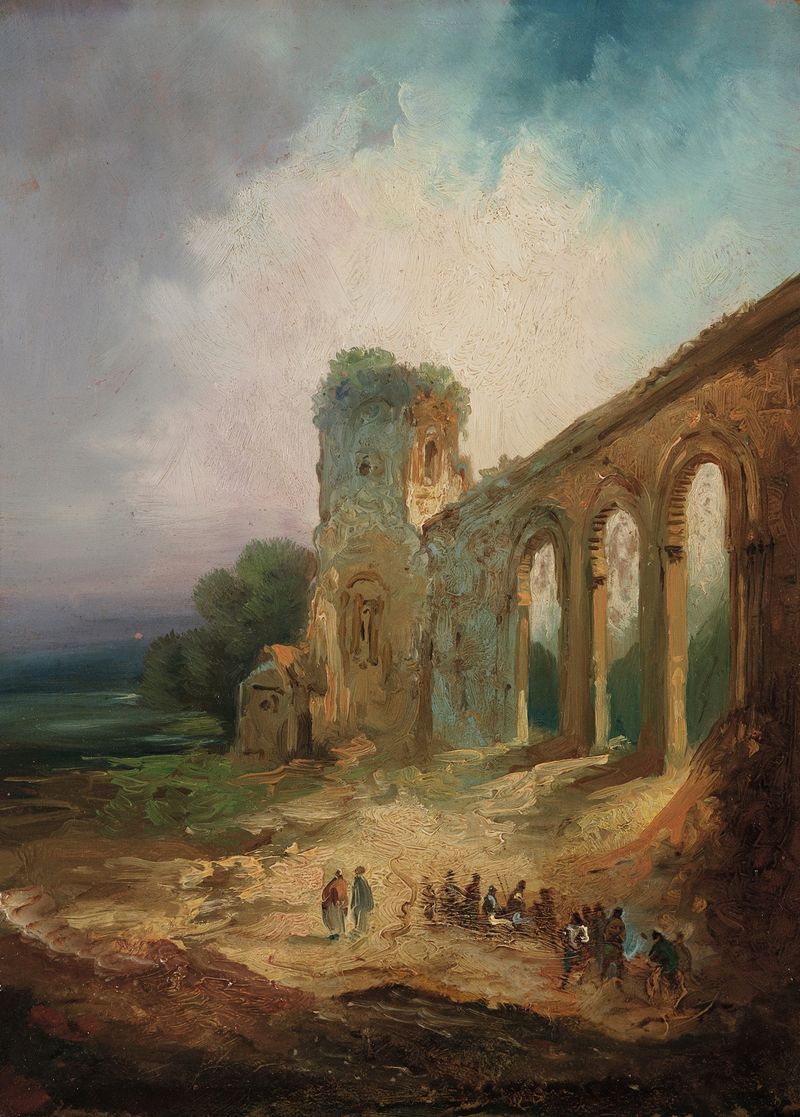
What if beauty was never meant to be finished? In El Juego de Barras, movement blurs the lines of finality, inviting viewers into an endless dance of life, dynamic and fluid. Look to the center of the canvas, where figures emerge from a vibrant swirl of color and motion. Notice how the artist employs bold strokes and lively brushwork to create a sense of energy that pulses through the scene. The use of warm, earthy tones contrasts with the cooler hues that surround them, drawing our eyes to the dynamic interactions within the group.
Each individual appears caught in a moment of spirited engagement, suggesting a spontaneous celebration that transcends mere representation. Beneath the surface lies a tension between joy and chaos, encapsulated in the figures' lively expressions and gestures. The juxtaposition of tightly grouped bodies against the expansive, open background evokes a sense of both community and freedom. This duality speaks to the complexities of human connection, where the bounds of individual experience meld into a collective pulse.
The movement captured here becomes a metaphor for the interplay of relationships, illustrating how beauty is born from the very act of being in motion. Eugenio Lucas Velázquez painted El Juego de Barras in 1860, during a period of profound change in Spain. At this time, the country was grappling with social and political upheaval. Velázquez, influenced by the Romantic movement, sought to convey emotion and spontaneity in his works.
This painting reflects his commitment to capturing the essence of life in motion, resonating with a society eager to embrace new artistic expressions amidst its turbulent realities.