Evening Glow — History & Facts
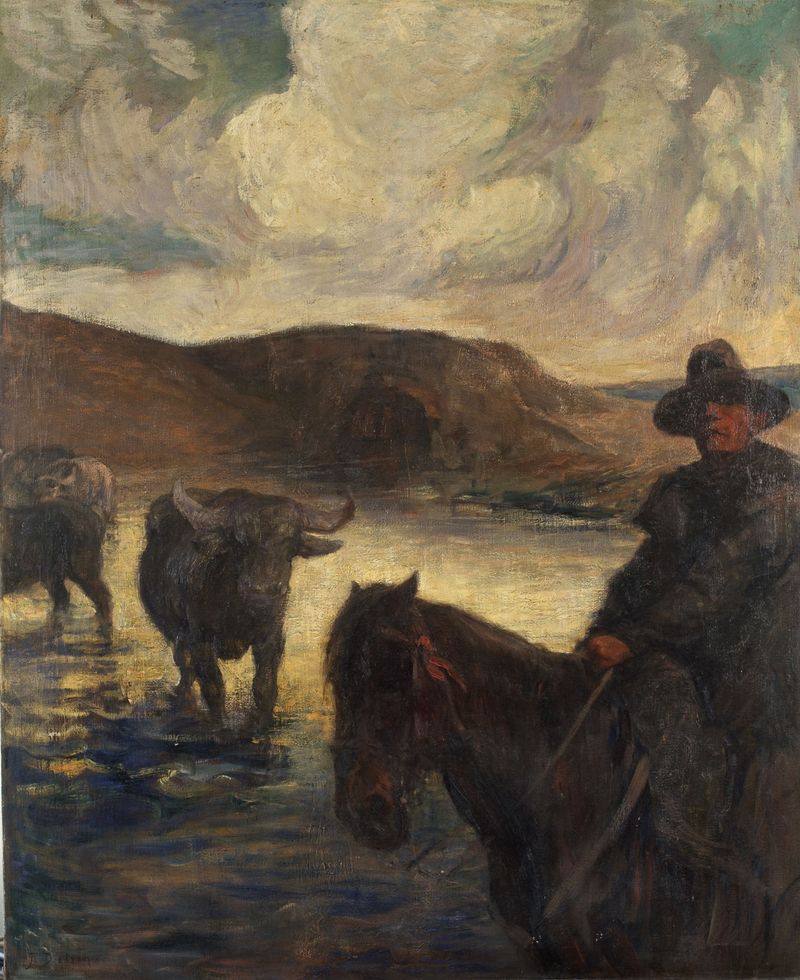
Who listens when art speaks of silence? In Evening Glow, the profound stillness captured invites viewers to reflect on the void that lingers beyond the edges of perception. Look to the center of the canvas, where warm amber hues blend seamlessly into soft coral tones. The subtle gradation of colors evokes the fading light of dusk, drawing your eye to the luminous glow that seems to radiate from within. The gentle brushwork suggests an ethereal quality, making the transition from day to night feel almost sacred.
Shadows gather in the corners, creating a sense of intimacy as you explore the interplay of light and dark. Amidst the vibrant colors, a haunting tension resides—a delicate balance between presence and absence. The painting whispers of fleeting moments, as if time itself has halted, inviting contemplation. There’s a palpable sense of yearning within the void, hinting at unspoken stories and emotions that linger just beneath the surface.
This contrast between warmth and emptiness evokes a bittersweet nostalgia, encouraging viewers to confront their own experiences of loss and longing. Created in the early 20th century, Delvin painted Evening Glow during a period marked by rapid changes in the art world, shifting from traditional expressions to more modernist explorations. Living in France, he was influenced by Impressionism and the evolving aesthetics of his time, navigating the complexities of both personal and collective histories. This painting reflects his engagement with light and color, capturing the essence of a moment that resonates with both beauty and desolation.