Evening in the mountains — History & Facts
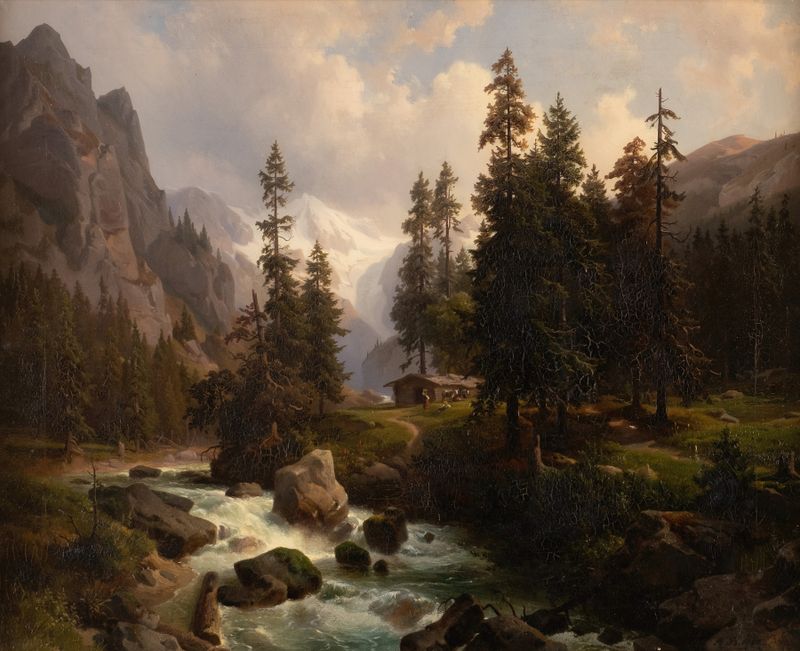
What if beauty was never meant to be finished? Each stroke of the brush in the realm of nature carries an unspoken revelation, echoing the whispers of the landscape into eternity. Look to the left where the mountains rise majestically, their rugged peaks softened by the warm embrace of the evening glow. The artist masterfully juxtaposes deep greens and blues with the gentle oranges and auburns of the setting sun, creating a harmonious gradient that captures the transition from day to night. Notice how the light dances upon the surface of the foreground lake, reflecting the surrounding beauty while hinting at depths beyond the visible.
This interplay of light and shadow invites contemplation, drawing the viewer deeper into the serene wilderness. Beneath the tranquil surface lies a contrast of tension and harmony. The towering mountains serve as silent guardians, evoking a sense of both isolation and protection, while the delicate ripples in the water suggest the fleeting nature of time. The painting captures not just a moment but an experience, igniting a longing for connection with the natural world.
Each brushstroke tells a story of stillness in a dynamic environment, a reminder that beauty is often a transient gift. August Behrendsen created Evening in the Mountains in 1843, during a period of growing romanticism in art that emphasized nature and individual emotion. Living in Germany, he was influenced by the dramatic landscapes that surrounded him, which were becoming increasingly popular among European artists. This work reflects both his personal exploration of the sublime and the broader movement of artists seeking to express their inner worlds through the majesty of nature.