Evening, Merri Creek — History & Facts
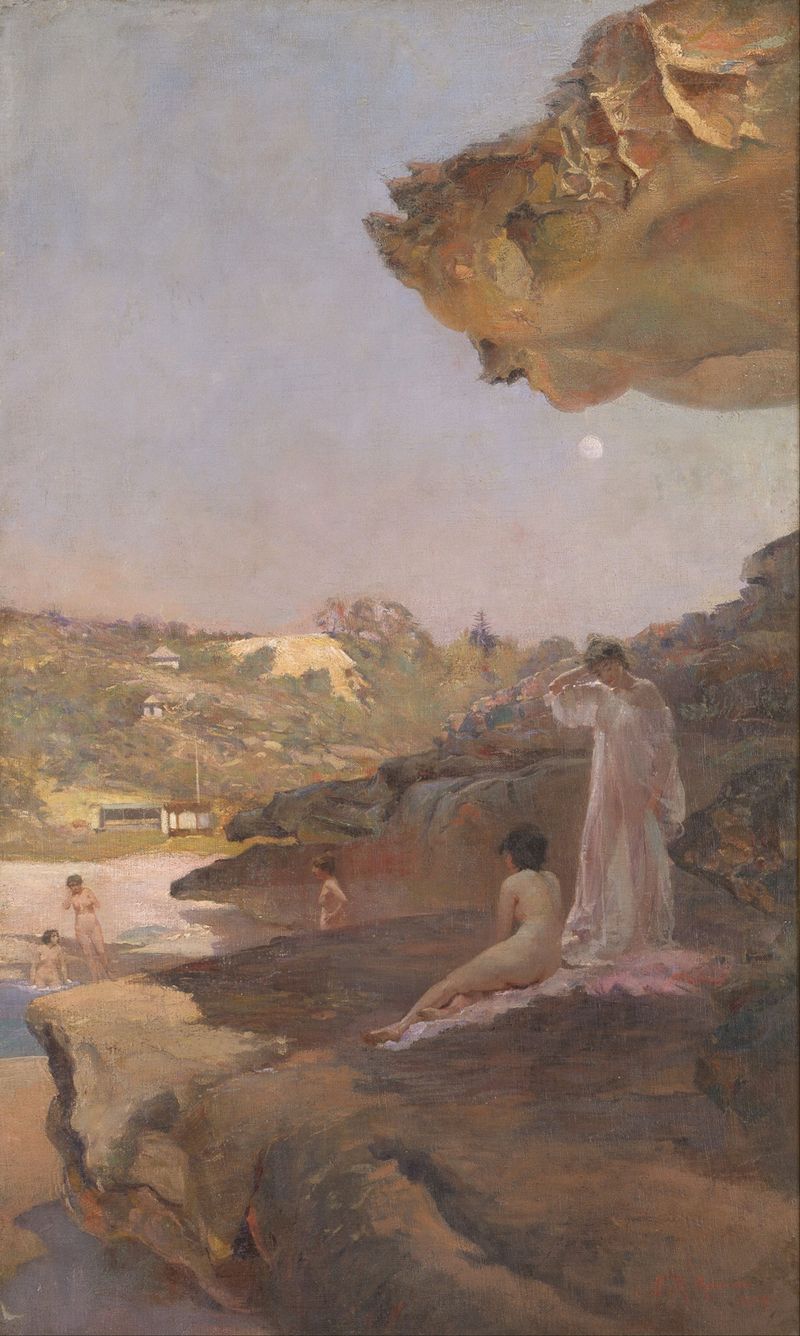
Could a single brushstroke hold eternity? In Evening, Merri Creek, the chaos of nature is tamed by the artist's masterful hand, inviting us to ponder the interplay between fleeting moments and the permanence of art. Focus first on the lush greenery that envelops the canvas, where every stroke conveys the vibrancy of the Australian landscape. The rich, deep greens blend seamlessly into muted ochres, capturing the essence of twilight. Notice how the light dances across the surface of the water, reflecting both the fading daylight and the deepening shadows of the surrounding trees.
It’s a delicate balance of chaos and calm, where the fluidity of the river contrasts with the steadfastness of the banks. Within this composition lies an emotional depth that transcends its tranquil surface. The winding creek suggests both movement and stillness, reflecting the unpredictable flow of life itself, while the distant mountains loom, embodying the weight of time. The contrast between the bright, illuminated patches of water and the encroaching darkness evokes a feeling of introspection, urging the viewer to contemplate the transient nature of each day. In 1882, Julian Ashton created this piece amid burgeoning artistic movements in Australia, seeking to capture the unique beauty of his homeland.
As a prominent figure in the Heidelberg School, Ashton was deeply influenced by Impressionism, striving to evoke emotional resonance through landscapes. This period marked a turning point in Australian art, as artists sought to define an identity distinct from European traditions, and Evening, Merri Creek serves as a testament to that evolving vision.