
Excavated Temple of Gyrshe [Gerf Hussein], Nubia. — History & Facts
Can paint confess what words never could? In the hands of a master like David Roberts, color becomes an unspoken language, revealing the soul of a place and its history. Look closely at the earthy palette that saturates the canvas; shades of ochre and sienna dominate, evoking the sunbaked terrain of Nubia. The ancient temple rises majestically in the center, its weathered stones a testament to time. Notice how the light gently bathes the structure and the surrounding landscape, highlighting the intricate carvings and the craggy cliffs that seem to cradle history itself.
Your eyes are drawn to the contrast between the temple’s grandeur and the barren surroundings, a visual dialogue that speaks volumes about civilization and decay. Delving deeper, the juxtaposition of vitality and desolation emerges. The soft, warm hues convey a sense of nostalgia for a past that still whispers in the ruins, while the stark shadows suggest the relentless passage of time. The temple stands resilient yet fragile, encapsulating the tension between human achievement and nature’s inexorable reclaiming force.
Each brushstroke resonates with the echoes of prayers once uttered within its walls, imbuing the painting with a spirit that transcends mere depiction. Created between 1846 and 1849, this work marks a pivotal moment in Roberts' career as he explored the landscapes of the East. At this time, the world was captivated by the allure of Egypt and Nubia, spurred on by the burgeoning field of archaeology. Roberts, traveling through these regions, sought to capture their essence and grandeur amidst growing Western interest in ancient cultures, contributing to a broader understanding of art's role in documenting history.
More Artworks by David Roberts
Browse all →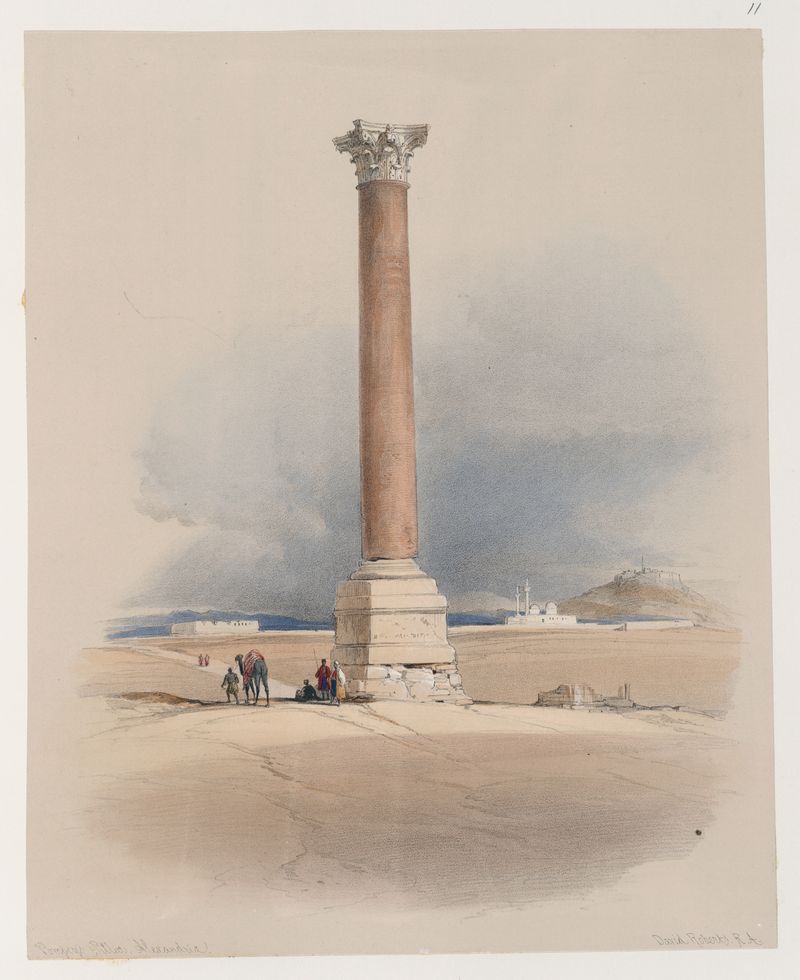
Pompey’s Pillar, Alexandria.
David Roberts

Approach to the Fortress of Ibrim.
David Roberts

Karnac [Karnak]. Nov. 29th, 1838.
David Roberts
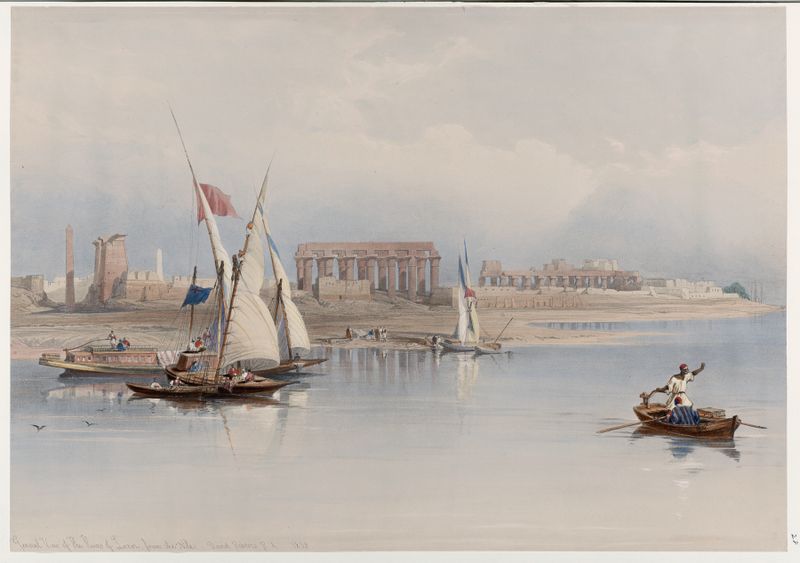
General view of the ruins of Luxor, from the Nile. 1838.
David Roberts

Statues of Memnon at Thebes, during the inundation.
David Roberts

Entrance to the tombs of the kings of Thebes. Bab-el-Malouk [Bîbân al-Mulûk].
David Roberts

The Fortress of the Alhambra, Granada
David Roberts
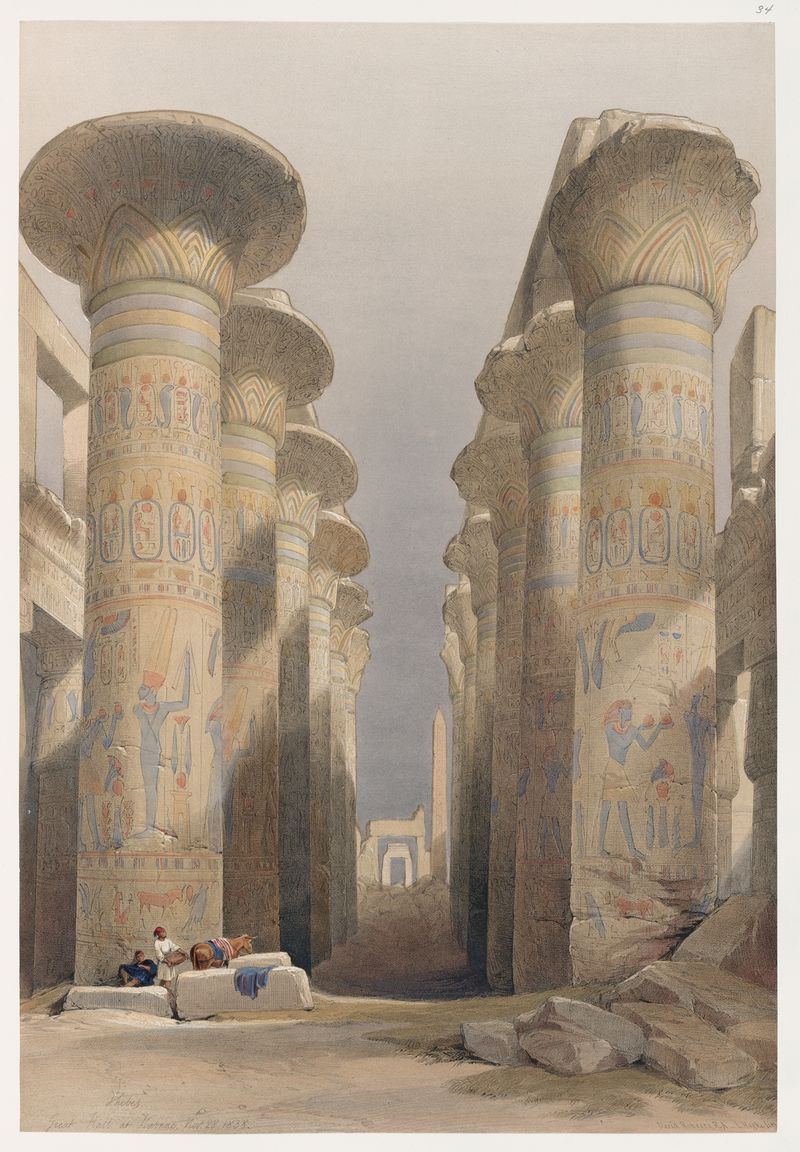
Thebes. Great Hall at Karnak. Nov. 28, 1838.
David Roberts
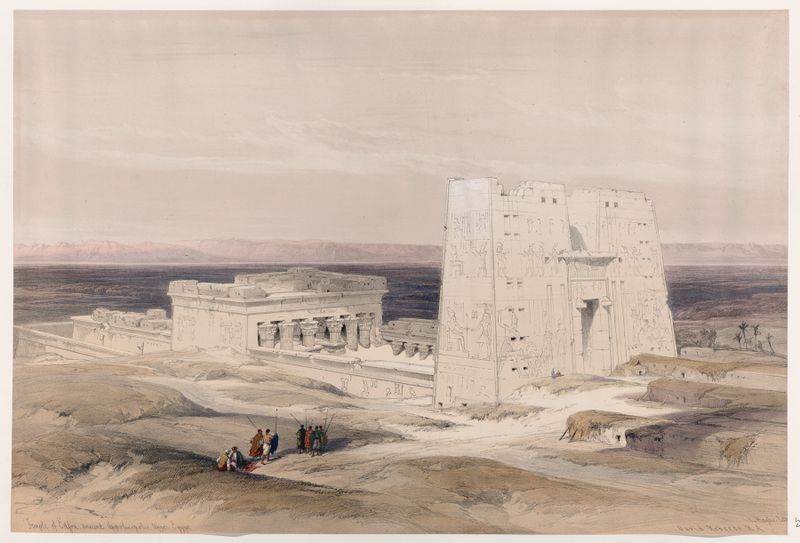
Temple of Edfou [Idfû], ancient Appolinopolis, Upper Egypt.
David Roberts

Temple of Kalabshee [Kalabsha, Kalâbishah], Nubia. Nov. 1838.
David Roberts
More Architecture Art
Browse all →
The statue of Liberty
Frédéric Auguste Bartholdi

View of Houses in Delft, Known as ‘The Little Street’
Johannes Vermeer

View of Houses in Delft, Known as ‘The Little Street’
Johannes Vermeer

The Cathedral in Rouen. The portal, Grey Weather
Claude Monet

The yellow house
Vincent van Gogh

The Church in Auvers-sur-Oise, View from the Chevet
Vincent van Gogh