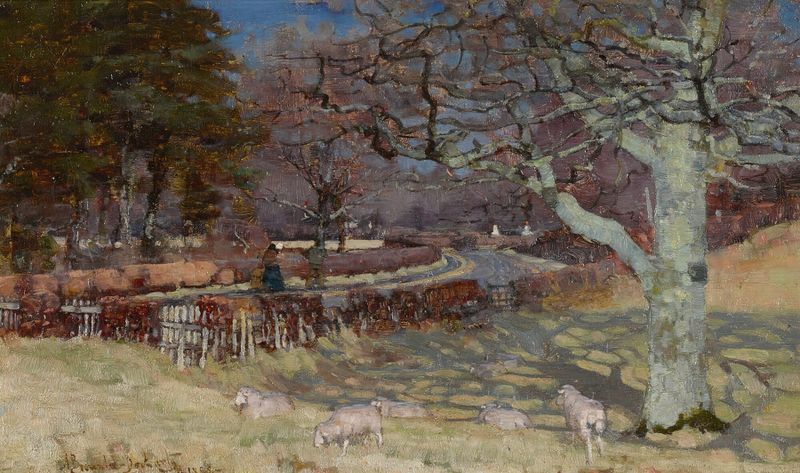
Extensive View of a Highland Loch — History & Facts
What secret hides in the quiet of the canvas? The tranquil beauty of a highland loch masks a deeper, more turbulent reality, echoing the violence of nature and the human experience intertwined within it. Look to the foreground, where the still, glassy surface reflects the rugged mountains looming in the distance. Notice how the artist employs a palette of deep greens and blues, contrasting the delicate light that breaks across the water's surface at dawn. This juxtaposition invites the viewer to delve into a serene moment, yet suggests an underlying tension evident in the jagged peaks that seem to pierce the sky with a sense of foreboding. The play of light and shadow serves not only to enhance the landscape's beauty but also hints at a duality within the scene.
Each ripple on the loch's surface suggests whispers of past trauma, while the ominous clouds above imply the ever-present threat of storms. The meticulous brushwork captures not just the geography, but the emotional weight of solitude and reflection, pointing to the violence of nature and the internal struggles faced by those who dwell in its wild embrace. In the 19th century, the artist created this work during a period of profound change in both his personal life and the broader world of art. Working in Scotland, Docharty sought to establish his identity amidst the Romantic movement, which idealized nature while simultaneously wrestling with themes of conflict and emotion.
The choice to depict such a serene yet conflicted landscape reflects his exploration of both external beauty and internal strife, revealing layers of meaning beneath the surface.