
Falstaff at Herne’s Oak — History & Facts
In Falstaff at Herne’s Oak, the colors are rich and vibrant, with deep greens and browns dominating the scene. The painting features Falstaff, a character from Shakespeare’s plays, surrounded by a mystical forest. The oak tree, central to the composition, is gnarled and ancient, adding to the enchanting atmosphere.
Light filters through the leaves, creating a dappled effect on the forest floor. The painting is executed in oil on canvas, a common medium for the Romantic period. Smirke’s technique showcases detailed brushwork, particularly in the foliage and textures of the tree bark. The figures are rendered with a sense of movement, suggesting a narrative moment.
The overall composition draws the viewer's eye toward Falstaff, emphasizing his importance in the scene. Robert Smirke was known for his historical and literary subjects, often drawing inspiration from Shakespeare. Falstaff at Herne’s Oak captures a moment from The Merry Wives of Windsor, where Falstaff encounters the ghost of Herne. This work reflects the Romantic fascination with nature and the supernatural.
Interestingly, Smirke was also an architect and contributed to the design of several notable buildings in London.
More Artworks by Robert Smirke

Hotspur and the Plotters at Bangor
Robert Smirke
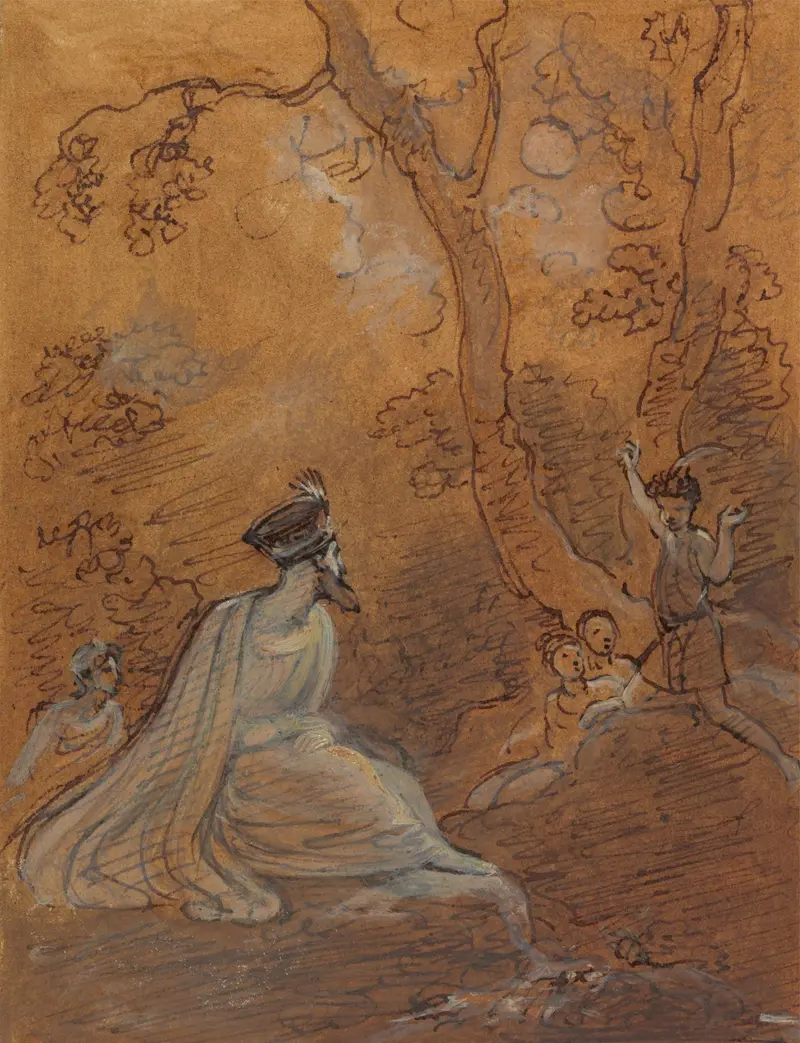
Oberon and Puck
Robert Smirke
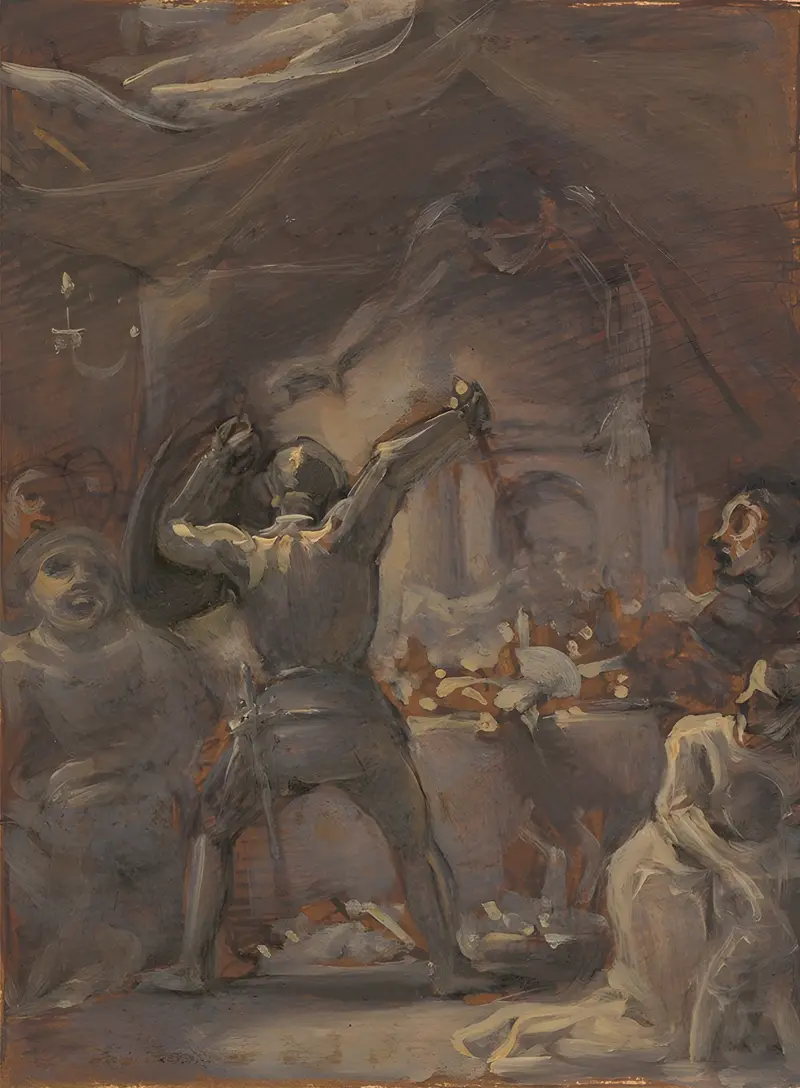
One from Illustrations to Shakespeare
Robert Smirke
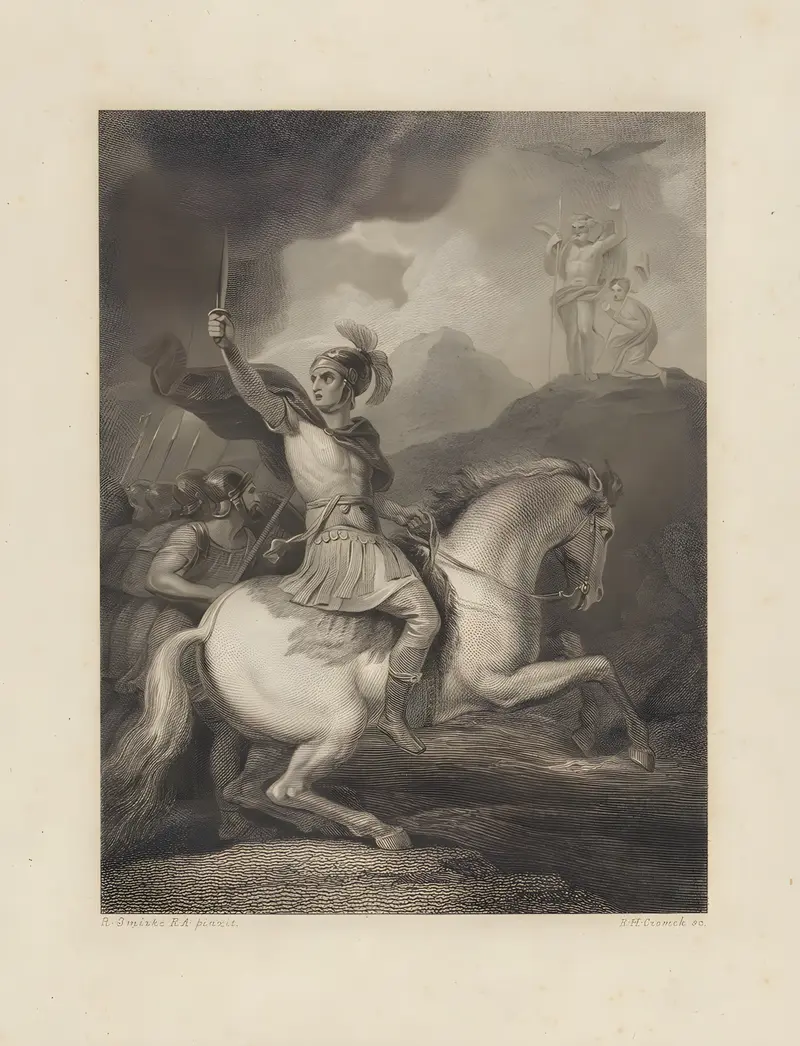
Cesar Passing the Rubicon
Robert Smirke
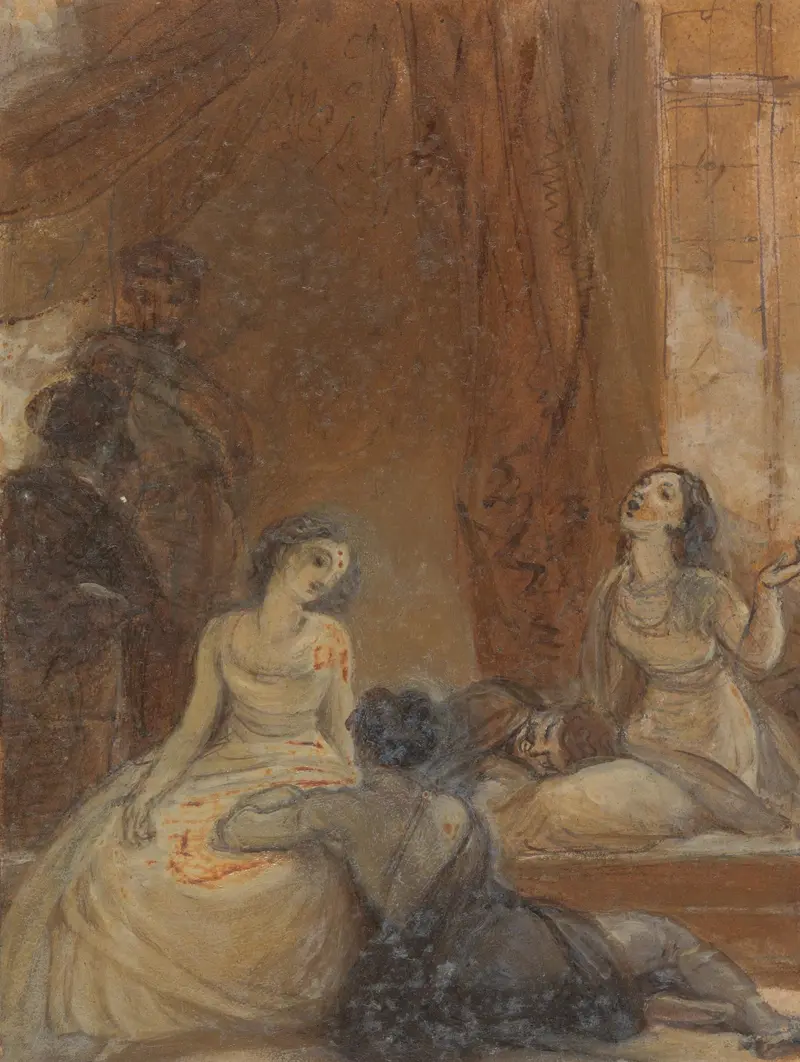
Lady Mortimer’s Welsh Song
Robert Smirke
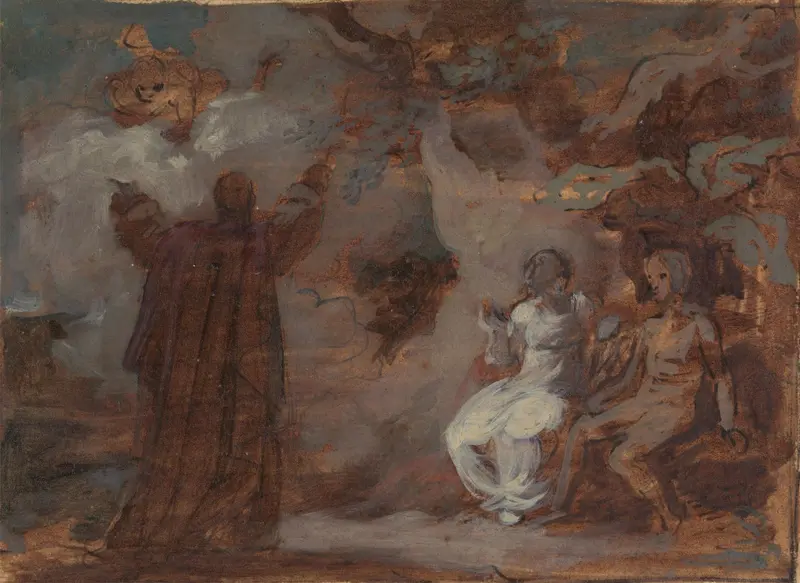
Prospero Conjuring a Masque for Ferdinand and Miranda
Robert Smirke

Master William Page and Sir Hugh Evans
Robert Smirke
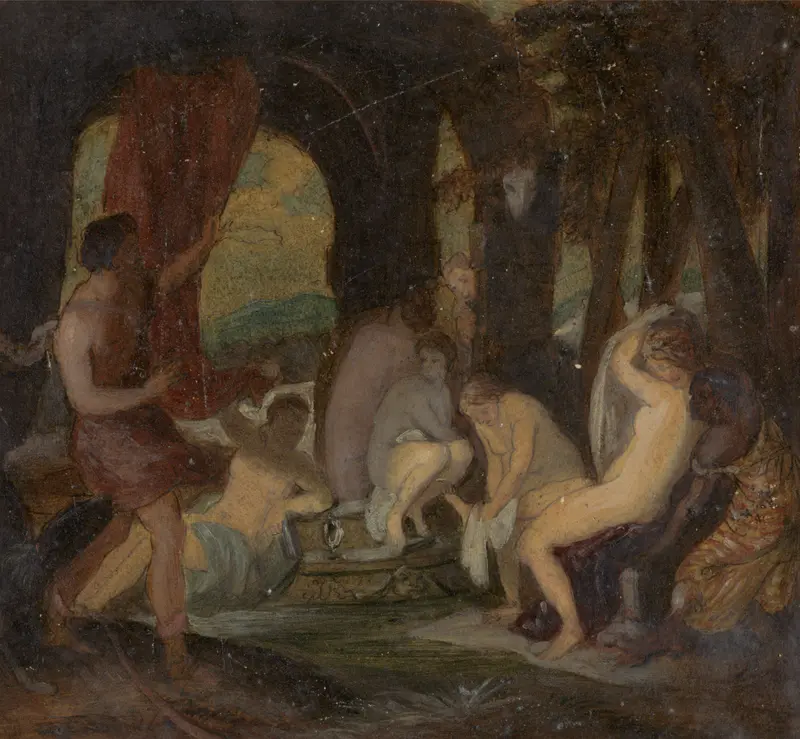
Diana and Actaeon
Robert Smirke
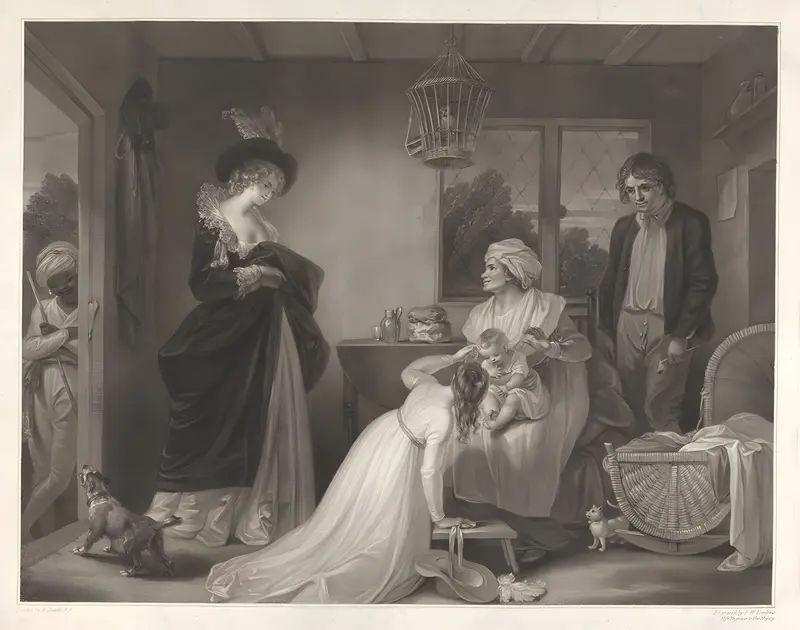
As You Like It; Act II, Scene VII; The Seven Ages Man (First Age)
Robert Smirke

As You Like It; Act II, Scene VII; The Seven Ages Man (Third Age)
Robert Smirke





