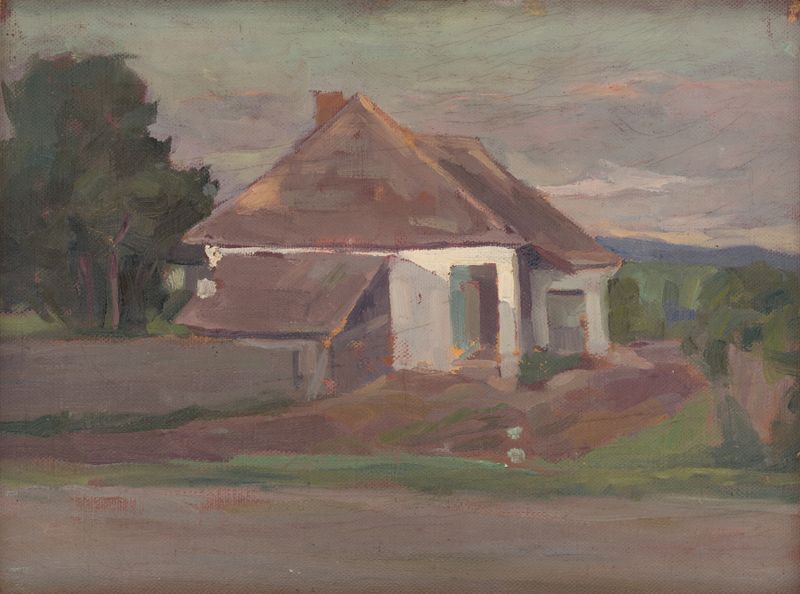
Farm — History & Facts
A paradox lies within the stillness of a farm, where the chaos of existence ripples beneath the calm facade. Each blade of grass whispers stories of labor, life, and the unrelenting struggle against nature's whims. This tension between serenity and turmoil invites deeper reflection on what it means to cultivate both land and spirit. Look to the foreground at the weathered barn, its timbers worn but sturdy, evoking resilience.
Notice how the earthy palette of browns and greens dominates the canvas, grounding the viewer in a rich tapestry of rural life. The brushstrokes are both deliberate and loose, capturing the essence of movement in the long grasses swaying in an unseen wind, as if nature itself is breathing. The light falls softly across the scene, illuminating patches of the field while casting shadows that hint at the hidden complexities beneath the surface. Within this tranquil landscape, contrasting elements emerge: the stark stillness of the barn against the lively dance of the grass, the promise of harvest shadowed by the labor that sustains it.
Figures, though faint and almost ghostly, seem to hover on the edges, emphasizing the solitude of agricultural life—a reminder of the unseen hands that keep the cycle of chaos and calm in perpetual motion. The subtle interplay of light and shadow here becomes not just a visual element, but a metaphor for the burdens and joys of rural existence. In 1900, during a period of burgeoning industrialization, Eduard Putra captured Farm as a reflection of both personal and societal transitions. Living in the twilight of traditional agrarian life, he sought to immortalize the serene yet chaotic nature of rural existence.
The art world was evolving rapidly, yet this portrayal echoed the whispers of a simpler time, making a poignant statement amid the approaching modernity that threatened to overshadow it.