Farm by the Water — History & Facts
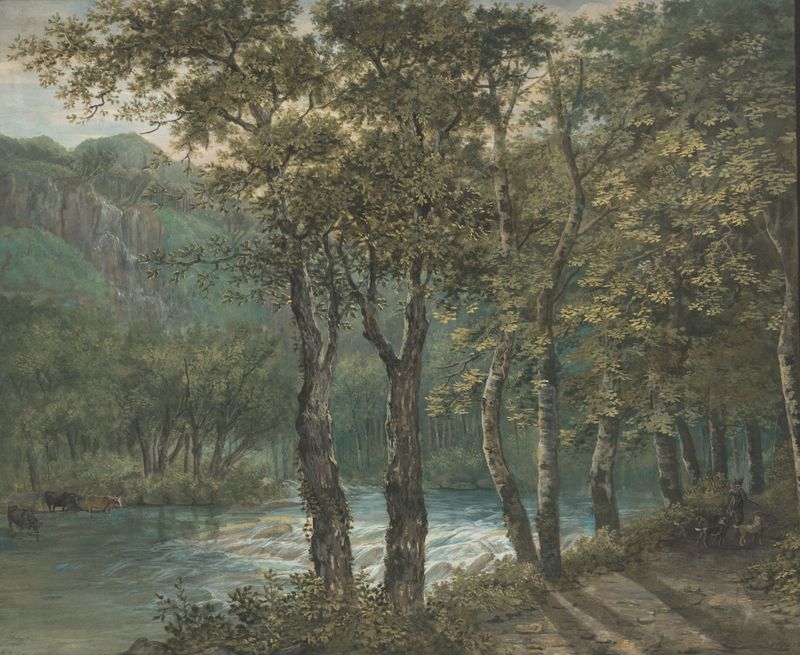
Where does light end, and longing begin? This question resonates deeply within the gentle brushstrokes of an unassuming pastoral scene, inviting reflection on the interplay of nature and emotion. First, look to the horizon where the soft glow of the setting sun bathes the water in tones of gold and amber. The artist’s adept use of light creates an ethereal quality, guiding your gaze across the tranquil landscape. Notice how the wooden structures of the farm emerge from the surrounding foliage, their silhouettes sharply defined against the vibrant backdrop, emphasizing both warmth and solitude.
Each stroke seems to whisper secrets of a simpler time, evoking an immediate sense of nostalgia. Beneath the surface, this piece reveals contrasts between the serenity of the water and the toil of rural life. The stillness evokes a longing for connection—a yearning that resonates in the delicate ripples of the water. Look closely at the reflections; they hint at fleeting moments, suggesting that what is real and what is imagined can often blend indistinctly.
Gessner masterfully balances the tranquility of nature with the profound silence of the human experience, creating a meditative space for the viewer. During the time he created this work, Conrad Gessner was deeply engaged in the study of nature, a pursuit that aligned with the broader artistic movements of the Renaissance. Active in the mid-16th century in Switzerland, he was not only an artist but also a naturalist and scholar, exploring the relationships between art, science, and the environment. This piece reflects his fascination with the beauty of the landscape, embodying the era’s growing appreciation for the natural world.