Farmstead in spring — History & Facts
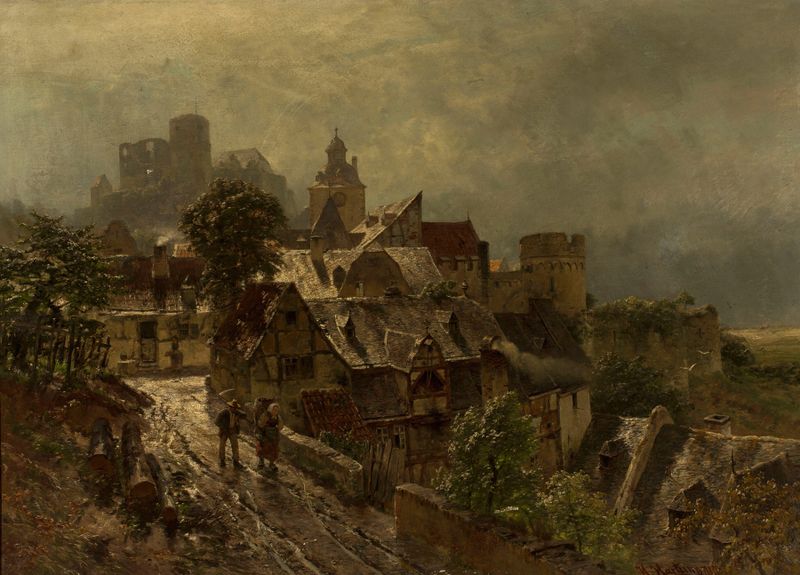
Who listens when art speaks of silence? In Farmstead in Spring, the quietude contrasts starkly with the world’s chaos, capturing a moment that feels both serene and charged with unspoken tension. Look to the left at the delicate blossoms that spring from the earth, a soft promise of renewal and hope. The muted pastels blend harmoniously, while the gentle strokes convey a surface tranquility that belies deeper undercurrents. Notice how the light falls upon the farmhouse, casting elongated shadows that stretch like anxious fingers across the landscape, subtly hinting at the unease lurking beneath the familiar rural scene. The painting suggests a fragile balance between nature’s beauty and the madness of the human experience.
The vibrant spring colors evoke life, yet the isolation of the farmstead speaks to a solitude that resonates with the tumult of the world outside its borders. The simple composition invites viewers to reflect on their place within the chaos, suggesting that tranquility often coexists with turmoil—a reminder of what is at stake in the harmony of life. Created in 1918, during a time when Europe was grappling with the aftermath of World War I, the artist found himself amidst profound societal changes. Hartung painted this piece in Germany, where the scars of conflict mingled with the longing for peace and renewal.
This duality in his work reflects not only personal sentiments but also the collective yearning for stability in a world teetering on the brink of madness.