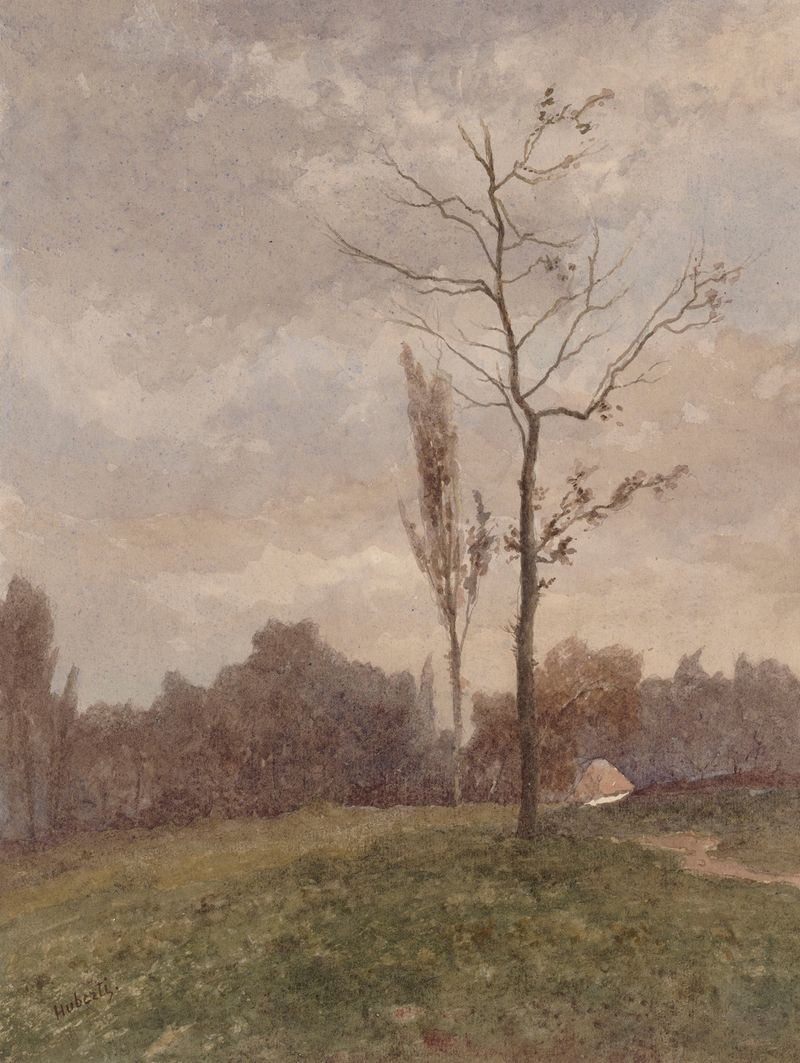
Fen in the Kempen — History & Facts
Can beauty exist without sorrow? The delicate dance of nature often whispers the answer through the gentle sway of grass and the flutter of wings. In Fen in the Kempen, a serene yet dynamic landscape unfolds, inviting the viewer to explore the delicate interplay between calm and chaos. Look to the center of the canvas, where the vibrant greens of reeds rise and bend gracefully, creating a rhythmic pattern that suggests life in motion. Notice how the dappled sunlight filters through, casting rich hues of gold and bronze across the scene, illuminating touches of blue in the water below.
The brushstrokes, both fluid and precise, reveal not just the beauty of the fen but also the artist’s deep connection to the landscape, encouraging an emotional response that transcends mere observation. Yet, beyond its outward charm, this work holds deeper narratives. The juxtaposition of the tranquil water surface against the thrumming vitality of the reeds suggests an underlying tension; nature teeters between serenity and upheaval. The subtle hints of darker shadows lurking at the edges remind us that beauty is often intertwined with the melancholy of impermanence, a poignant reminder of the cycle of life and decay. Huberti painted this piece in the late 19th century, during a time when the Impressionist movement was redefining artistic expression.
Living in Belgium, he found inspiration in the landscapes around him, reflecting the era's fascination with capturing fleeting moments. As he explored color and light, he was also influenced by the natural world’s transience, an awareness that resonates throughout Fen in the Kempen, making it a striking testament to both beauty and the bittersweet nature of existence.