Fernblick auf Wien vom Bisamberg — History & Facts
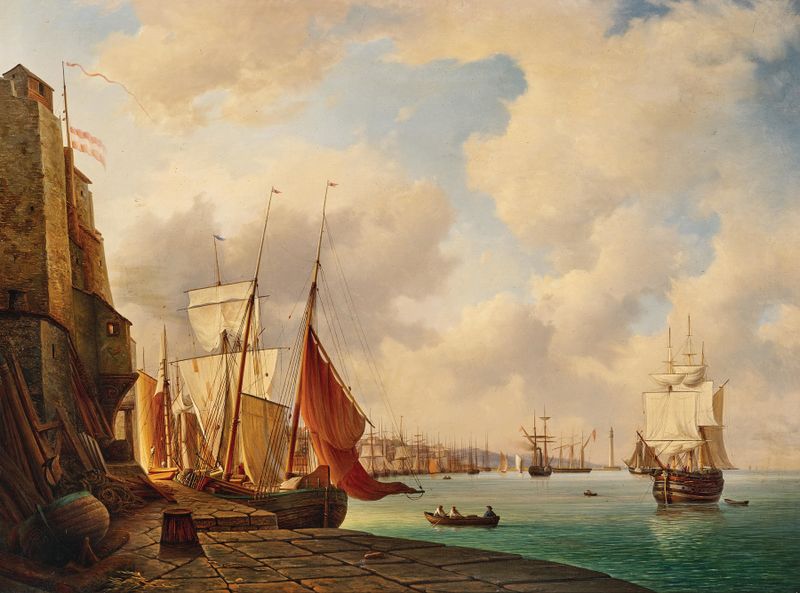
What secret hides in the quiet of the canvas? A landscape stretches forth, yet beneath its serene facade, shadows whisper untold stories of the past. Look to the foreground where the gentle curve of the hillside cradles the city—a lush green fabric woven with the light of a fading sun. The strokes evoke a delicate interplay of light and shadow, guiding your gaze to the shimmering Danube, glistening like a ribbon of silver. Notice how the distant spires of Vienna pierce the horizon, their outlines softened by the ethereal mist that envelops the scene, creating a sense of depth and memory. The interplay of light and shadow creates an emotional tension, suggesting the duality of presence and absence.
The vibrant greens represent life, yet the subdued tones of the city shadows hint at the weight of history, a reminder of what once was. Each element—the tranquil sky graced by languid clouds, and the quiet presence of trees—contributes to a palpable stillness that invites contemplation, urging the viewer to connect with both the beauty and the melancholy of this urban expanse. In 1840, Christian von Plattensteiner was immersed in a period where Romanticism inspired artists to capture the essence of their surroundings with emotional depth. Working from his vantage point on the Bisamberg, he painted this landscape during a time when Vienna was experiencing shifts in culture and society, reflecting both a yearning for nature and an engagement with the burgeoning urbanization of the era.
The canvas stands as a testament to this transformative time, echoing the artist's keen observations and emotional responses to the world around him.