Fingal’s Cave, Staffa — History & Facts
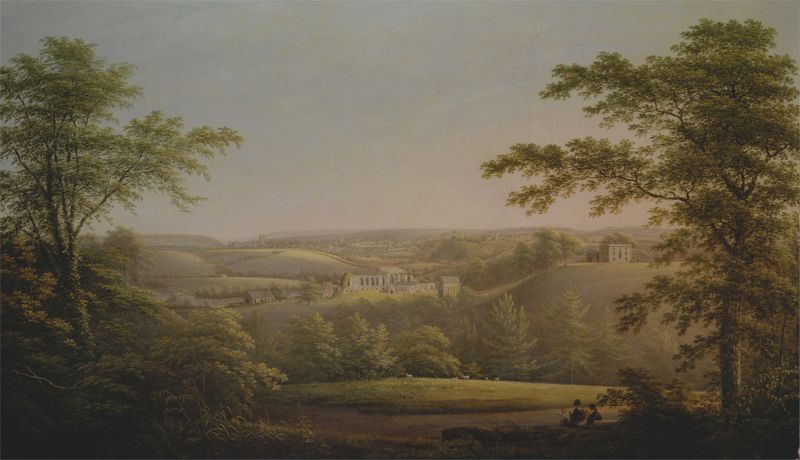
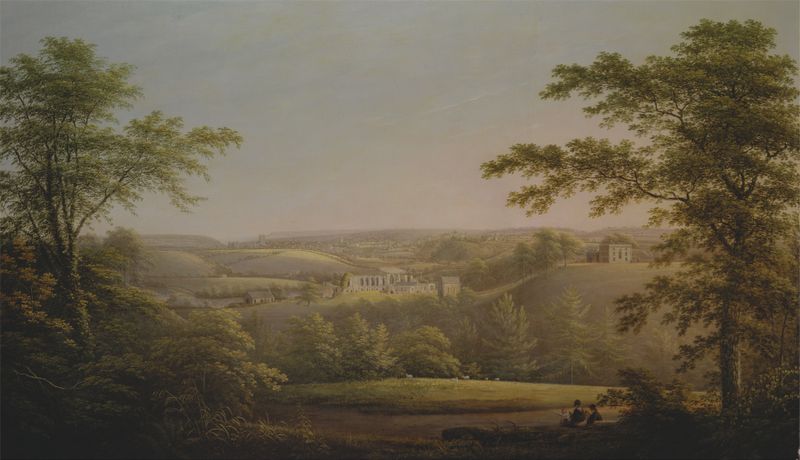
In the depths of grief, the hues of mourning often reveal the essence of our reality. Look to the center of the canvas, where the dramatic cliffs rise like ancient sentinels, enveloped in mist. The artist's technique captures the rugged texture of the stone, each brushstroke echoing a sense of permanence yet fragility. Notice how the light filters through the cave's mouth, casting a gentle glow that beckons the viewer into the depths of the scene, illuminating the interplay between darkness and illumination. As you delve deeper into the artwork, the dynamic contrast between the rough cliffs and the serene, still waters evokes a palpable tension.
The reflection in the water is neither mirror-like nor completely disrupted; it suggests the duality of existence—how beauty can coexist with sorrow. The colors oscillate between muted grays and soft blues, perhaps a visual representation of the artist's own contemplations on loss and solitude. Cuitt painted this piece during a time when the Romantic movement was gaining momentum, likely in the late 18th or early 19th century. His work reflects a burgeoning fascination with nature's sublime aspects, mirroring the emotional landscapes of the era.
The artist's personal life, marked by both triumphs and tribulations, would have informed his portrayal of such evocative settings, embodying the complex relationship between external beauty and internal grief.