
Fishermen by a Canal at Dusk — History & Facts
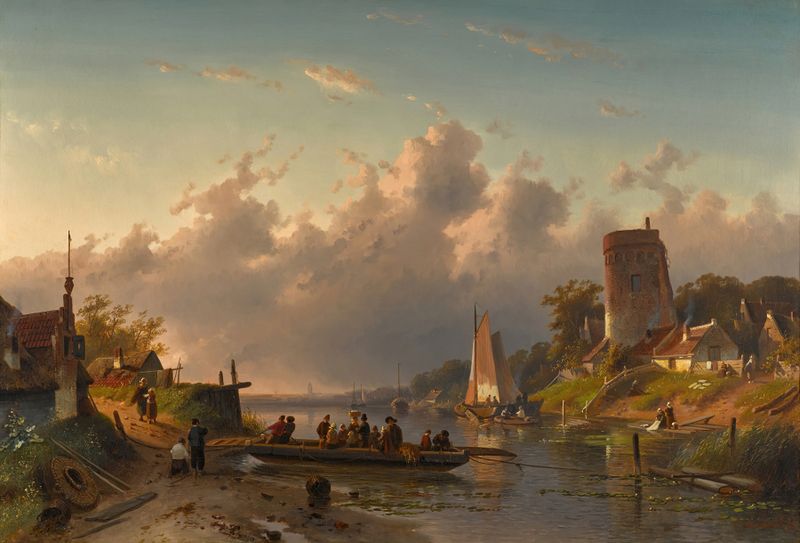
Where does light end, and longing begin? In the fading glimmer of dusk, a sense of solitude envelops the figures in Fishermen by a Canal at Dusk. Look closely at the water’s edge, where the cool hues of twilight kiss the surface. The deep blues and soft oranges bleed into one another, creating a shimmering reflection that draws your gaze. Notice how the fishermen, almost silhouettes, huddle together yet remain emotionally distant, their postures conveying a heavy, silent weight.
The gentle, rippling canal seems to cradle their isolation, the stillness punctuated only by the whisper of the wind. As you explore further, observe the contrasting vitality of the surroundings—the lush greenery and vibrant sky juxtaposed against the somber figures. The warmth of the setting sun casts a fleeting glow, evoking a bittersweet nostalgia. Through the fishermen’s quiet demeanor, you sense a profound yearning, not just for the catch of the day but perhaps for connection or lost dreams, underscoring the inherent loneliness of their existence. In 1847, Charles Leickert painted this scene during a period marked by the romanticism of nature and the industrial dawn in Europe.
Living in the Netherlands, he was captivated by the landscapes around him, reflecting a transitional time in art where emotive realism began to take root. Leickert's works often celebrated the Dutch waterways, marrying his impressions of the world with the emotional narratives he sought to convey, revealing much about his own experiences and the collective consciousness of his time.
More Artworks by Charles Leickert
Browse all →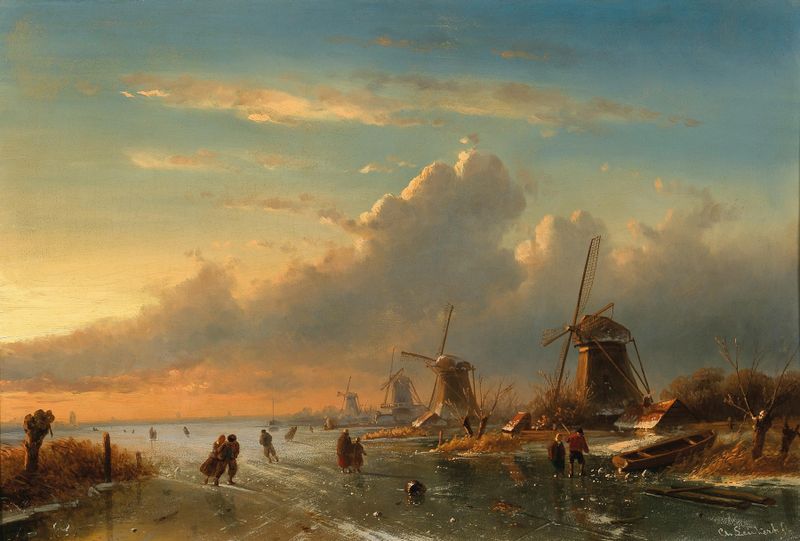
A winter landscape at sunset with figures on the ice
Charles Leickert
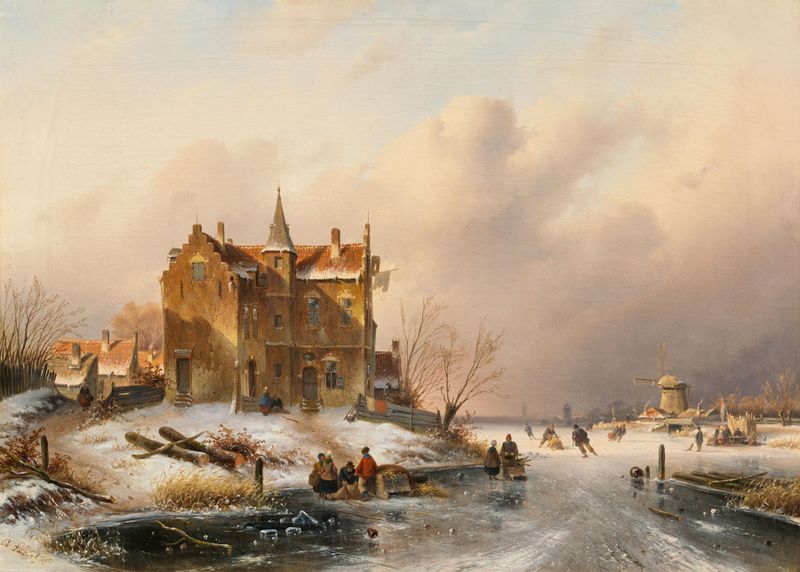
Winterlandschaft mit Schlittschuhläufern auf einem zugefrorenen See
Charles Leickert
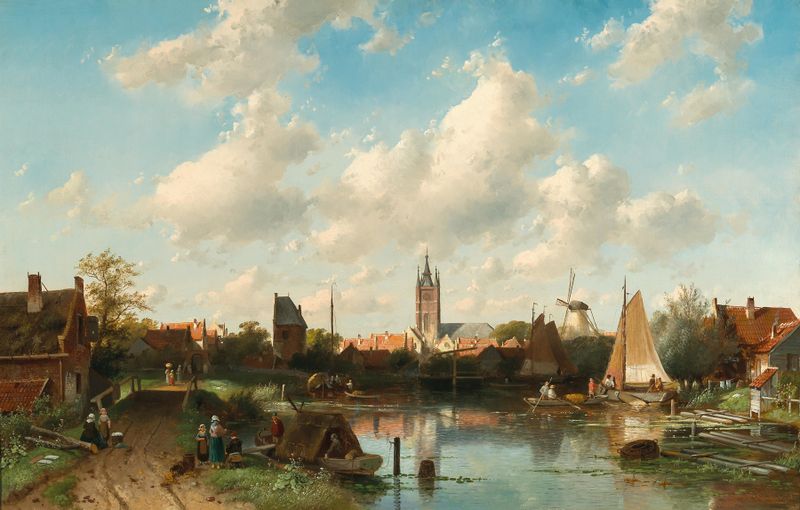
A View of Delft
Charles Leickert
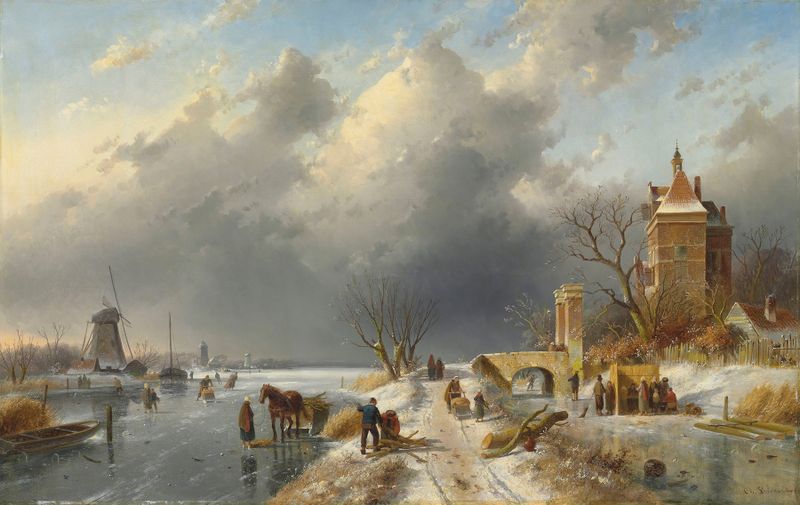
A winter landscape with figures on the ice
Charles Leickert

Ice Skaters at Sunset
Charles Leickert

A Vast River Landscape with Windmills
Charles Leickert

Winterrivierlandschap
Charles Leickert

A village street scene in winter
Charles Leickert
Evening at the Riverbank
Charles Leickert

A River Landscape with Figures on the Bank
Charles Leickert





