Fjordlandskap — History & Facts
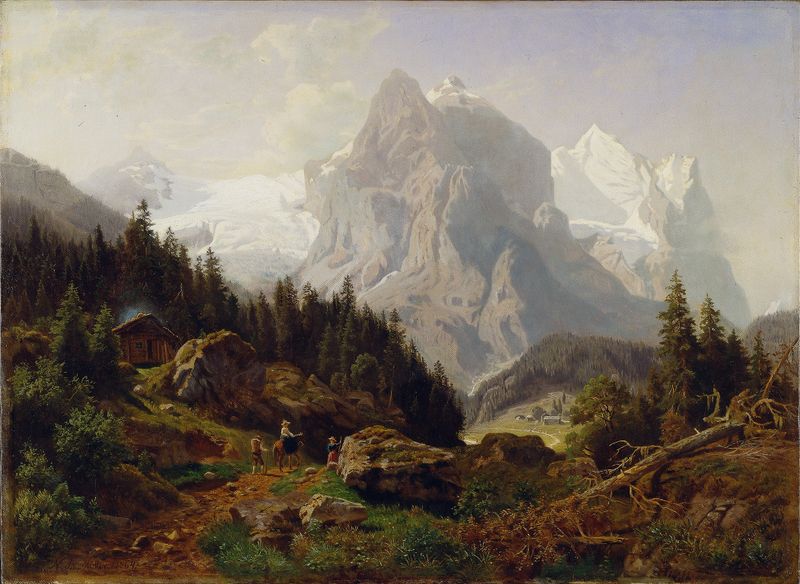
In the quiet embrace of nature, awe beckons in the interplay of hues and shadows, revealing landscapes that stir the soul. Look to the foreground and observe the delicate brushwork that shapes the rolling hills, dappled in lush greens and soft browns. Focus on the interplay of light and shadow as it cascades down the mountainsides, creating a majestic rhythm that draws the eye toward the serene water below. Notice how the artist employs a palette of muted blues and grays, invoking a sense of calm that envelops the viewer like a gentle mist. Delve deeper into the hidden contrasts that lie within this tranquil scene.
The stillness of the water reflects not only the grandeur of the fjords but also the underlying tension between nature's beauty and its awe-inspiring vastness. Here, silence reigns, yet there is an undercurrent of emotional resonance that whispers of the sublime and the infinite. Each brushstroke captures the essence of solitude, inviting contemplation and reflection on our place within such grandeur. Nils Bjørnsen Møller painted Fjordlandskap during a time when the Romantic movement was shaping the artistic landscape of Europe.
Although the exact date remains unknown, he was active in the late 19th century, amidst a growing fascination with nature as a source of inspiration. In a world increasingly marked by industrialization, Møller sought to capture the untouched beauty of the fjords, reflecting his deep admiration for the natural world and its ability to evoke profound emotions in the viewer.