Flower Girl in Holland — History & Facts
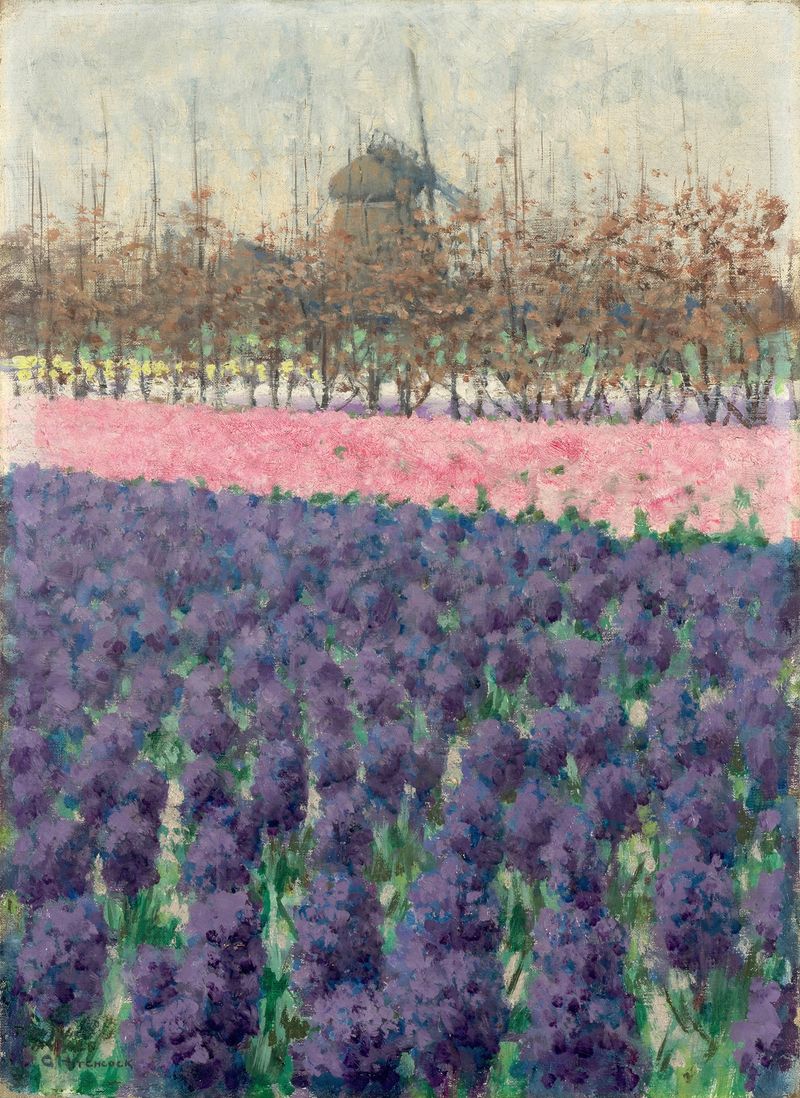
In Flower Girl in Holland, the viewer is invited into a world where nature and humanity dance together in harmony. The artwork captures a singular moment of reflection, where the innocence of youth intertwines with the vibrant beauty of the natural world. Look to the left at the girl, her warm smile radiating a gentle enthusiasm as she stands amidst a cascade of flowers. Notice how Hitchcock employs a stunning palette of soft pastels – lilacs, yellows, and greens – creating an enchanting symphony that flows seamlessly.
The delicate brushwork captures the intricate details of blossoms and foliage, while sunlight glimmers off the petals, enhancing the vibrancy of this serene scene. Every element draws the eye toward her, the focal point of the composition, as she delicately cradles a bouquet that mirrors her own youthful exuberance. Yet, beneath this cheerful facade lies a contrast between the girl’s bright innocence and the untamed wildness of her surroundings. The blooming flowers, in all their chaotic beauty, evoke a sense of fleeting time, a reminder of how quickly youth fades.
The harmonious blending of the girl and the flora also suggests an intimate relationship between humanity and nature, where both are intertwined in a delicate balance. This reflection on existence lingers softly, inviting viewers to ponder their own transient moments. In 1887, Hitchcock painted this piece while living in Holland, a time when he was deeply influenced by the Impressionist movement. The 19th-century art scene was undergoing a transformation, embracing new ideas about light and color.
Here, the artist captured not only the essence of the moment but also the profound interconnectedness of life, as he immersed himself in the rich tapestry of Dutch culture and landscapes.