Flowers and Fruit — History & Facts
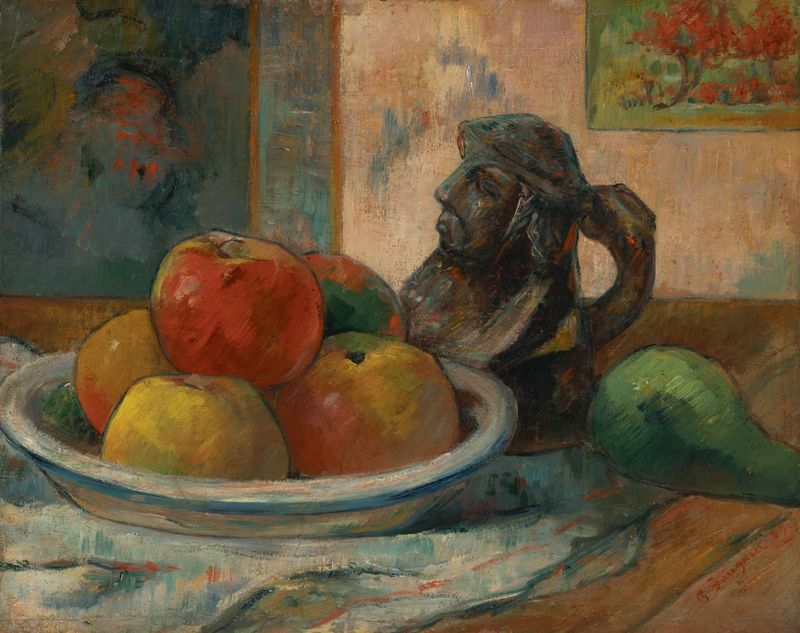
Can beauty exist without sorrow? In Flowers and Fruit, the delicate balance between vibrant life and inevitable decay is poignantly captured. Each petal and piece of fruit stands as a testament to the fleeting nature of beauty, inviting contemplation on the transience of existence. Look to the left at the way the light caresses the ripened peaches, their warm hues contrasting against the cool greens of the leaves. Notice how the artist's brushwork creates a sense of movement, as if the blossoms are caught in a gentle breeze.
The meticulous attention to detail in the textures—the velvety softness of the petals versus the smoothness of the fruit—draws the viewer in, urging them to explore the intricate interplay of color and form that exudes life. Yet, amid this lush abundance lies an underlying tension. The wilting flowers lean towards the viewer, hinting at their impending demise, while the lush fruits symbolize vitality, nourishment, and the promise of new beginnings. This duality evokes a bittersweet emotion; the beauty is enchanting, yet it is imbued with the awareness that such perfection is fleeting, echoing the cycle of life itself. Created in 1866, this piece comes from an artist who was immersed in the rich traditions of still-life painting.
At this time, Todd was establishing his reputation in the burgeoning art scene of England, where the Pre-Raphaelites were redefining artistic expression. Surrounded by an era that sought to embrace nature in its finest detail, Todd’s work reflects both a celebration of beauty and a subtle acknowledgment of its fragility.