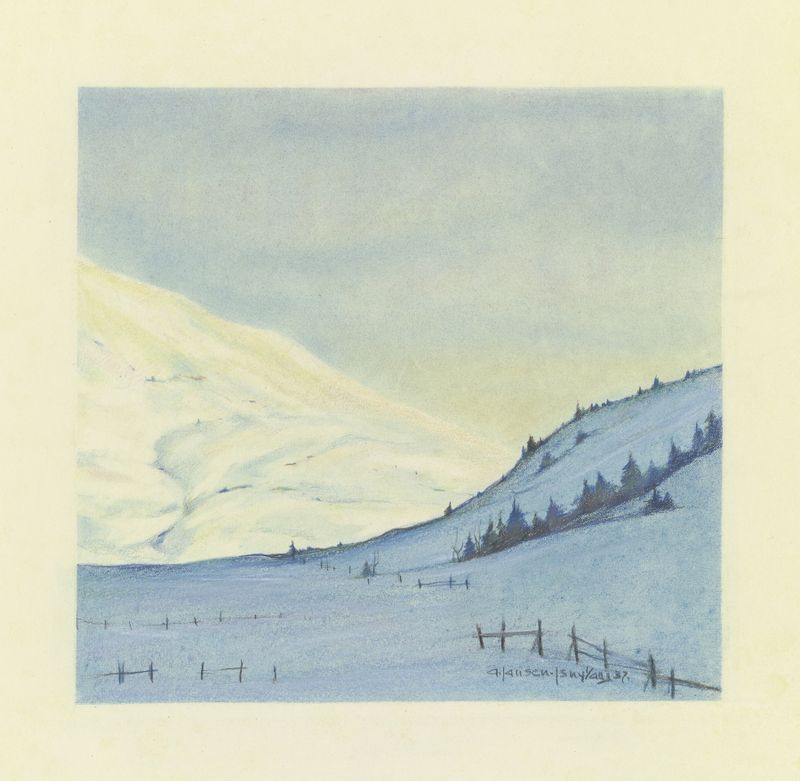
Foehn near Isny — History & Facts
When did color learn to lie? Shadows stretch and dance across a landscape painted in hues that whisper secrets, revealing more than they conceal. Here, vibrant greens clash with deep blues, creating a tableau that feels both serene and unsettling. Look to the center, where a quiet valley unfolds beneath a tumultuous sky. Notice how the light struggles to break through the dense clouds, casting an ethereal glow over the imposing mountains.
The foreground, rich with textured grasses and wildflowers, draws the eye, while shadowy patches play tricks on perception, inviting deeper contemplation about what lies beneath the surface of the scene. In the interplay of light and shadow, tension brews. The darkened areas hint at hidden complexities in nature, suggesting that beauty often harbors a duality of light and obscurity. The juxtaposition of the vivid greens against the brooding blues amplifies this contrast, evoking feelings of both tranquility and unease—reminding us that landscapes are not merely backdrops, but living entities with their own stories to tell. Adolf Jansen painted Foehn near Isny in 1937 while residing in Germany, a time of significant tumult and transformation in the world.
Emerging from the shadow of the First World War, he was navigating a changing artistic landscape that embraced new forms and techniques. This piece reflects not only the natural beauty of the Bavarian countryside but also Jansen's own internal struggles, as he sought to find harmony amid the chaos that defined his era.