
Ford in a Rage After Seeing Falstaff — History & Facts
In Ford in a Rage After Seeing Falstaff, the viewer is struck by the intense colors and dramatic expressions of the figures. The painting depicts a scene filled with emotion, where Ford appears furious after encountering Falstaff. The background is rich and detailed, enhancing the overall tension of the moment.
The use of light and shadow adds depth to the characters and their surroundings. The painting is executed in oil on canvas, showcasing Robert Smirke's skill in capturing human emotion. The dimensions are approximately 100 x 120 cm, making it a sizable work that draws the viewer in. The brushwork is detailed, particularly in the facial expressions of the characters, which convey a range of emotions.
The composition is dynamic, guiding the viewer's eye through the scene. Robert Smirke was known for his historical and literary themes, often drawing inspiration from Shakespearean works. Ford in a Rage After Seeing Falstaff is a prime example of this, illustrating a moment from Shakespeare's play 'The Merry Wives of Windsor'. An interesting fact about this work is that it reflects the Romantic style, emphasizing emotion and drama over classical restraint.
Smirke's ability to blend literature with visual art makes this painting significant in his oeuvre.
More Artworks by Robert Smirke

Hotspur and the Plotters at Bangor
Robert Smirke
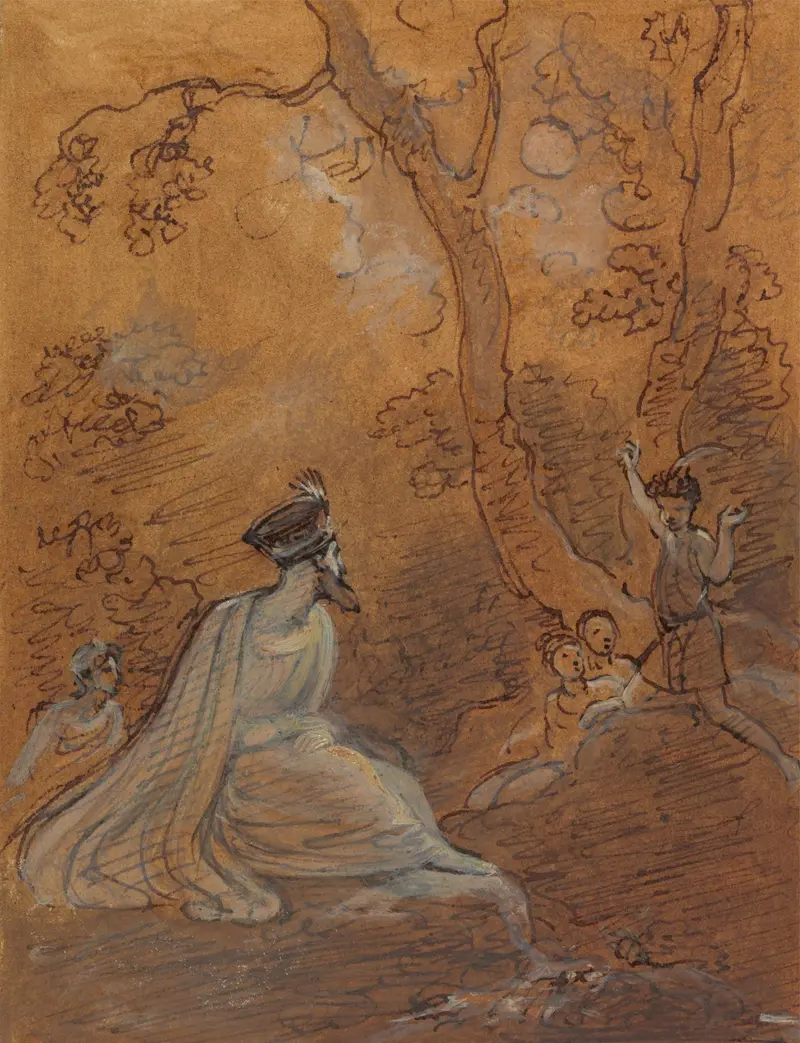
Oberon and Puck
Robert Smirke
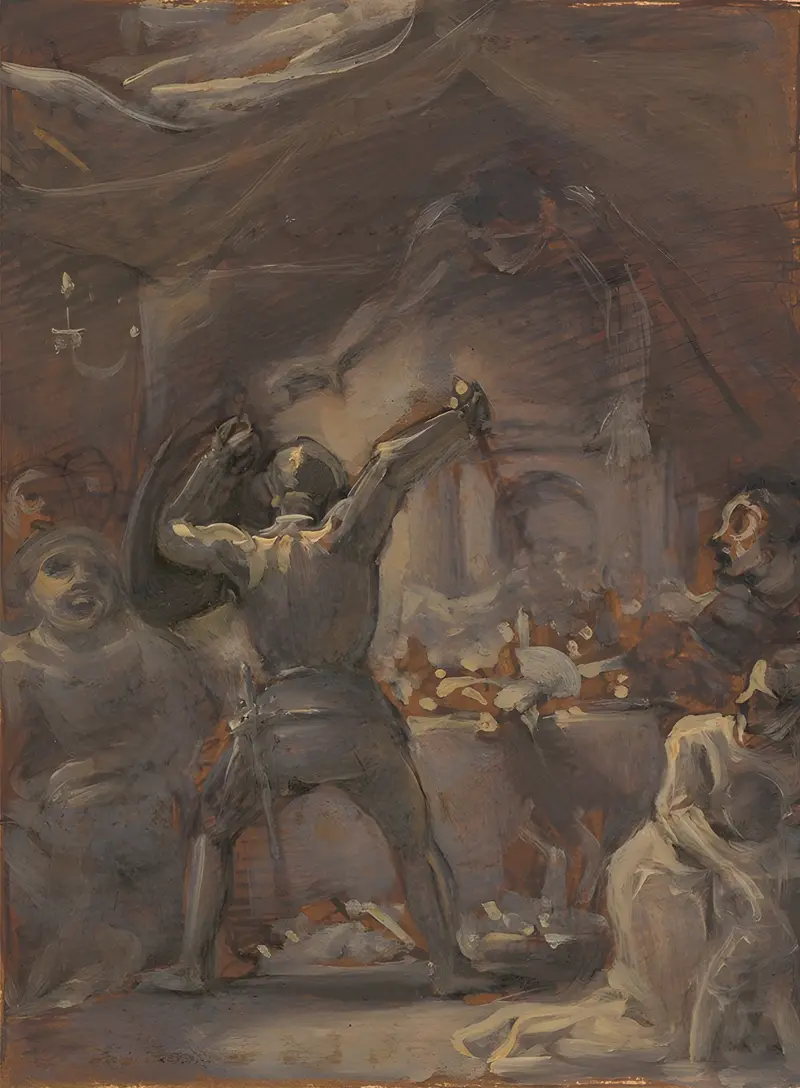
One from Illustrations to Shakespeare
Robert Smirke
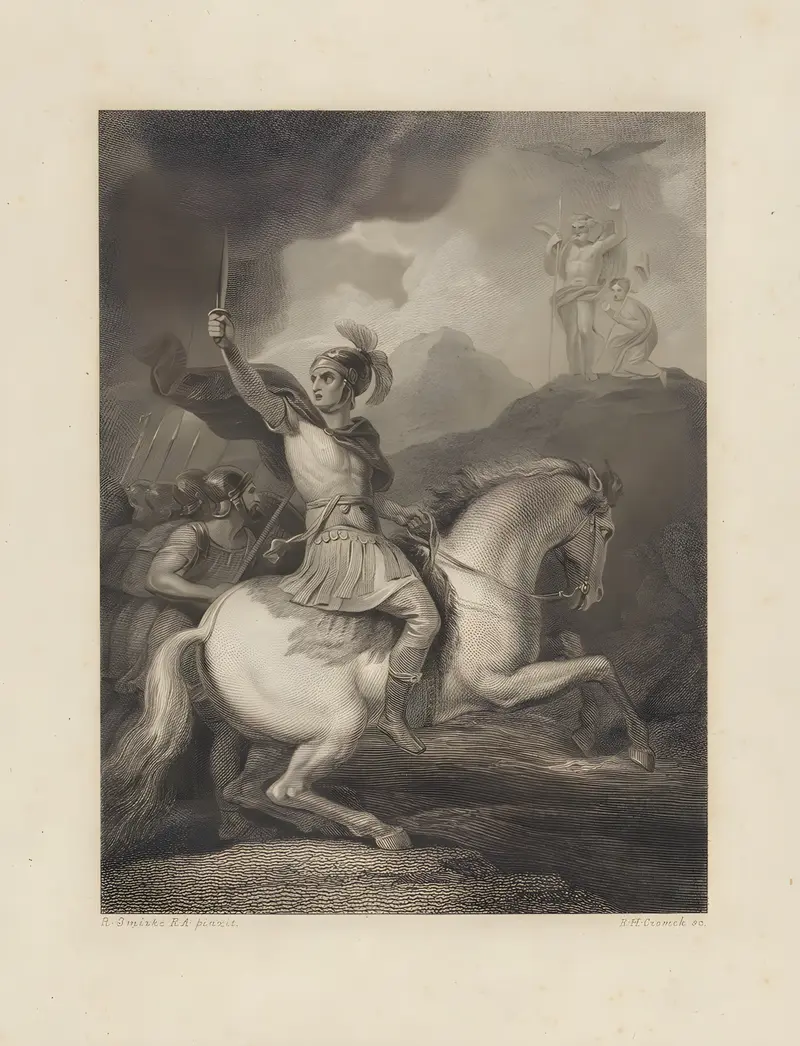
Cesar Passing the Rubicon
Robert Smirke
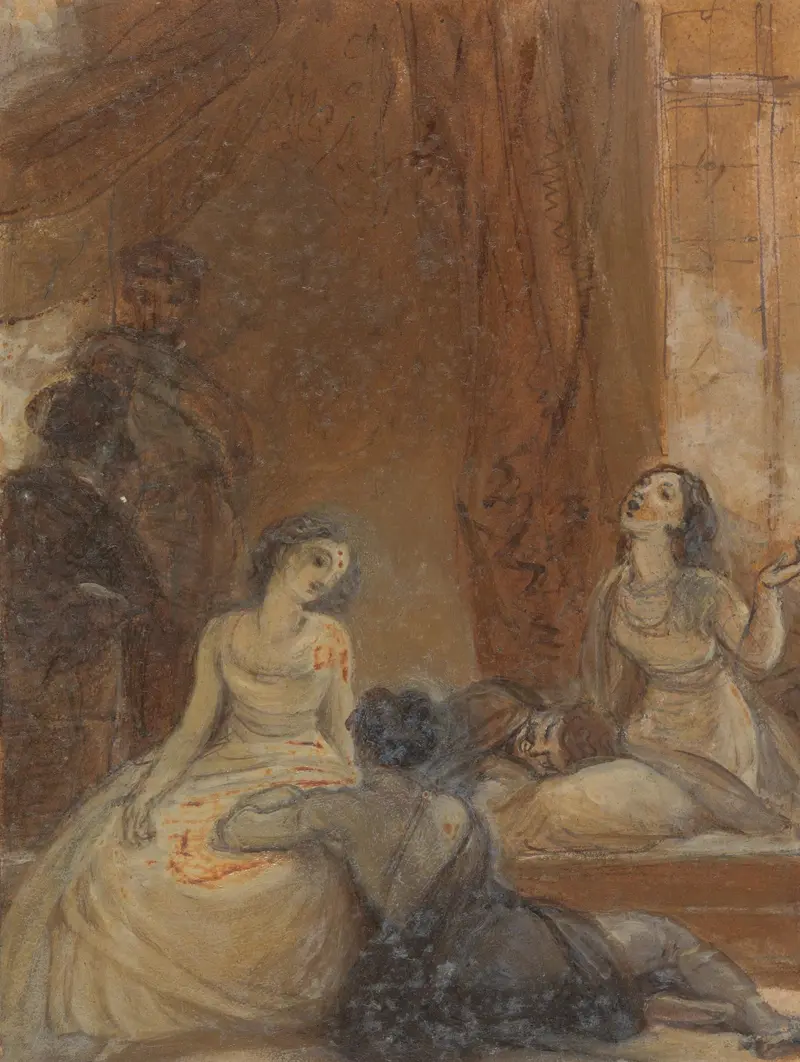
Lady Mortimer’s Welsh Song
Robert Smirke
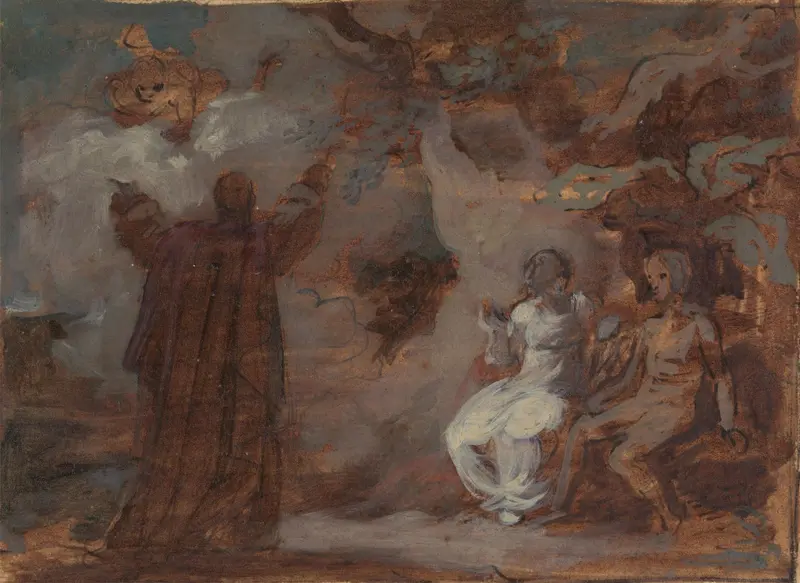
Prospero Conjuring a Masque for Ferdinand and Miranda
Robert Smirke

Master William Page and Sir Hugh Evans
Robert Smirke
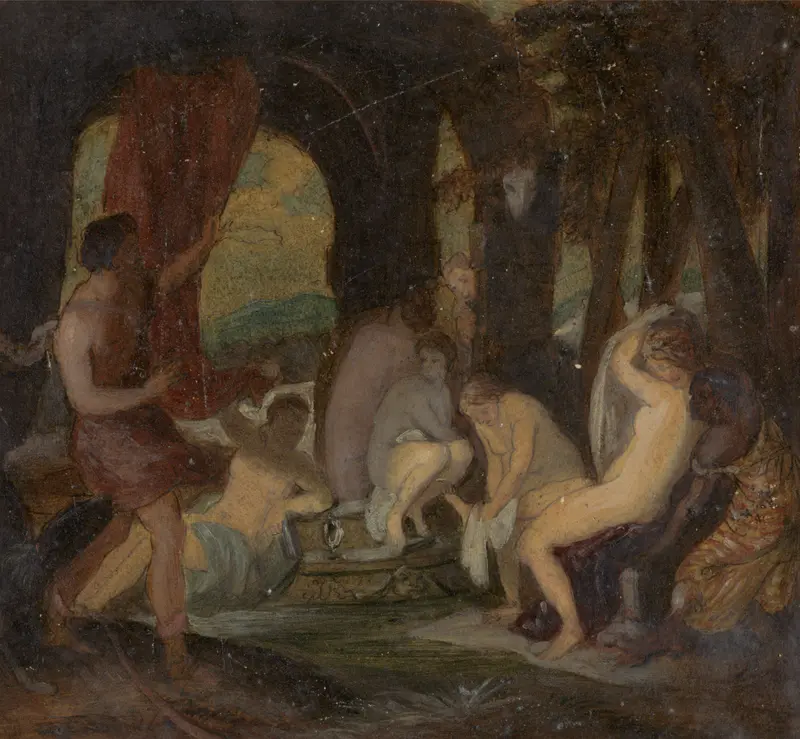
Diana and Actaeon
Robert Smirke
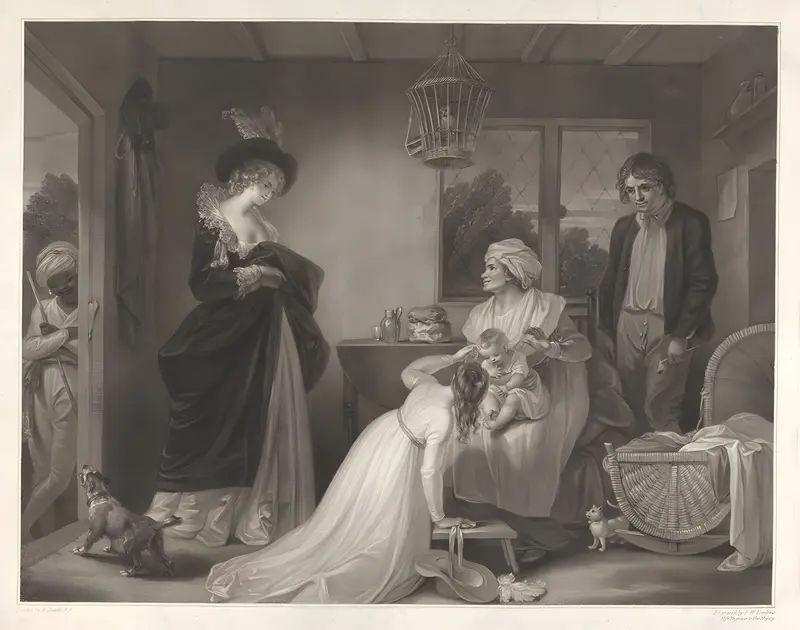
As You Like It; Act II, Scene VII; The Seven Ages Man (First Age)
Robert Smirke

As You Like It; Act II, Scene VII; The Seven Ages Man (Third Age)
Robert Smirke





