Forest — History & Facts
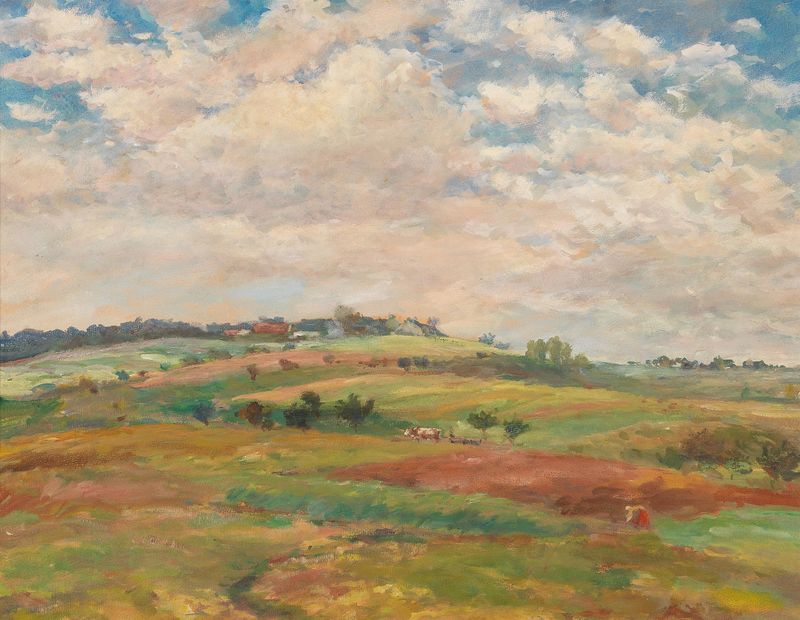
The memories we hold are not always joy; they often emerge as bittersweet specters, cloaked in the warmth of nostalgia. Look closely at the canvas and you’ll find a dense tapestry of verdant greens and deep browns, where the dappled light filters through the leaves. The gentle brushstrokes create a sense of movement, as if the forest itself breathes. Notice the interplay of shadow and light that dances across the ground, illuminating ephemeral patches where wildflowers dare to bloom.
The composition draws you into the woods, inviting you to wander deeper into its embrace. The hidden narratives within the foliage evoke a feeling of solitude and reflection. Each tree, while sturdy, seems to carry its own story, standing sentinel over the secrets of the forest. The contrast between the vibrant greenery and the encroaching shadows suggests a tension between life and decay, a reminder of the fleeting nature of beauty and time.
Could it be that in our search for tranquility, we are haunted by the echoes of our past? During a period when Slavíček was exploring the depths of landscape painting, he found himself grappling with personal loss and the complexities of memory. Although the exact date of this work remains unknown, it’s likely that he painted it in the late 19th or early 20th century, a time of artistic transition in Central Europe. He sought solace in nature, using his brush to articulate both the beauty he perceived and the emotional weight he carried.