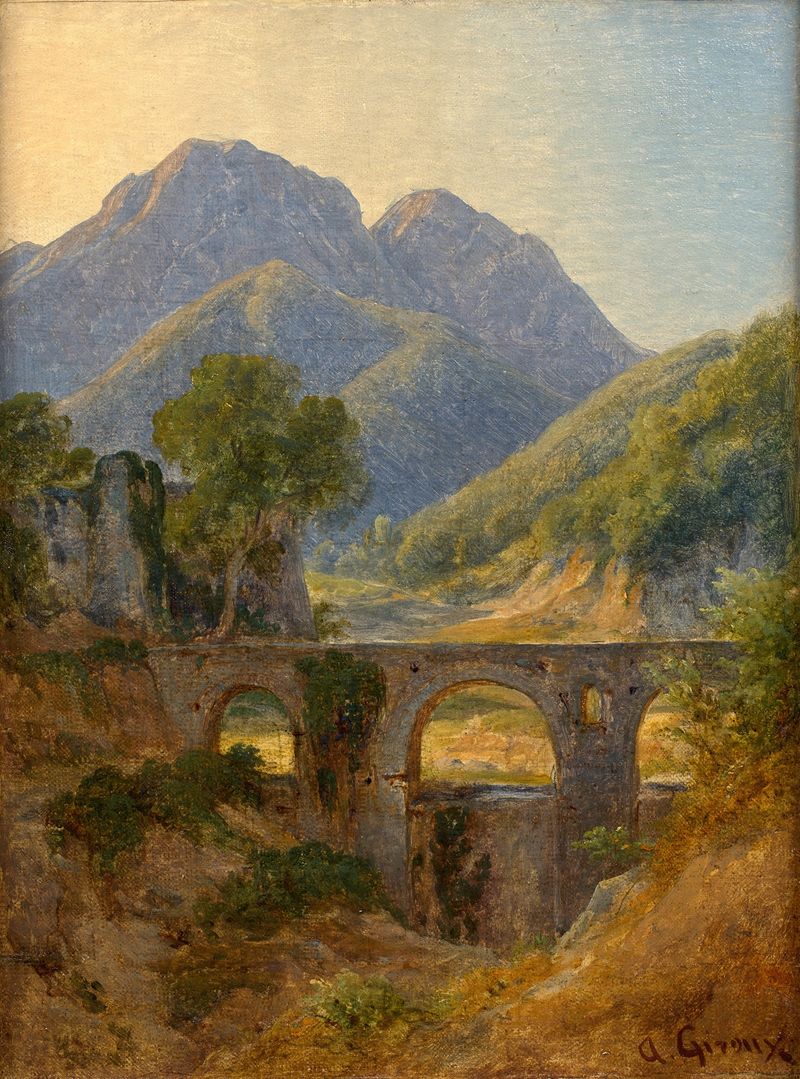
Forest Interior with a Waterfall — History & Facts
The essence of nature whispers in the delicate balance between chaos and calm, where every brushstroke reveals a deeper story waiting to be uncovered. Look to the left at the vibrant greens that saturate the foliage, each leaf a testament to life’s tenacity. The waterfall, cascading gently into the tranquil pool below, draws the eye across the painting with its shimmering blues and whites, evoking both movement and serenity. Notice how the dappled light filters through the trees, casting soft shadows that play upon the terrain, creating a palpable sense of depth and inviting the viewer to step into this secluded world. Here, the interplay of light and darkness speaks to the contrasts of existence.
The serene water reflects not only the sky above but also the inner turmoils of the soul, as the rapid flow of the waterfall suggests the relentless passage of time. Each hidden nook in the forest carries an air of mystery, inviting contemplation on what truths may lie beyond the visible. The lush greenery symbolizes vitality, while the underlying darkness hints at the secrets nature keeps, embodying a harmonious, yet paradoxical relationship with the viewer’s own search for understanding. André Giroux painted this serene moment between 1825 and 1830, a period when Romanticism was shaping Europe’s artistic landscape.
Living in France, he was influenced by the era’s emphasis on emotion and nature, which reflected both personal struggles and collective aspirations. During this time, artists were beginning to explore the interplay of light and natural beauty as avenues for deeper introspection, creating a foundation for future movements in landscape painting.