Fragment of the Panorama of Paris — History & Facts
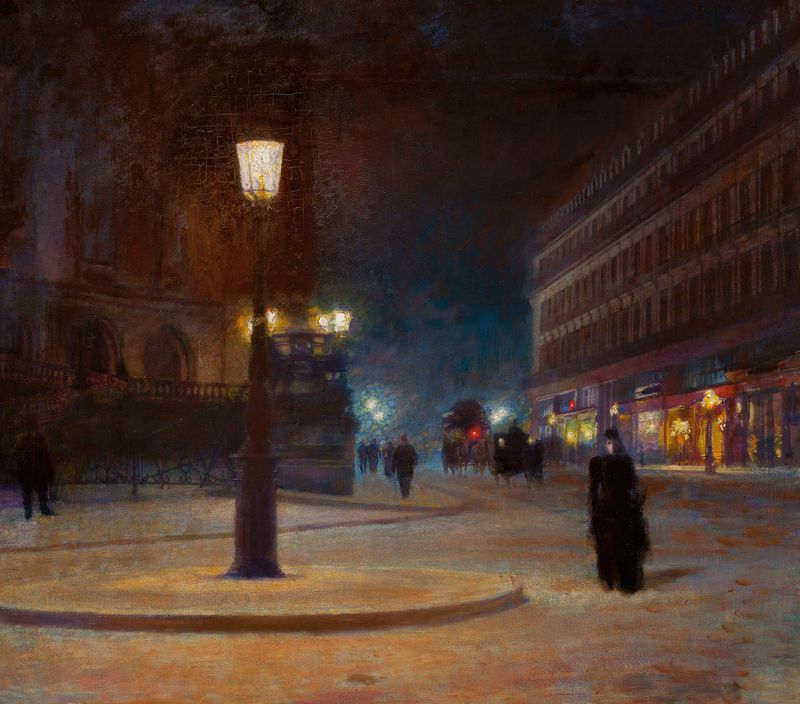
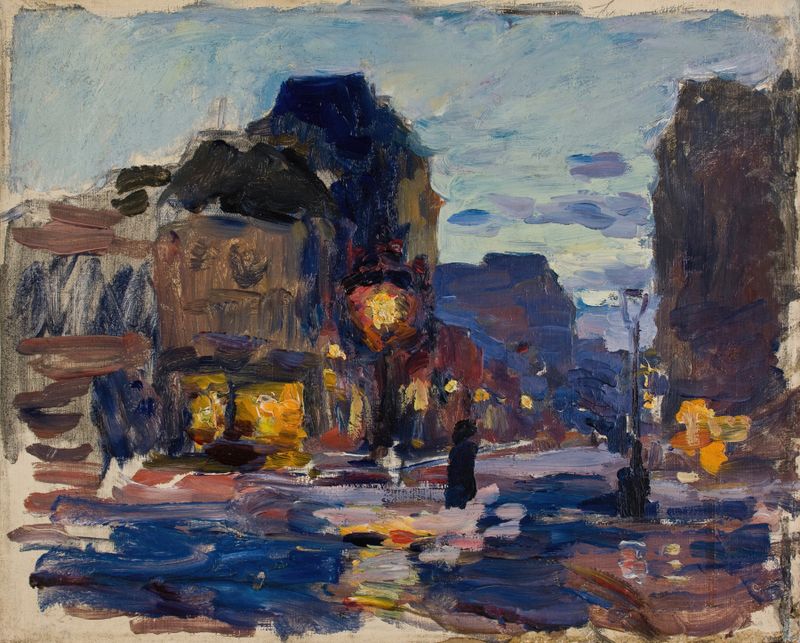
Could a single brushstroke hold eternity? In Fragment of the Panorama of Paris, Ludwik de Laveaux captures the deep yearning for a city both vibrant and ephemeral, a dream suspended between reality and imagination. Look to the left at the gentle curve of the Seine, its waters shimmering with reflections of the Parisian skyline, as if inviting you to explore the layers of history woven into its banks. Focus on the intricate details of the buildings, their facades alive with the bustling spirit of the late 19th century, while soft pastel hues blend seamlessly to create a sense of warmth and nostalgia. The composition draws your eye toward the horizon, where the faint outline of the Eiffel Tower begins to emerge, a symbol of innovation and a new era. In this work, the interplay of light and shadow conveys a sense of time slipping away, each brushstroke a reminder of moments that have come and gone.
The delicate observations of human figures mingling along the riverbanks evoke the pulse of life—each gesture laden with emotion and significance. The contrast between the serene water and the lively streets hints at a deeper longing, a nostalgia for both the familiar and the unattainable. Ludwik de Laveaux painted Fragment of the Panorama of Paris in 1893 as part of a larger series celebrating the city. At that time, he was immersed in a dynamic art scene that embraced Impressionism and the burgeoning modernity of urban life.
The late 19th century was a period marked by transition, with Paris emerging as a cultural epicenter, and de Laveaux's work reflects both the excitement and fleeting nature of this transformative moment.