Friedhof in Ahrenshoop — History & Facts
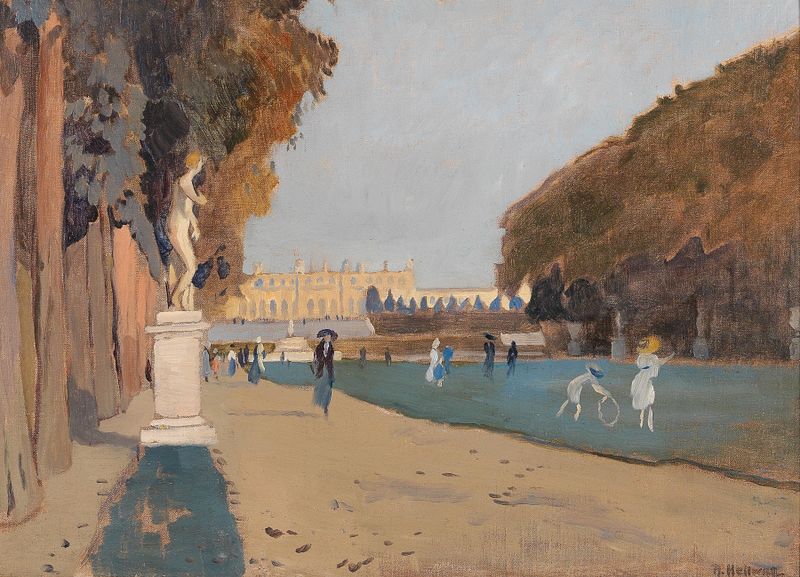
Can paint confess what words never could? In the stillness of Friedhof in Ahrenshoop, the canvas reverberates with a profound sense of loneliness that words often fail to articulate. Look to the left at the weathered tombstones, their rough surfaces catching the muted light of an overcast sky. The heavy brushstrokes evoke a sense of texture, grounding the viewer in the somber landscape. Notice how the delicate, muted greens and browns of the surrounding foliage contrast against the gray tones of the gravestones, reflecting the life that still lingers amidst the solemnity of death.
This juxtaposition invites us to contemplate the cycle of existence, drawing our gaze deeper into this contemplative scene. Hidden within the shadows, each gravestone tells a story of memory and loss, hinting at the lives once lived. The sparse horizon stretches outward, creating a vast emptiness that speaks of both isolation and reflection. By capturing this quiet cemetery, the artist reveals an emotional tension between the vibrancy of nature and the stillness of human absence, suggesting an enduring connection, even in solitude. Rudolf Hellwag painted Friedhof in Ahrenshoop in 1890 while he was living in Germany, a time when artists were increasingly exploring themes of existentialism and the human condition.
As the art world was transitioning towards Modernism, Hellwag's work reflected a deep introspection, marking his exploration of solitude during a period defined by social and artistic upheaval.