
From Union Hill, Hoboken — History & Facts
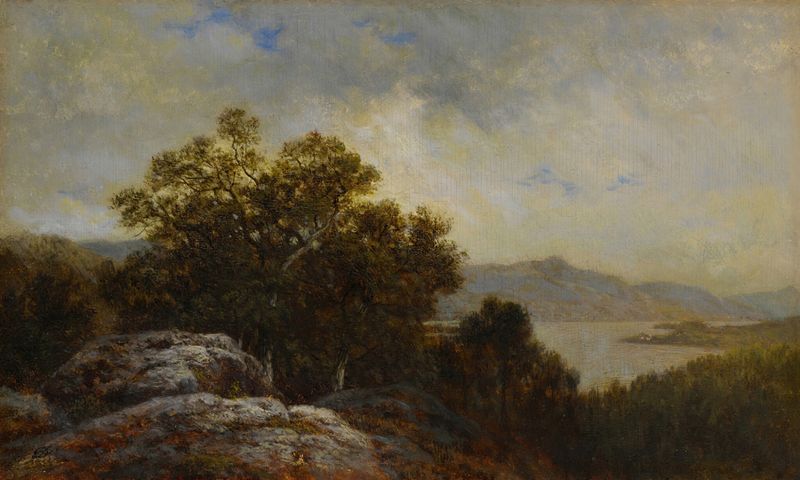
Could beauty survive in a century of chaos? In the midst of the tumultuous 1860s, From Union Hill, Hoboken captures a moment of serene legacy, inviting us to reflect on the enduring power of nature despite the clamor of human strife. As we gaze upon this landscape, we are reminded of the resilience embedded in the world around us. First, look to the horizon where the soft silhouettes of distant hills meld with a vibrant sky painted in hues of orange and pink. Notice how the light cascades over the tranquil waters, creating a shimmering pathway that draws the eye toward the cityscape in the background.
The brushwork is loose yet deliberate, evoking a sense of movement that contrasts with the stillness of the foreground, where trees stand watch over the scene, their robust forms anchoring the ethereal qualities of the landscape. Delve deeper, and you’ll find the emotional undercurrents that lie beneath this idyllic portrayal. The juxtaposition of the natural elements with the burgeoning industrial landscape hints at a conflict between progress and preservation. The gentle glow of sunset reflects a fleeting beauty, bridging the ephemeral and the eternal, while the serene water suggests calm amidst the brewing storms of societal change. David Johnson painted this piece in 1862, a time marked by escalating tensions in the United States as the Civil War raged on.
Living in New Jersey, he was deeply influenced by the Hudson River School movement, which sought to capture the American landscape’s sublime beauty. This painting stands as a testament to his belief in the transformative power of nature, providing an escape into tranquility during a time of national upheaval.
More Artworks by David Johnson
Browse all →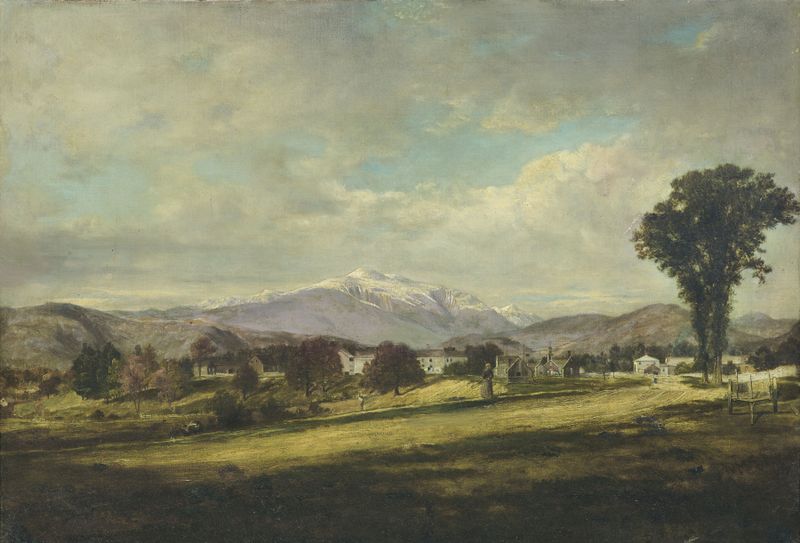
White Mountains from North Conway, New Hampshire
David Johnson
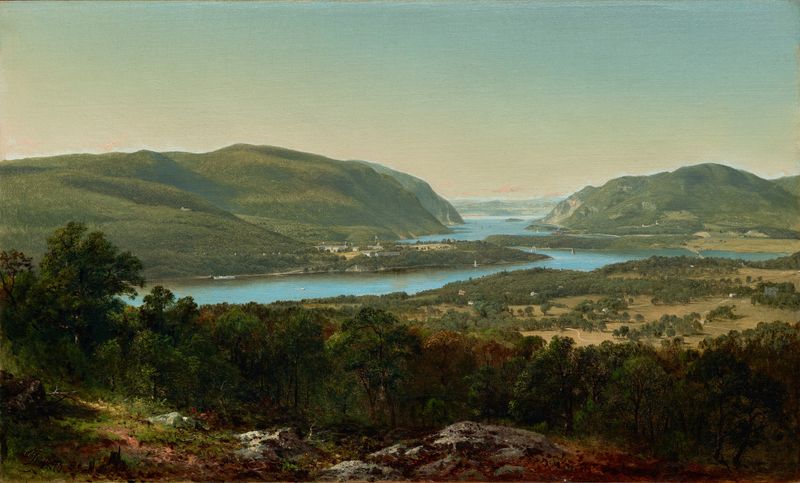
View from Garrison, West Point, New York
David Johnson
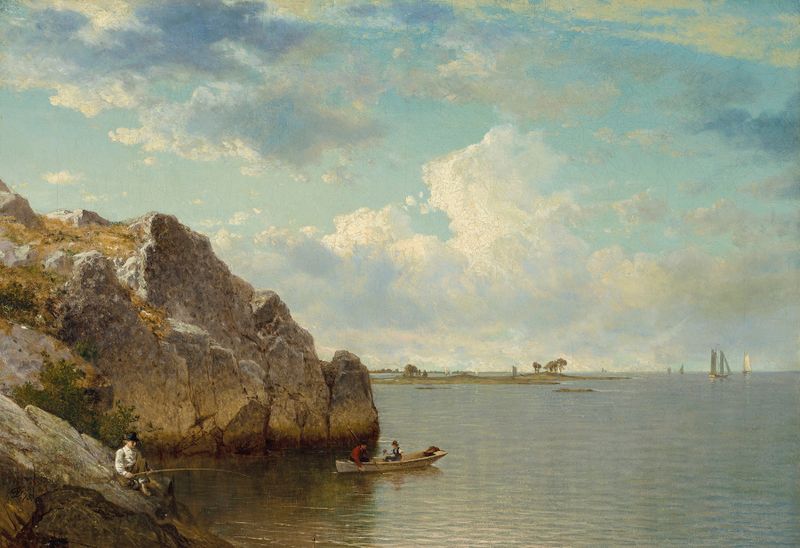
Near Noroton, Connecticut
David Johnson
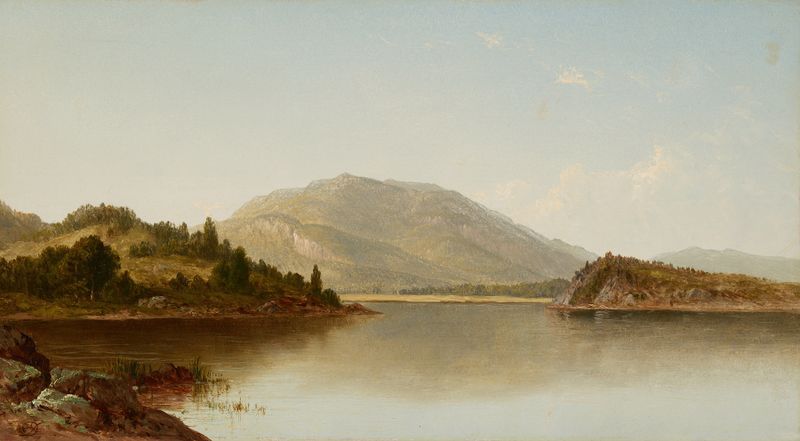
Bear Mountain and Iona Island on the Hudson River
David Johnson
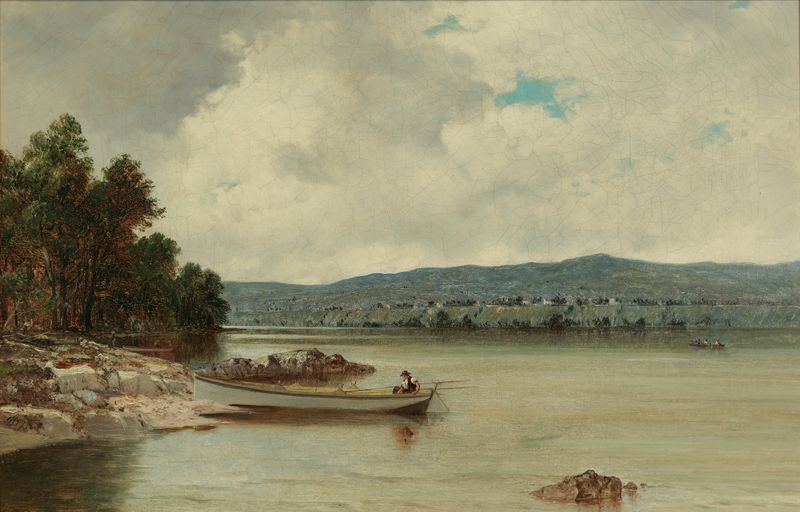
Landing The Dory
David Johnson
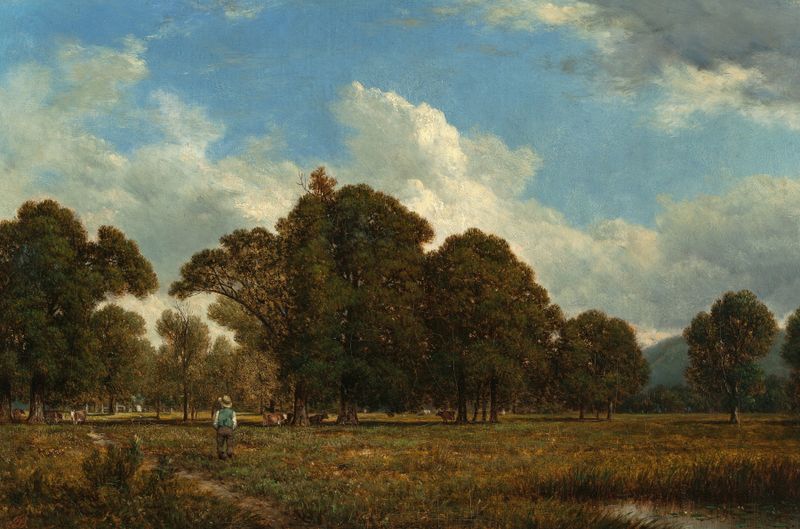
A Farm on the Genesee River
David Johnson
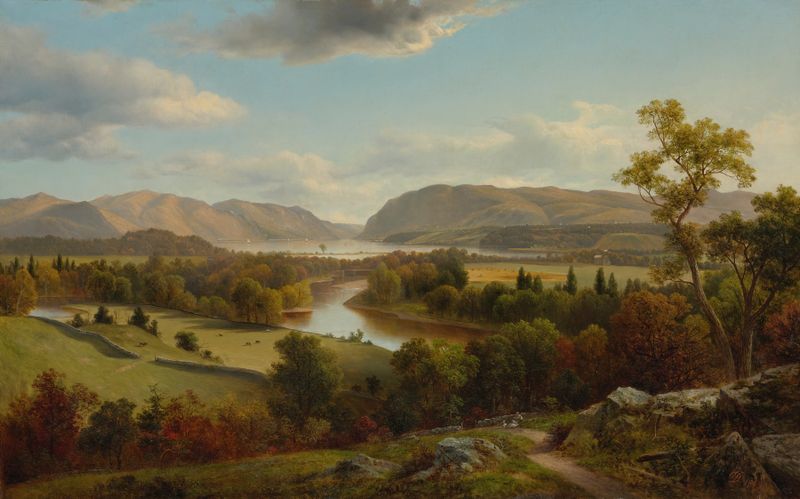
View From New Windsor, Hudson River
David Johnson
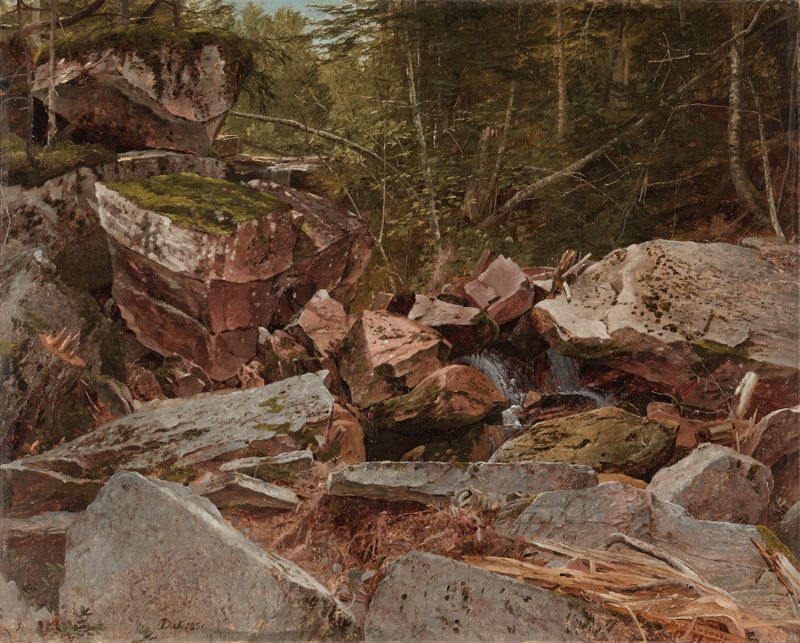
Study, North Conway, New Hampshire
David Johnson
Near Hague, Lake George
David Johnson

Cascade, Rockland County, New York
David Johnson





