Fruit Piece — History & Facts
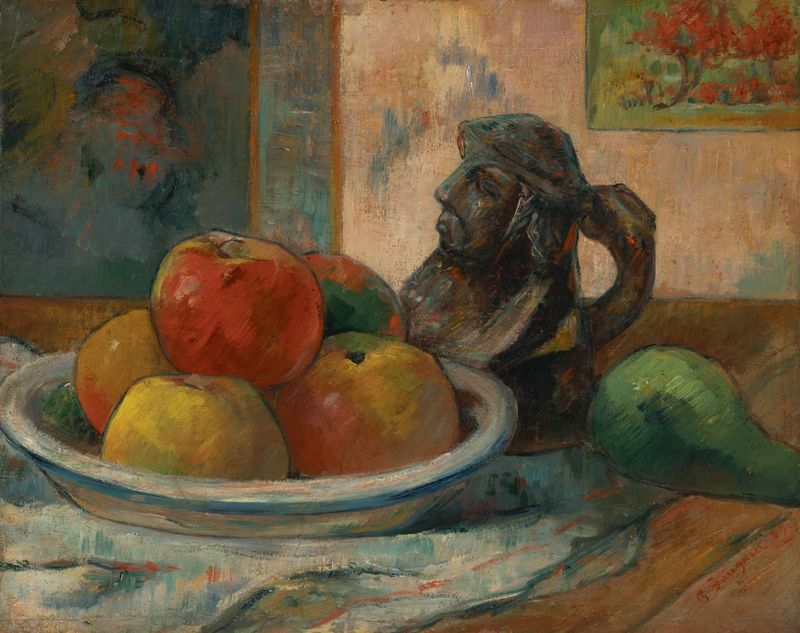
Could a single brushstroke hold eternity? In the delicate stillness of Fruit Piece, beauty transcends the ordinary, inviting contemplation on the ephemeral and the eternal. Look to the right at the lush, vibrant oranges, their textured skin seeming to shimmer in the light. Notice how the dark background enhances their brightness, creating a striking contrast that pulls the viewer into the heart of the composition. The precise arrangement of fruit, with its careful balance of shapes and colors, conveys both harmony and complexity, while the subtle brushwork allows each piece to appear almost lifelike, as if it could roll off the canvas at any moment. At first glance, this still life seems merely to celebrate the bounty of nature.
However, a closer examination reveals an exploration of transience. The fading light on the edges of the fruit suggests the passage of time, a reminder that beauty is often fleeting. The artist’s meticulous attention to detail draws us in, urging reflection on the relationship between nature, mortality, and the act of creation itself. During the year 1860, Skeele painted Fruit Piece in a period marked by burgeoning artistic movements that sought to capture realism and beauty.
Living in the midst of a rapidly changing world, she was part of a conversation that celebrated the everyday while simultaneously challenging traditional artistic boundaries. Her work reflects not only personal mastery but also the wider evolution in the art world, where still lifes began to embody deeper philosophical inquiries through the lens of everyday beauty.