
Funeral of Saint Benedict; Saint Augustine; Beheading of Saint Lucilla — History & Facts
Can beauty exist without sorrow? In Funeral of Saint Benedict; Saint Augustine; Beheading of Saint Lucilla, the profound interplay of color draws us into a tapestry of grief and reverence, where loss is entwined with divine luminosity. Look to the center where the vibrant crimson of Saint Benedict's robe commands attention, stark against the muted earth tones surrounding him. Notice how the somber palette envelops the figures in shadow, yet highlights the heavenly light that bathes Saint Augustine in a soft gold, symbolizing his spiritual elevation amidst mourning. The composition is meticulously arranged, leading the eye through each figure’s expression of sorrow and contemplation, creating a dynamic yet harmonious tableau. Amidst the mournful scene, the contrasting hues of red and gold evoke the duality of life and death, illustrating the tension between earthly despair and heavenly hope.
The cold steel of Lucilla’s impending execution juxtaposes the warmth of the saints’ compassion, reminding us of the fragility of faith in the face of tragedy. Each detail, from the intricate folds of garments to the somber expressions of the onlookers, encapsulates the emotional weight of the moment, inviting the viewer to contemplate the deeper significance of sacrifice and redemption. Spinello Aretino created this work in 1385 during a period when the art world was transitioning into the Renaissance. Living in Florence, he was influenced by the burgeoning humanism of the time, which emphasized the emotional depth of religious narratives.
Art was evolving, as was the society around him, reflecting themes of spirituality that remained relevant amid a backdrop of social upheaval and change.
More Artworks by Spinello Aretino
Browse all →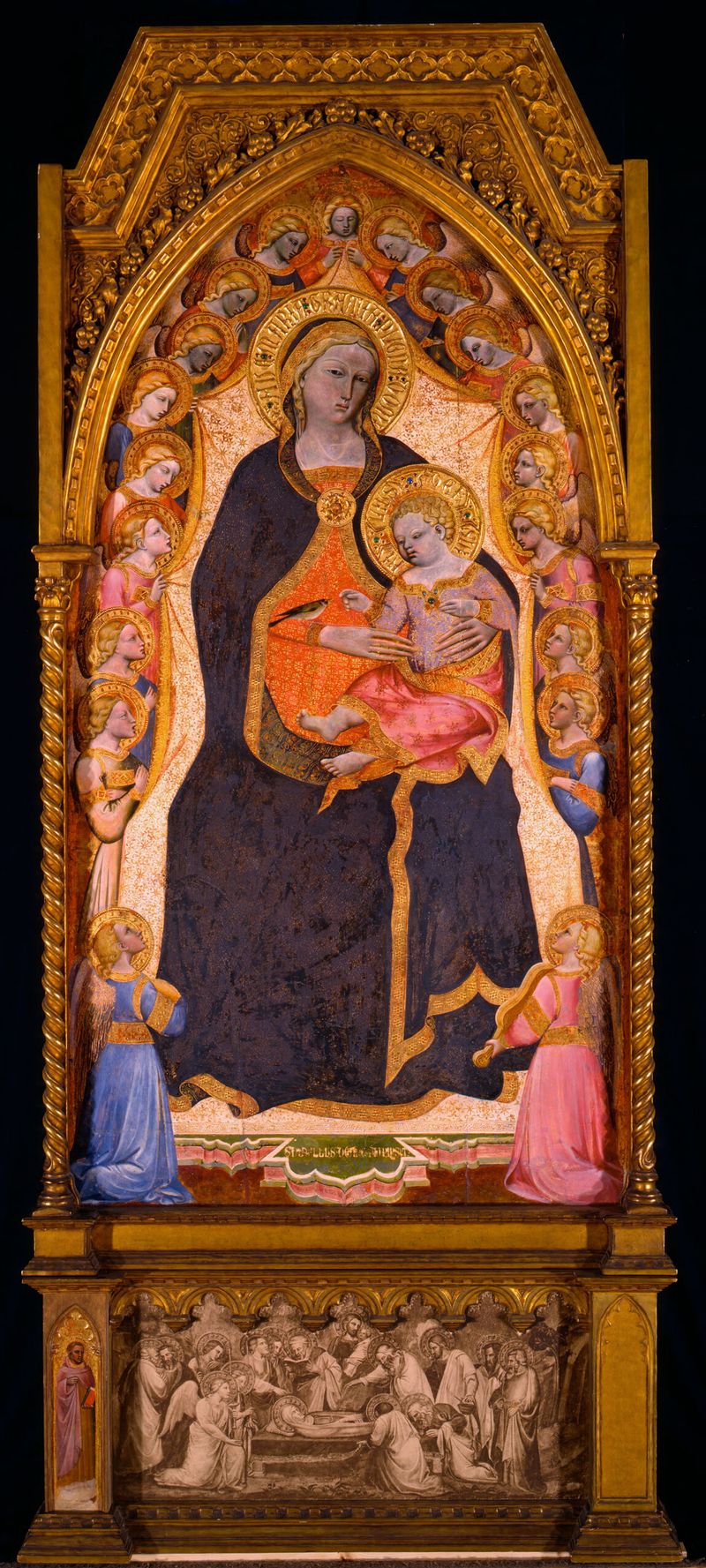

More Religious Art
Browse all →
The Return of the Prodigal Son
Rembrandt van Rijn

The Garden of Earthly Delights
El Bosco

Count Orgaz’ funeral
El Greco

The Hundred Guilder Print: the central piece with Christ preaching, the plate arched
Rembrandt van Rijn

The Descent from the Cross
Rogier van der Weyden

The return of the prodigal son
Rembrandt van Rijn