
Virgin Enthroned with Angels — History & Facts
Could a single brushstroke hold eternity? In Virgin Enthroned with Angels, the delicate balance of faith and artistry invites us to ponder the depth of each careful application of paint. Look to the center, where the Virgin Mary sits majestically upon her throne, a serene expression adorning her face. Notice the intricate gold leaf halo that radiates light, framing her figure in divine splendor. The vibrant hues of blue and red envelop her, evoking both warmth and reverence, while the angels flanking her soar gently around the composition, their wings almost whispering the sacredness of the moment.
The contrast of the deep, rich colors against the shimmering gold background draws the viewer in, as if inviting them to witness a sacred audience. Beneath the surface of this ethereal scene lies a profound nostalgia, a longing for a connection to the divine that transcends time. The angels, with their softened features and flowing drapery, embody the delicate interplay between earthly existence and heavenly grace. Each figure seems to express an unspoken harmony, reflecting a world where the sacred and the mundane coexist.
The composition itself, with its symmetrical balance, echoes the stability and assurance of faith amidst the chaos of life. Created around 1380, this artwork emerged during a period of transformation in the Italian Renaissance, as religious themes began to intertwine with burgeoning humanist ideals. Spinello Aretino worked in Tuscany, a region flourishing with artistic innovation and spiritual exploration. This piece, with its intricate detail and spiritual depth, captures the essence of a society grappling with faith and identity, a fitting reflection of Aretino's own journey as an artist in a rapidly changing world.
More Artworks by Spinello Aretino
Browse all →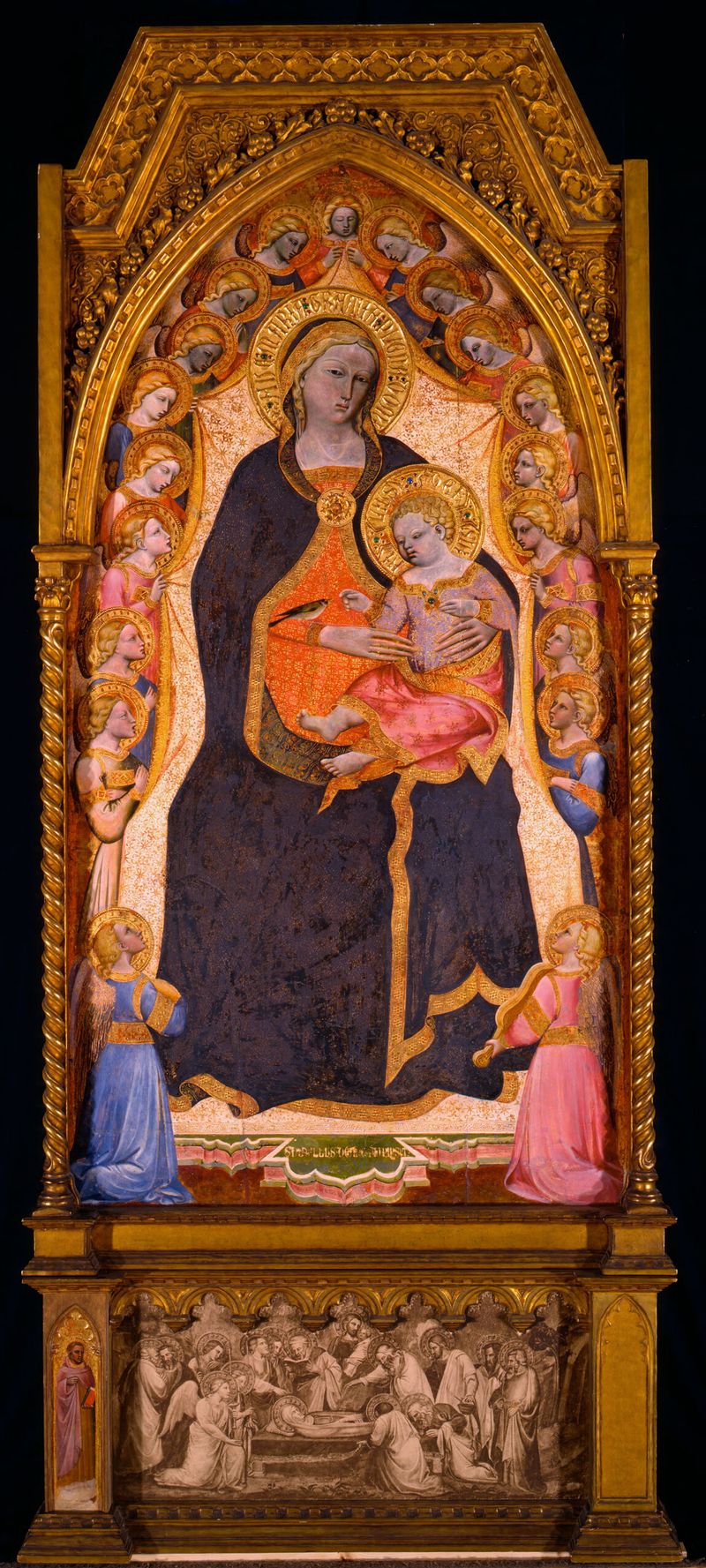

More Religious Art
Browse all →
The Return of the Prodigal Son
Rembrandt van Rijn

The Garden of Earthly Delights
El Bosco

Count Orgaz’ funeral
El Greco

The Hundred Guilder Print: the central piece with Christ preaching, the plate arched
Rembrandt van Rijn

The Descent from the Cross
Rogier van der Weyden

The return of the prodigal son
Rembrandt van Rijn