General Garibaldi’s Residence at Caprera — History & Facts
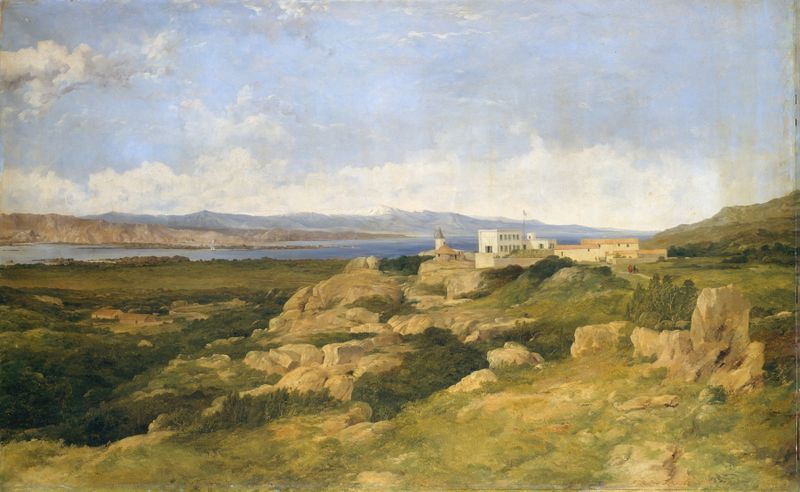
This sentiment resonates profoundly in the vibrant strokes and lively palette of a remarkable work from the mid-19th century. Here, the artist captures the essence of movement, not just in physical forms, but in the spirit of a landscape that feels alive. Look to the foreground where the fluttering branches sway in a gentle breeze, inviting your eyes to trace their rhythm against the backdrop of a rugged coastline. Notice how the dappled sunlight bathes the residence in warm hues, enhancing the textured surfaces that speak to the rawness of nature.
The juxtaposition of the serene dwelling against the boisterous sea suggests an equilibrium between human endeavor and the untamed wilderness, a balance that is artistically celebrated through dynamic brushwork. Beneath the surface, there lies a dialogue between stability and transience. The robust structure stands firm, yet the undulating waves and swaying trees evoke a sense of impermanence, reminding us that even the most steadfast homes are ultimately at the mercy of nature's whims. The choice of colors — vibrant greens mingling with deep blues — creates a vivid contrast that signifies both hope and turmoil, reflecting the tumultuous era of the Italian unification that Garibaldi championed. In 1865, Frederick Richard Lee created this piece during a period when Romanticism was waning, and new artistic movements were emerging.
Living in England, he was influenced by the dramatic landscapes of his homeland and the growing interest in plein air painting, which emphasized capturing the momentary effects of light and atmosphere. This painting stands as a testament to his ability to bridge tradition and innovation, echoing the vibrant energy of his time.