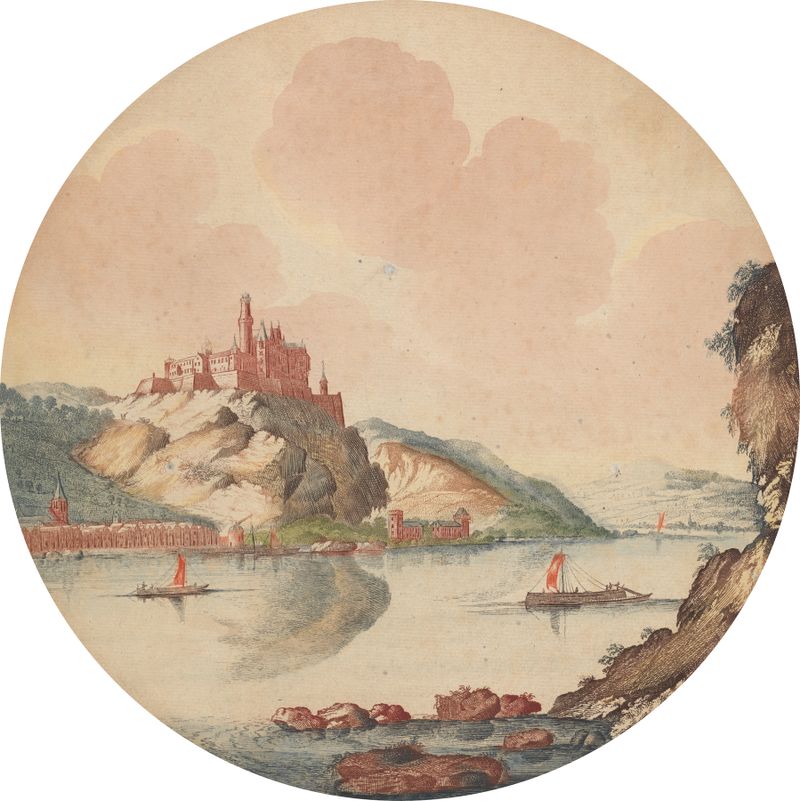
Gezicht op burcht Pfalzgrafenstein bij Kaub — History & Facts
Who listens when art speaks of silence? In the stillness of fleeting grandeur, echoes of decay whisper stories of a once-mighty fortress. Look to the center where the imposing structure of the Pfalzgrafenstein rises from the tranquil waters. The artist employs a meticulous detail that draws the eye to the castle's ancient stone façade, its muted grays and browns contrasting sharply with the vibrant blues of the surrounding Rhine River. Notice how the delicate brushwork captures the gentle ripples of the water, reflecting the fort’s silhouette, creating a harmonious dialogue between land and sea.
The soft daylight illuminates the scene, casting long shadows that evoke a sense of nostalgia, inviting you to linger in the moment. Yet, beneath this serene exterior lies an inherent tension. The fortress, though majestic, stands as a testament to time’s relentless march, its walls bearing the marks of erosion and neglect. The gentle decay depicted suggests both the fragility of human endeavors and the inevitable passage of history, provoking contemplation on legacy and memory.
The juxtaposition of the tranquil landscape with the fortress's somber decay speaks to the fleeting nature of power and existence, urging viewers to consider what endures beyond physical presence. Jan van Call painted this piece between 1688 and 1698, a period when he was immersed in the baroque tradition, focusing on landscapes that captured both beauty and contemplation. Working during a time of political strife and changing artistic ideals in the Low Countries, he sought to reflect the timeless relationship between nature and humanity’s creations. This work embodies not only a specific place but also the era’s duality of grandeur and decay, a poignant reminder of history’s relentless flow.