Gezicht op de suikerplantage Catharina Sophia — History & Facts
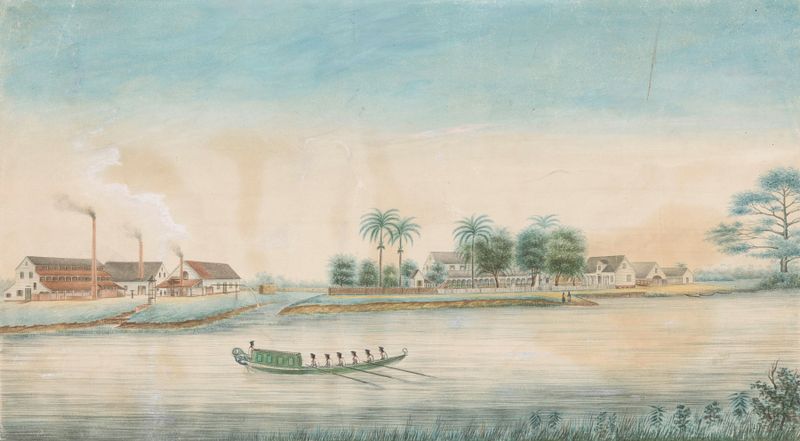
Where does light end, and longing begin? In the world of Gezicht op de suikerplantage Catharina Sophia, the gentle interplay of sunlight and shadow evokes a poignant sense of solitude that lingers long after one has gazed upon it. Focus on the sweeping horizon where the lush green fields meet the sky, capturing the eye with its vibrant hues. The sugar plantation stretches out beneath a radiant, expansive sky, drawing the viewer into the intricate details of the landscape. Notice the delicate variations of green in the sugarcane and the subtle flickers of sunlight reflecting off the leaves, creating a shimmering dance that hints at both abundance and isolation.
The composition leads your gaze towards the distant horizon, evoking a feeling of yearning for what lies beyond the immediate beauty. Yet, this scene of pastoral delight is imbued with a deeper emotional tension. The vastness of the fields can suggest both prosperity and emptiness, as the horizon fades into an uncertain distance. The solitary figure of a worker, barely visible amid the swells of sugarcane, amplifies the theme of loneliness, as they labor within this lush paradise, perhaps questioning their place within it.
The juxtaposition of the bountiful environment against the isolated figure speaks to the human experience of connection within a seemingly endless landscape. In the early 1860s, Brockmann painted this work in the Dutch East Indies, during a period marked by significant colonial growth and exploitation. While he captured the beauty of the sugar plantation, he also subtly reflected the complex dynamics of labor and isolation in a rapidly changing world. This painting represents not just a snapshot of landscape, but a moment of reflection on the human condition amid nature's splendor.